Skincare and beauty brand marketing is creative-led performance marketing under a claims microscope. The category rewards real texture, routine content, creator trust, strong packaging and social proof. It also punishes vague efficacy claims, body-shaming hooks, unsupported clinical language and careless influencer disclosure.
The strongest brands do not treat Meta, TikTok and TikTok Shop as isolated channels. They build a creative and commerce system: compliant creator content creates discovery, product pages answer ingredient and routine questions, catalog ads retarget shoppers, subscriptions and bundles lift lifetime value, and measurement looks beyond first-order ROAS.
This guide focuses on DTC skincare and beauty brands selling cosmetics, beauty tools or adjacent personal-care products. It is marketing guidance, not legal, regulatory or medical advice. Cosmetic, OTC drug, health, influencer and platform-policy review should happen before campaigns scale, especially for acne, SPF, anti-aging, sensitive skin, medical-adjacent or treatment-oriented claims.
TL;DR
- UGC is the creative engine. Beauty shoppers want application, texture, shade, routine and real-use context, not only polished product shots.
- Claims discipline protects performance. Cosmetic benefits, health-adjacent benefits, clinical claims, testimonials and creator scripts need evidence and review.
- Meta and TikTok do different jobs. TikTok creates discovery and trend velocity; Meta often converts, retargets and stabilizes scale through catalog and purchase data.
- TikTok Shop can shorten the purchase path. It works best when product authenticity, inventory, affiliate controls and margins are managed tightly.
- Before/after is not a simple yes/no. Policies vary by platform, product type and context; avoid negative self-perception tactics and review transformation claims carefully.
- LTV beats first-order ROAS. Refill, subscription, bundle, routine and second-order behavior decide profitable scale.
- Influencer disclosures are part of the system. Paid, gifted, affiliate and employment relationships need clear disclosure where rules require it.
Why Beauty Marketing Is Different
Beauty marketing has four structural constraints.
First, creative drives demand. A serum, cleanser, balm, SPF, mask, foundation, lip product or hair treatment often needs to be seen in use before the buyer understands texture, finish, shade, absorption or routine fit. Static claims rarely carry the whole sale.
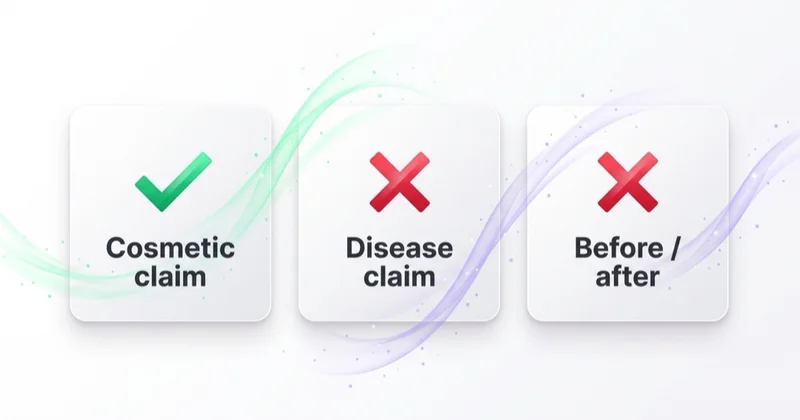
Second, the line between cosmetic and health claim can move quickly. FDA explains that intended use helps determine whether a product is a cosmetic, drug or both. Claims about cleansing, beautifying or altering appearance are different from claims about treating disease or affecting the structure or function of the body. A skincare brand can cross that line through ad copy, product pages, creator scripts, before/after framing or ingredient promises.
Third, creative fatigue is fast. Beauty audiences see a high volume of creator content, ads and trends. A winning concept can decay quickly if the brand does not keep producing new hooks, creators, demos and angles.
Fourth, profit usually depends on repeat purchase. Consumables refill. Routines expand. Bundles and subscriptions compound. A campaign that looks weak on first-order ROAS may be profitable when second order and subscription behavior are included.
Claims First: Cosmetic, OTC And Health-Adjacent Language
Before media scaling, skincare and beauty brands need a claims map. It should define what can be said in ads, creator briefs, landing pages, product pages, TikTok Shop listings, emails and organic posts.
| Claim Area | Marketing Risk | Better Operating Rule |
|---|---|---|
| cosmetic benefit | vague but usually lower risk when truthful | describe appearance, texture, feel and routine role |
| drug or treatment implication | may trigger FDA/OTC or medical-adjacent review | route through regulatory review before use |
| ingredient efficacy | often overclaimed from supplier data | connect claim to final formula evidence |
| clinical language | can imply a high level of proof | use only when substantiation supports the exact claim |
| dermatologist language | can imply endorsement or testing | document what the phrase means and who supports it |
| sensitive-skin claims | can imply broad tolerance | qualify by test basis and avoid universal certainty |
| SPF or acne language | can move into OTC/drug territory | treat as regulated product messaging |
| testimonials | can imply typical results | review for disclosure, typicality and substantiation |
FTC guidance says health-related benefit and safety claims generally require competent and reliable scientific evidence. For beauty, that matters when copy moves beyond sensory or cosmetic language into efficacy, safety, health or treatment territory. The ad's net impression matters, not only the literal words.
The operational fix is a claims library:
- approved phrases;
- banned phrases;
- required disclaimers;
- evidence source for each claim;
- allowed creator talking points;
- product-specific claim limits;
- regional differences;
- platform-specific restrictions;
- approval workflow for new hooks.
This protects growth. It prevents creative teams from finding a high-performing hook that later causes disapprovals, chargebacks, legal review or trust problems.
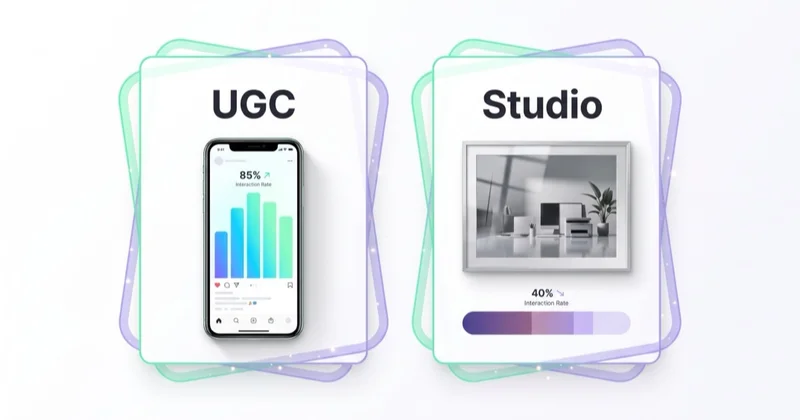
UGC And Creator Creative
UGC is not a style filter. It is a buying aid. Good beauty UGC helps the viewer answer practical questions:
- What is the texture?
- How much product is used?
- When in the routine does it fit?
- How does it sit under makeup?
- What skin feel does it leave?
- What shade does it look like in natural light?
- How long does application take?
- Who is the product designed for?
- What should be avoided or paired with it?
Useful creative formats include:
| Format | Best Use |
|---|---|
| routine demo | shows context and order of application |
| texture close-up | answers sensory objections |
| first impression | creates discovery and curiosity |
| wear test | shows finish over time where truthful |
| ingredient explainer | educates without overclaiming |
| founder or chemist explainer | builds authority if credentials are accurate |
| creator comparison | compares routine role, not medical outcome |
| customer review readout | adds proof with disclosure and typicality review |
| bundle/routine demo | lifts AOV and cross-sell |
| replenishment reminder | supports retention and subscription |
The creative pipeline should be continuous:
- Brief multiple creators every month.
- Use approved claim language.
- Require disclosure language for paid, gifted or affiliate relationships.
- Produce several hook variants from each concept.
- Test raw creator edits against brand-edited versions.
- Cut winners into platform-native lengths.
- Retire fatigued ads quickly.
- Feed learnings into the next brief.
For creative operations and AI-assisted variants, see AI UGC ads and TikTok Creative Center.
Influencer And Affiliate Disclosures
Creator relationships are commercial infrastructure, not only content sourcing.
FTC influencer guidance says a relationship should be disclosed when there is a financial, employment, personal or family relationship with a brand, and that value does not have to be cash. Free product, discounts, affiliate commission and other perks can all create disclosure needs. The disclosure should be hard to miss and placed with the endorsement message itself.
For beauty brands, that affects:
- paid UGC ads;
- whitelisted creator posts;
- Spark Ads;
- TikTok Shop affiliate videos;
- gifting programs;
- ambassador communities;
- commission-based creator content;
- employee or founder content;
- review collection.
The brand should not assume that the platform's built-in paid partnership label solves every disclosure requirement. The brief should specify required disclosure language, placement, spoken/video treatment and caption treatment by market.
Meta Strategy For Beauty Brands
Meta is often the scale and retargeting engine once the brand has enough compliant creative and product data.
Core roles:
| Meta Element | Role |
|---|---|
| Advantage+ Shopping / Sales campaigns | broad purchase optimization with many creative inputs |
| catalog ads | product-level retargeting and dynamic merchandising |
| Reels and Stories creative | native creator-style discovery and retargeting |
| retargeting | product viewers, cart abandoners, engaged users, routine content viewers |
| exclusions | separate new-customer acquisition from retention where needed |
| Meta Pixel and CAPI | measurement resilience and better event matching |
Meta creative should avoid negative self-perception framing. Meta's health and wellness standards restrict ads that exploit insecurity or body image concerns and include age-targeting requirements for cosmetic products and procedures. Current policy nuance matters: some cosmetic before/after depictions may be allowed in certain contexts, while anti-aging, treatment, side-by-side comparison, body-image and health-adjacent content can be restricted. The safe operating approach is not "all before/after is always banned" or "before/after is always fine"; it is platform-specific review before launch.
For measurement, connect Meta Pixel and Meta Conversions API carefully. Better tracking should not mean sending unnecessary sensitive information.
TikTok And TikTok Shop
TikTok is usually strongest for discovery, creator validation and product education. It can create demand faster than search because the buyer may not know the category or product before seeing the content.
Strong TikTok beauty content usually has:
- an immediate visual hook;
- a real person using the product;
- fast demonstration of texture or routine role;
- native pacing and captions;
- clear product name and variant;
- claim-safe language;
- creator disclosure where needed;
- simple path to product page or TikTok Shop listing.
TikTok Shop can shorten the path from video to purchase where available. That can help impulse beauty purchases, but it also raises operational requirements:
- product listings must match claims and inventory;
- shop pricing should not destroy margin;
- affiliate scripts need claims control;
- unauthorized sellers and counterfeit risk need monitoring;
- shipping and returns must match customer expectations;
- reviews and product ratings influence conversion;
- attribution should be reconciled with website and Meta performance.
For the mechanics of the channel, see TikTok Shop: what it is and how it works.
Product Pages And Social Commerce CRO
Beauty product pages should be built for both human shoppers and AI/search interpretation.
High-converting pages usually include:
- what the product is;
- who it is designed for;
- skin type or hair type fit where evidence supports it;
- texture and finish;
- routine step;
- ingredient list and key ingredient explanation;
- how to use;
- when to use;
- compatibility warnings or patch-test guidance where appropriate;
- claim substantiation language where needed;
- size, refill frequency and value;
- subscription or bundle options;
- shipping, returns and guarantees where accurate;
- reviews with skin type, shade or routine context;
- UGC videos or application demos;
- FAQ for sensitive, acne-prone, SPF, pregnancy, fragrance or allergy-related questions where relevant and reviewed.
The page should not rely only on aesthetic copy. Search engines, AI systems and shoppers need structured product facts. "Glow serum" is weaker than "hydrating serum for a nighttime routine with lightweight gel texture, fragrance-free formula, and refill cadence of roughly X weeks" if that is accurate for the product.
For broader sales conversion work, see how to increase online sales.
Subscription, Bundles And Routine Economics
Beauty brands often scale profitably only when first order leads to repeat purchase.
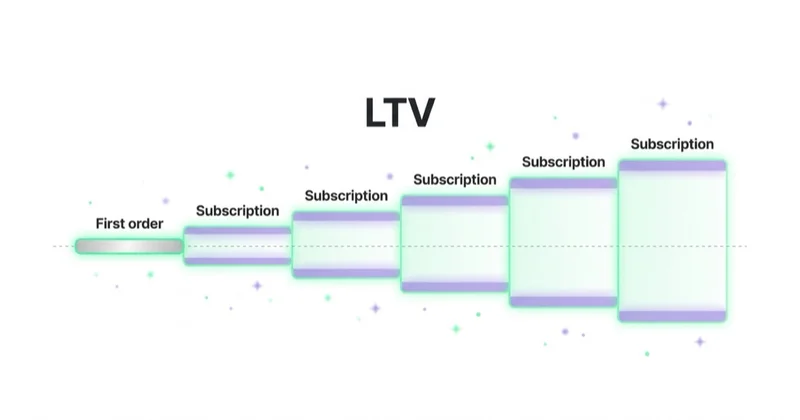
Useful revenue levers include:
| Lever | Why It Helps |
|---|---|
| subscribe and save | increases predictability and repeat purchase |
| routine bundles | lifts AOV and teaches product system |
| starter kits | lowers first-purchase friction |
| replenishment emails/SMS | captures refill timing |
| shade or skin-type quiz | improves product match and data collection |
| post-purchase education | reduces misuse and returns |
| replenishment ads | brings buyers back when product should run out |
| loyalty or VIP programs | supports second and third order |
The first order should not be viewed in isolation. A cleanser with modest first-order margin can be valuable if it drives routine adoption. A heavily discounted hero product can be weak if it attracts bargain buyers who never reorder. The cohort view is essential.
Measurement: Contribution Margin And LTV
First-order ROAS is too narrow for skincare and beauty.
Better reporting includes:
| Metric | Why It Matters |
|---|---|
| contribution margin | reveals profit after product cost, shipping and ad spend |
| CAC by new customer | separates acquisition from retargeting existing buyers |
| first-to-second order rate | shows whether the product creates habit |
| subscription start rate | measures recurring revenue creation |
| subscription retention | shows whether subscription quality is real |
| AOV and bundle rate | tracks routine-building success |
| return and refund rate | protects against misleading top-line revenue |
| creator-level performance | identifies content sources that scale |
| product-level margin | prevents low-margin SKUs from dominating spend |
| TikTok Shop vs site margin | compares channel economics fairly |
Where possible, product margin, new-customer status, subscription start and repeat purchase should be part of the optimization signal. If platform optimization cannot receive all of that data directly, reporting should still guide budgets and creative decisions.
Policy-Safe Creative Review Checklist
Before launch, each ad should pass a simple review:
- Does the ad imply a medical or disease-treatment claim?
- Does it suggest the viewer has a condition or flaw?
- Does it use negative self-perception or shame?
- Does it show transformation claims that need platform review?
- Does the evidence support the exact benefit stated?
- Does the creator have a required disclosure?
- Does the product page support the same claim?
- Is the product cosmetic, OTC, both or another regulated category?
- Does the ad target the correct age group and geography?
- Does the landing page avoid unsupported clinical language?
- Are comments and creator responses monitored for off-script claims?
This checklist should be used before creative enters the testing queue, not after disapproval.
How Space Ads Approaches Beauty Accounts
At Space Ads, skincare and beauty accounts start with three audits: claims, creative operations and unit economics. We check what can be said, what evidence supports it, how creator content is sourced, how quickly creative fatigues, which products have margin, what subscription and repeat purchase data shows, and whether platform tracking reflects real contribution.
Then the channel system is built around product role. TikTok and creators create discovery. TikTok Shop can shorten the purchase path where available. Meta scales purchase campaigns, catalog retargeting and repeat-customer flows. Product pages and email/SMS turn the first purchase into routine adoption. Reporting compares contribution margin, new-customer quality and LTV, not only first-order ROAS.
For an existing brand, a marketing audit can show whether spend is buying profitable new customers or recycling existing demand. Execution usually connects Meta Ads, TikTok Ads, creative testing, catalog work, CRO and performance marketing.
30-Day Optimization Plan
- Build the claims library. Define approved claims, banned claims, evidence sources, disclaimers and creator talking points.
- Audit product pages. Add texture, routine step, use instructions, ingredient context, reviews and policy-safe FAQs.
- Review creator disclosures. Standardize paid, gifted, affiliate and employee disclosure requirements.
- Map product economics. Contribution margin, AOV, subscription rate, repeat rate and refund rate by product.
- Create a UGC pipeline. Brief creators with claim-safe hooks, demos, routines, texture shots and product usage limits.
- Separate channel roles. Use TikTok for discovery, Meta for scale/retargeting and TikTok Shop where channel margin works.
- Clean tracking. Validate pixel/CAPI events, purchase values, product IDs, subscription events and new-customer reporting.
- Launch routine and bundle tests. Test starter kits, regimens, replenishment and subscription offers.
- Review policy performance weekly. Track disapprovals, edits, creator off-script claims and landing-page mismatches.
- Read cohorts monthly. Compare first-order, second-order, subscription and LTV by product and creative angle.
Common Mistakes
| Mistake | Why It Hurts | Better Approach |
|---|---|---|
| Judging only first-order ROAS | misses refill and subscription economics | use contribution margin and LTV |
| Letting creators invent claims | creates policy and substantiation risk | use approved claim libraries |
| Assuming all before/after rules are identical | policies vary by product and platform | review each use case before launch |
| Using negative self-image hooks | harms trust and triggers policy risk | describe product/routine without shaming |
| No disclosure process | creator content can become noncompliant | define disclosure by relationship and channel |
| Polished ads only | limits native performance | build a high-volume UGC pipeline |
| Weak product pages | creative creates demand but page fails | add routine, texture, ingredient and policy details |
| Ignoring refunds and returns | overstates performance | include refund and product-fit data |
FAQ
What is skincare and beauty brand marketing?
Skincare and beauty brand marketing is the system used to acquire and retain customers through creator content, Meta, TikTok, TikTok Shop, product pages, email/SMS, subscriptions, reviews and compliant product claims. The best programs measure contribution margin and repeat purchase, not only first-order revenue.
Are before/after ads allowed for skincare?
It depends on the platform, product type, claim and creative context. Meta's current policy has nuanced rules for cosmetic products and health-related appearance claims, including restrictions around negative self-perception and some side-by-side transformation depictions. Beauty brands should review each before/after concept against current platform rules and evidence before launch.
What claims are risky for skincare brands?
Disease-treatment claims, structure/function claims, unsupported clinical language, universal safety claims, exaggerated anti-aging claims and creator testimonials that imply typical results can all create risk. FDA and FTC guidance make the exact intended use and evidence important, so claims should be reviewed before they enter ads or creator briefs.
How important is UGC for beauty brands?
UGC is usually one of the strongest creative formats because it shows texture, application, routine use and real context. The advantage comes from volume and iteration: multiple creators, multiple hooks, claim-safe scripts and fast learning from performance data.
Should beauty brands use TikTok Shop?
TikTok Shop is worth testing where available if the brand can protect margin, inventory, listing quality, affiliate scripts, shipping and product authenticity. It can shorten the path from creator discovery to purchase, but it should be compared with website sales by contribution margin and repeat purchase.
Why is first-order ROAS misleading in beauty?
Beauty products are often replenished. A customer may buy a starter product, reorder, subscribe, add a routine bundle or purchase gifts later. Contribution margin, subscription starts, second-order rate and LTV give a stronger view of profitability than day-one ROAS.
What should beauty product pages include?
Product pages should explain product type, routine step, texture, use instructions, ingredient context, skin or hair fit where substantiated, reviews, shipping, returns, subscription options and FAQs. The page should support the same claims used in ads and creator content.
In Short
- Skincare and beauty brand marketing works when creative, claims, product pages and LTV measurement are aligned.
- UGC drives discovery, but creator scripts need substantiation and disclosure controls.
- Meta and TikTok have different roles; TikTok creates demand, Meta often stabilizes scale and retargeting.
- Before/after and transformation claims need platform-specific review, not blanket assumptions.
- Contribution margin, subscription starts and repeat purchase are better growth metrics than first-order ROAS alone.
Sources
- FDA - Is It a Cosmetic, a Drug, or Both?
- FDA - Modernization of Cosmetics Regulation Act of 2022
- FTC - Health Products Compliance Guidance
- FTC - Disclosures 101 for Social Media Influencers
- Meta Transparency Center - Health and wellness ad standards
Continue Learning
- Supplement brand marketing: Meta, TikTok and subscription LTV
- Facebook, Instagram and TikTok ads for fashion brands
- TikTok Creative Center: what it is and how to use it
- TikTok Shop: what it is and how it works
- AI UGC ads: AI-generated creators and captions
- Meta Pixel: what it is and how to use it
- Meta Ads · TikTok Ads · Performance marketing · Marketing audit
Continue reading
Fashion Influencer Marketing: Building a Creator Programme That Feeds Paid
Fashion influencer marketing works best when it is run as a creator system: audience fit, clear briefs, usage rights, disclosure, affiliate logic and paid amplification of the posts that prove they can create demand.
Social Media Marketing for Fashion Brands: Organic, Creators, Commerce and Paid
Social media marketing for fashion brands works when organic content, creators, social commerce and paid amplification operate as one system. This guide explains platform roles, content pillars, creator rights, catalogue hygiene, measurement and how to turn attention into profitable demand.
Furniture Marketing: Shopping, Meta, Showrooms and Custom Orders
Furniture marketing needs two operating models: product-led ecommerce for stock furniture and consultation-led lead generation for custom work. This guide covers Google Shopping, product feeds, Meta lifestyle creative, delivery, returns, financing, showrooms and margin-aware measurement.