Weight loss clinic marketing changed when GLP-1 demand moved into mainstream patient awareness. Search volume increased, telehealth competitors entered the market, local clinics started advertising medical weight management programs more aggressively, and patients became more familiar with medication-assisted care.
That does not make the category easier. It makes the category more sensitive. Weight loss, body image, prescription medication, telehealth eligibility and patient privacy all sit inside one funnel. The clinic that scales is not the one with the loudest transformation promise. It is the clinic with the clearest program, compliant messaging, qualified consultation flow, privacy-conscious tracking and a measurement model based on enrolled patients.
This guide is a marketing and measurement framework, not medical or legal advice. Prescription-drug, telehealth, privacy and state-scope questions need review by qualified counsel and clinical leadership before campaigns go live.
TL;DR
- Weight loss clinic marketing should sell the program and consultation. It should not imply a guaranteed body outcome or direct access to a specific prescription.
- GLP-1 demand raises compliance pressure. Messaging has to account for prescription-drug promotion rules, platform policies, compounding risk and patient expectation management.
- Meta and Google play different roles. Meta educates and creates demand; Google Search captures active clinic, program and consultation intent.
- Tracking needs a privacy-first design. Health intake data, eligibility answers and treatment details should stay out of ad platforms.
- Leads are not enough. The useful KPI is cost per qualified consultation, consultation held, enrolled patient and program value.
- CRO is mostly trust and clarity. Provider credentials, eligibility, process, pricing transparency, privacy language and follow-up speed drive conversion quality.
Why Weight Loss Clinic Marketing Is Different
Medical weight loss sits at the intersection of healthcare, consumer demand generation and regulated advertising.
First, the service is clinically sensitive. Patients are not buying a cosmetic shortcut. They are considering a medical program that may involve screening, provider consultation, lifestyle support, medication eligibility, contraindication review, monitoring and follow-up. Marketing should set realistic expectations before the first form is submitted.
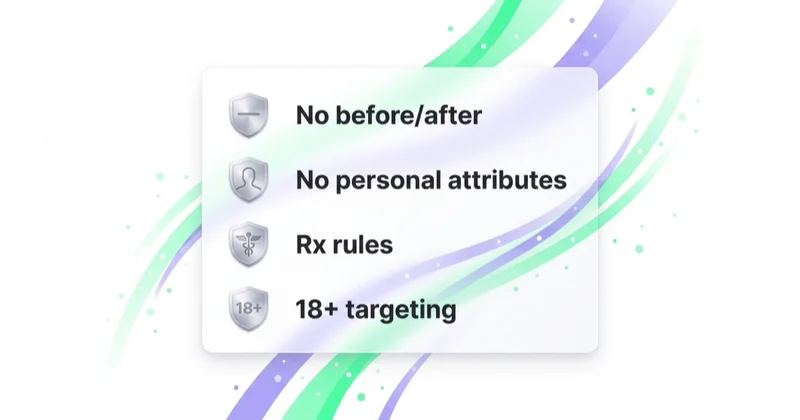
Second, the category is emotionally sensitive. Platforms restrict ads that exploit negative body image or imply knowledge of a person's health, body or weight. Meta's health and wellness standards require age restrictions for certain diet, health and weight-loss products or services and prohibit negative self-perception tactics. Weight-loss creative should use neutral, care-focused language rather than fear, shame or dramatic transformation.
Third, prescription medication cannot be handled like a consumer product. FDA's Office of Prescription Drug Promotion says prescription drug promotion should be truthful, balanced and accurately communicated. When a clinic mentions a specific medication or medication class, the review burden rises. In many cases, the safer paid funnel is program-led: medically supervised weight management, eligibility consultation, care plan and follow-up.
Fourth, healthcare tracking is not ordinary ecommerce tracking. HHS OCR guidance on online tracking technologies has been partly vacated by a federal court, but the remaining guidance still emphasizes that regulated entities may not use tracking technologies in ways that impermissibly disclose protected health information to vendors. A clinic's privacy, legal and compliance teams should be involved before pixels, server events, call recordings or lead integrations are connected.
The Safer Positioning Model
The strongest paid message is not "get a GLP-1 now." It is a clear program promise:
| Riskier positioning | Stronger positioning |
|---|---|
| Medication access as the headline | Medical weight management consultation |
| Body transformation as the proof | Provider-supervised process and patient education |
| Urgency around limited supply | Eligibility, safety review and care continuity |
| Vague "easy results" language | Program structure, monitoring and expectations |
| One-click prescription framing | Consultation-first intake and clinical decisioning |
This does not hide the fact that GLP-1 medications may be part of some programs. It keeps the marketing aligned with how care should work: a patient requests information, completes intake, speaks with a provider, receives eligibility review and then receives a care plan if appropriate.
The Compliance Map
| Area | Marketing implication |
|---|---|
| Prescription-drug promotion | Specific medication claims need specialist review and risk/benefit discipline |
| Platform health policies | Avoid negative self-perception, shaming and sensitive personal-attribute framing |
| Weight-loss creative | Avoid side-by-side transformation imagery and certain body-focused tactics |
| Compounded medication language | Avoid implying that compounded products are equivalent to approved drugs; verify current FDA and state rules |
| Telehealth | Advertise only in states or markets where the program can lawfully operate |
| HIPAA/privacy | Keep PHI, intake answers and treatment details out of ad platforms |
| FTC health claims | Claims should be truthful, non-misleading and substantiated |
Compounding deserves special caution. FDA has published concerns about unapproved GLP-1 drugs used for weight loss, including concerns around compounded products and counterfeit supply. A marketing page should not present compounded medications as simple substitutes for approved drugs, and it should avoid claims that imply identical safety, efficacy or approval status. The current shortage and enforcement landscape can change, so clinic and pharmacy language needs review before launch.
Meta Ads: Demand Creation Without Body-Image Traps
Meta can introduce a clinic's program to people who may not yet be searching. That makes it useful for education, but also risky if the creative implies that the platform knows something about the viewer.
Better Meta angles include:
- how a medically supervised consultation works;
- what a first visit or virtual intake includes;
- provider credentials and care team structure;
- nutrition, activity and follow-up support as part of the program;
- eligibility and safety review;
- pricing and insurance or cash-pay clarity where appropriate;
- patient privacy and secure intake expectations.
Avoid creative that centers shame, a specific body part, urgency around appearance, side-by-side transformation, or copy that calls out the viewer's weight or medical status. The ad should speak about the clinic's program, not the viewer's condition.
Lead ads can work, but the form should stay high-level. A paid social form can capture contact details, preferred location or telehealth market, consultation interest and broad timing. Detailed medical intake should happen in a secure clinical system after the ad platform handoff.
For lead-form mechanics, see Facebook lead ads. For regulated healthcare creative patterns, aesthetic clinic marketing, med spa marketing and plastic surgery marketing have overlapping trust and policy concerns.
Google Search: Capture Intent, Then Qualify
Google Search captures patients already looking for options. The campaign structure should separate intent instead of pushing every query to one page.
| Search group | Example intent | Page focus |
|---|---|---|
| Program | medical weight loss program, weight loss clinic near me |
Program overview, provider supervision, consultation CTA |
| Provider | weight loss doctor, obesity medicine clinic |
Credentials, care process, scheduling |
| Telehealth | online medical weight loss, virtual weight loss clinic |
States served, eligibility, secure intake |
| Medication-aware | GLP-1 class or brand-adjacent searches | Consultation-first page with careful Rx review |
| Brand | Clinic name, reviews, pricing | Direct booking and trust proof |
Search campaigns need negative keywords for non-clinical, bargain, DIY, celebrity, pharmacy-only and unsafe-intent queries. Drug-name bidding and landing pages require careful review because Google restricts healthcare and medicines advertising and can restrict prescription drug terms depending on location and advertiser type.
The search landing page should not be a medication storefront. It should explain the clinical program, who reviews eligibility, what happens during a consultation, what information is needed, how follow-up works and how privacy is protected.
Telehealth Funnel Design
Telehealth expands reach, but it also expands operational and compliance complexity. A clinic should not advertise into markets it cannot serve. The funnel has to route by state, provider availability, pharmacy model, intake requirements and appointment capacity.
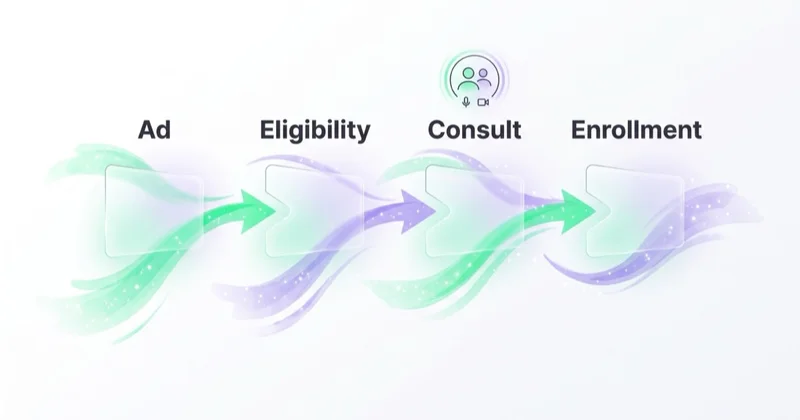
| Step | Goal | What to avoid |
|---|---|---|
| Ad | Introduce program or capture search intent | Medication shortcut language |
| Landing page | Explain program and eligibility process | Overpromising treatment access |
| Contact form | Capture neutral lead and preferred market | Detailed health answers inside ad platform forms |
| Secure intake | Collect medical history in the proper system | Sending intake answers to ad tools |
| Provider consult | Determine clinical fit | Treating every lead as eligible |
| Enrollment | Begin care plan if appropriate | Measuring only lead volume |
| Follow-up | Retention, monitoring and support | Abandoning patients after first payment |
This is also where CRO affects patient quality. A page that promises less but explains more may generate fewer leads and more appropriate consultations. In this category, that is usually a better outcome.
Privacy-Conscious Tracking
A healthcare funnel should be built with the assumption that ad platforms do not need health details to optimize.
| Event | Safe direction | Risk to avoid |
|---|---|---|
lead_submitted |
Neutral inquiry event | Form fields containing symptoms, medication interest or health status |
consultation_booked |
Appointment scheduled | Passing visit reason or treatment category |
consultation_held |
Consult occurred | Uploading diagnosis, prescription or eligibility outcome |
enrolled |
Program enrollment as a neutral CRM stage | Sending treatment details or medication data |
program_value |
Aggregated or privacy-reviewed value signal | Uploading PHI or re-identifiable health details |
Pixels, server-side tagging, CRM imports, call recordings and lead integrations should be reviewed together. Server-side tagging and Meta Conversions API can improve measurement quality in many sectors, but healthcare use requires stricter governance, data minimization and business-associate/privacy review. A technically advanced setup is not automatically a compliant setup.
Landing Page CRO for Weight Loss Clinics
The page needs to build trust without overclaiming.
| Page element | Why it matters |
|---|---|
| Program overview | Explains that the offer is medical care, not a shortcut |
| Provider credentials | Establishes clinical authority |
| Eligibility process | Sets expectations before the form |
| What the consultation includes | Reduces uncertainty and improves show rate |
| Treatment-plan language | Leaves room for provider judgment |
| Pricing and payment clarity | Reduces low-fit leads and support burden |
| Privacy statement | Reassures patients before intake |
| FAQ | Handles medication, telehealth, follow-up and safety questions carefully |
| Reviews | Builds trust when compliant and not outcome-misleading |
A good call to action is "Request a consultation" or "Start eligibility review." A weaker CTA is one that implies immediate access to medication before a provider evaluates the patient.
Measurement: From Lead to Enrolled Patient
Medical weight loss often has recurring revenue and ongoing care, so cost per lead is too shallow.
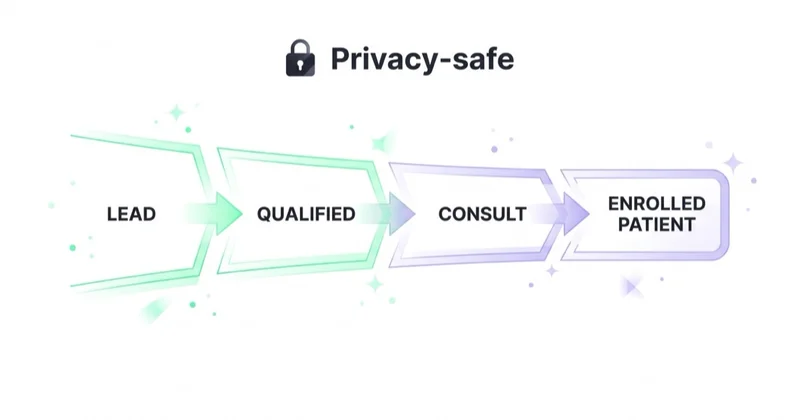
| Stage | Meaning | Optimization use |
|---|---|---|
| Lead | Person requested information | Early signal only |
| Qualified lead | In market, contactable and service-fit | Filters wrong-market and low-fit volume |
| Consultation booked | Appointment scheduled | Main short-term media KPI |
| Consultation held | Patient attended | Measures lead quality and follow-up |
| Enrolled patient | Program started after review | Primary business KPI |
| Retained patient | Patient continues program | LTV and quality signal |
| Program value | Revenue or gross profit over time | Budget and bidding decision input |
The clinic should also track no-show rate, speed-to-lead, call answer rate, contact attempts, provider capacity, refund/cancellation reasons and patient acquisition cost by market. That helps distinguish marketing failure from operations failure.
For value-based reporting, the same discipline behind margin-based conversion value, call tracking and marketing reporting applies, but with a stronger privacy review.
Common Mistakes
| Mistake | Better Approach |
|---|---|
| Making medication access the main promise | Lead with consultation, eligibility and medical supervision |
| Using transformation-style creative | Use neutral program education and provider-led trust |
| Collecting health details in ad forms | Move medical intake to secure clinical systems |
| Optimizing to cheap leads | Optimize to booked consults, held consults and enrolled patients |
| Advertising beyond licensed markets | Route campaigns by state, provider availability and serviceability |
| Treating compounding as a simple ad angle | Verify current FDA, pharmacy and state rules before making claims |
| Sending raw CRM stages to platforms | Minimize data and review every uploaded field |
How Space Ads Approaches Weight Loss Clinic Accounts
Across 25+ client accounts audited daily and roughly 14 million monthly data points analyzed through Space Ads OS, regulated health accounts usually fail in four places: risky creative, weak qualification, privacy-unsafe tracking and lead reporting that does not connect to enrollment.
For weight loss clinics, the Space Ads approach starts by mapping the funnel with clinical, legal and operations input. Meta is used for program education and compliant demand creation. Google Search captures active consultation intent. Landing pages explain eligibility and supervision without turning medication into a shortcut offer. Tracking uses neutral events and privacy review. Reporting moves from cost per lead to booked consultation, held consultation, enrollment and program value. For an existing clinic, a marketing audit should answer whether spend is generating qualified consultations safely or only creating risky lead volume.
30-Day Optimization Plan
- Days 1-3: review compliance and privacy. Check ads, pages, forms, tracking, CRM uploads, call recording and retargeting audiences.
- Days 4-7: define patient-quality stages. Agree on qualified lead, booked consult, held consult, enrolled patient and retained patient.
- Days 8-12: rebuild the landing page. Clarify program, eligibility, provider supervision, pricing, privacy and secure intake.
- Days 13-18: restructure media. Separate Meta education, Google program intent, telehealth markets and brand campaigns.
- Days 19-24: improve follow-up. Track speed-to-lead, call answer rate, no-show rate and appointment reminders.
- Days 25-30: report by enrollment. Compare channels by held consults, enrollments, retention and program value.
FAQ
What is weight loss clinic marketing?
Weight loss clinic marketing is the system used to generate qualified consultations and enrolled patients for medical weight management programs. It includes Meta Ads, Google Search, landing pages, lead forms, secure intake, call follow-up, privacy-conscious tracking and reporting by enrollment value.
Can weight loss clinics advertise GLP-1 programs?
Clinics can advertise medical weight management programs, but GLP-1-related messaging needs careful review. Prescription-drug promotion, platform policies, state rules, compounding rules and patient privacy all matter. The safer paid funnel usually promotes a medically supervised consultation and eligibility review rather than direct medication access.
What should weight loss ads avoid?
Weight loss ads should avoid shame-based messaging, sensitive personal-attribute framing, body-focused transformation creative, certain side-by-side imagery, rapid-result promises and medication shortcut language. The message should focus on care, consultation, eligibility, provider supervision and realistic program structure.
How should a clinic handle GLP-1 search terms?
GLP-1-aware search traffic should usually land on a consultation-first program page. The page can explain that treatment options are reviewed by a provider when appropriate, but it should not promise a specific prescription before evaluation. Drug-name keyword and landing-page strategy requires policy and legal review.
What is HIPAA-conscious tracking for weight loss clinics?
HIPAA-conscious tracking means ad platforms receive only neutral marketing events, while intake answers, health details, treatment information, eligibility outcomes and medication data stay in appropriate clinical systems. Pixel, server event, CRM import and call tracking fields should be reviewed before activation.
Which channels work best for weight loss clinics?
Google Search is usually strongest for active intent, including clinic, program and consultation searches. Meta is useful for education and demand creation when creative is policy-safe. Google Business Profile matters for local clinics. Telehealth programs can broaden geography, but only where provider coverage and compliance are in place.
How should weight loss clinic marketing be measured?
Measurement should move from cost per lead to cost per qualified lead, booked consultation, held consultation, enrolled patient, retained patient and program value. Cheap leads are not valuable if they are out of market, unreachable, ineligible, privacy-risky or unlikely to attend.
In Short
- Weight loss clinic marketing should promote the medical program and consultation, not a guaranteed result or medication shortcut.
- GLP-1 demand makes compliance, privacy and expectation management more important.
- Meta builds compliant demand; Google Search captures active consultation intent.
- Tracking should keep PHI and treatment details out of ad platforms.
- The business KPI is enrolled patient value, not raw lead volume.
Sources
- FDA - Office of Prescription Drug Promotion
- FDA - FDA's Concerns with Unapproved GLP-1 Drugs Used for Weight Loss
- HHS OCR - Use of Online Tracking Technologies by HIPAA Covered Entities and Business Associates
- FTC - Health Products Compliance Guidance
- Meta Transparency Center - Health and Wellness ad standards
- Google Ads Help - Healthcare and medicines policy
Continue Learning
Continue reading

Wedding Venue Marketing: Tours, Dates and Signed Bookings
Wedding venue marketing should fill the calendar with qualified tours and signed bookings, not just raw inquiries. This guide covers Google Search, Google Business Profile, wedding marketplaces, Instagram, Pinterest, galleries, off-peak dates, CRM follow-up and measuring tour-to-booking value.

Catering Marketing: Google Ads, Meta and Booked Events
Catering marketing works when event catering, corporate accounts and drop-off orders are measured separately. This guide covers Google Search, Meta, marketplaces, food trust, seasonality, quote quality and booked-event value.

Home Remodeling Marketing: High-Ticket Leads from Google and Meta
Home remodeling marketing should turn search and visual interest into qualified consultations, delivered proposals and profitable completed projects. Learn how to connect Google, Meta, project proof, financing disclosures, lead handling and CRM values.