Social media management can mean two very different services. One provider may schedule eight client-supplied posts; another may own strategy, original video, platform adaptation, publishing, moderation, creator coordination and reporting. Both can call the work "social media management," so price only becomes meaningful after the scope is clear.
For planning, ongoing agency retainers often fall between $1,500 and $15,000+ per month, excluding ad spend, creator fees and larger production. The lower end usually covers a limited number of channels using supplied assets. A content-led, multi-platform program with regular video, active community care and senior strategy sits higher. These are budgeting bands, not a universal price list: market, category, risk, language coverage and production standard can change them substantially.
Social media management cost: quick planning ranges
The ranges below are illustrative USD budgets for comparing service levels. They are not a survey average or a quotation from Space Ads.
| Monthly budget | A scope might include | Usually not included |
|---|---|---|
| $1,500–$3,500 | One or two platforms, 8–12 planned outputs, light copy/design, client-supplied assets, scheduling and basic reporting | Original shoots, daily moderation, paid campaigns, creator fees |
| $3,500–$8,000 | Two or three platforms, strategy and calendar, 12–20 core outputs plus adaptations, regular editing/design, defined community windows, monthly analysis | Larger shoots, out-of-hours response, substantial paid-media work |
| $8,000–$15,000+ | Multi-platform program, frequent original short-form video, senior creative direction, active community management, campaigns, testing and deeper reporting | Media spend, talent/usage rights and major production unless stated |
| Custom / enterprise | Multiple markets or brands, regulated approvals, high message volume, social care, crisis readiness, creator program and paid integration | Anything not explicitly assigned in the statement of work |
One core idea can produce a LinkedIn document, an Instagram carousel, a TikTok edit and several Stories. That is not necessarily four independently researched concepts, but it is also not one copy-and-paste task. A good proposal distinguishes core assets from platform adaptations so the buyer can see how much thinking and production it includes.
What drives the price?
1. Objectives and level of strategy
A publishing service executes an existing plan. A managed program also researches the audience, defines content pillars, creates campaign concepts, plans launches, advises stakeholders and changes the mix based on performance. Senior strategy costs more because it requires judgment and accountability, not because it adds another slide deck.
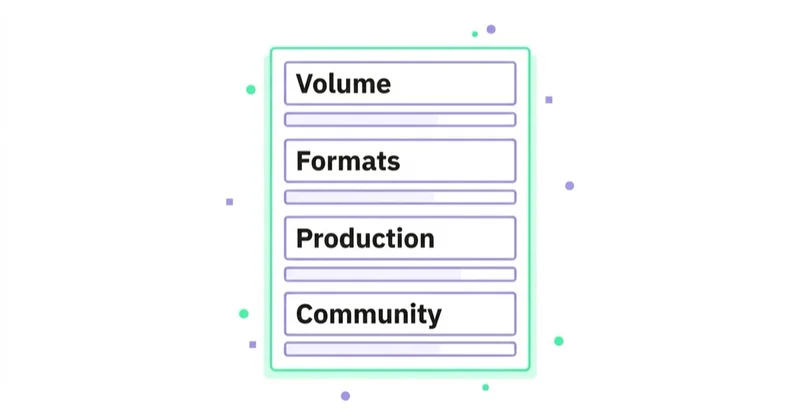
Ask who will make decisions about message, channel role, testing and trade-offs. If the proposal promises "strategy" but only lists a monthly calendar, the term may not mean what the buyer expects.
2. Number and role of platforms
Adding a platform creates more than another upload. It can require different hooks, aspect ratios, edit length, captions, search behavior, publishing features, moderation rules and measurement. The incremental cost is lower when the same audience and source material can be adapted; it is higher when the platform serves a different audience or content format.
Do not buy presence everywhere by default. Give every channel a job—for example discovery, professional authority, customer service, community or conversion support—and fund the production that job requires.
3. Content volume and complexity
Twelve template graphics are not equivalent to twelve founder interviews or product demonstrations. Define the deliverable unit:
- static post, carousel or document;
- short-form video and number of cut-downs;
- Story sequence rather than individual frames;
- live session or long-form video;
- copy-only post;
- platform adaptation of an approved master;
- community response or social-care case.
Complexity comes from research, scripting, compliance, locations, products, animation, captions, sound, feedback and versioning. Cadence should follow the strategy and sustainable production capacity, not an arbitrary demand to post daily.
4. Original production
Original photography and video can be the largest variable in a social budget. A phone-shot interview at the client's office has a different cost structure from a campaign with crew, studio, talent, styling, product logistics, motion graphics and licensed music.
The quote should state:
- number and length of shoot days;
- pre-production, concepts and scripts;
- crew, equipment, studio and travel;
- talent, creator and usage rights;
- number, format and duration of final edits;
- subtitles, languages and accessibility versions;
- raw-file ownership and storage;
- reshoot and cancellation rules.
Separating recurring management from production makes budgeting clearer. A retainer can include a defined monthly production allowance, while larger campaign shoots are approved as projects.
5. Community management and social care
Community management can mean checking comments once each business day or operating a near-real-time customer-service queue across time zones. Price depends on inbound volume, hours, languages, response target, escalation paths and the sensitivity of the category.
Define which actions the provider may take without approval, which questions go to customer service and what constitutes a crisis. If account access includes private messages, establish data-handling, retention and permission rules. A response-time commitment without working hours and volume assumptions is not a usable service level.
6. Paid social and organic amplification
Organic management and paid campaign management are related but distinct. Paid work can include account structure, audience strategy, creative testing, tracking, budget pacing, optimization and experiment design. It may be priced as a fixed retainer, a percentage of media spend, a hybrid or part of a wider performance engagement.
Ad spend should be a separate line paid through a client-controlled ad account. That keeps platform cost, service fee and taxes visible. Boosting posts is still advertising and needs ownership, targeting and measurement rules; it should not be hidden inside "organic reach support."
7. Markets, languages and approval risk
Translation is only one component of local social management. A market may need different cultural references, claims, offers, community responses, posting times and escalation owners. Regulated sectors can add medical, legal or compliance review and a longer approval trail.
The quote should specify whether local copy is translated, transcreated or written by a market specialist, and who approves claims. Faster approval targets increase the capacity the provider must reserve.
8. Reporting, tools and data
A monthly export of reach and follower counts costs less than analysis connecting content to qualified traffic, lead quality, assisted revenue and experiments. Reporting scope should identify data sources, taxonomy, dashboard ownership and the decisions expected from each review.
Tools for scheduling, listening, moderation, design, stock assets, link management and analytics may be included, recharged or held in the client's name. Tool access after termination should be explicit.
What is normally excluded?
Never assume the following are included simply because the proposal says "full service":
- advertising spend paid to Meta, TikTok, LinkedIn or another platform;
- influencer, creator, actor or voice-over fees;
- content usage extensions and paid-media licensing;
- studios, locations, travel, props and product shipping;
- heavy animation, 3D, long-form editing or large campaigns;
- giveaway prizes and fulfillment;
- social listening software or client-specific tool licenses;
- customer-service case resolution outside social replies;
- legal, medical, regulatory or translation review;
- evenings, weekends, holidays and crisis response;
- paid campaign management and tracking implementation;
- work beyond the agreed revision and approval cycle.
Exclusions are not a weakness when they are clear. They prevent a modest ongoing scope from silently absorbing campaign production or round-the-clock support.
Common pricing models
| Model | How it works | Best fit | Risk to manage |
|---|---|---|---|
| Monthly retainer | Fixed fee for a defined recurring scope | Continuous content, publishing and community work | Vague scope and accumulated extra requests |
| Retainer plus production | Management fee plus approved shoot/edit projects | Brands that need regular operations and variable campaign production | Budget volatility without a production calendar |
| Project fee | Fixed scope for strategy, launch or content batch | Defined outcome with a start and finish | Change requests and unclear acceptance criteria |
| Day or hourly rate | Time spent is billed | Advisory, workshops and unpredictable support | Low cost certainty without a cap |
| Per deliverable | Each agreed asset has a rate | Low volume and standardized formats | Rewards output count rather than business value |
| Hybrid paid-media fee | Fixed minimum plus a spend-related component | Paid social with changing budget and a service floor | Fee growth without a corresponding work/value review |
Performance-only pricing is rarely a complete answer for organic social because the provider does not control product, offer, sales follow-up, attribution or platform distribution. A variable incentive can complement a retainer when the metric is controllable, auditable and protected against harmful short-term behavior.
For a wider explanation, see how agencies bill: retainer, project and performance.
How to compare two agency proposals
Create one comparison table and ask every provider to complete it. Avoid scoring "quality" from the number of posts alone.
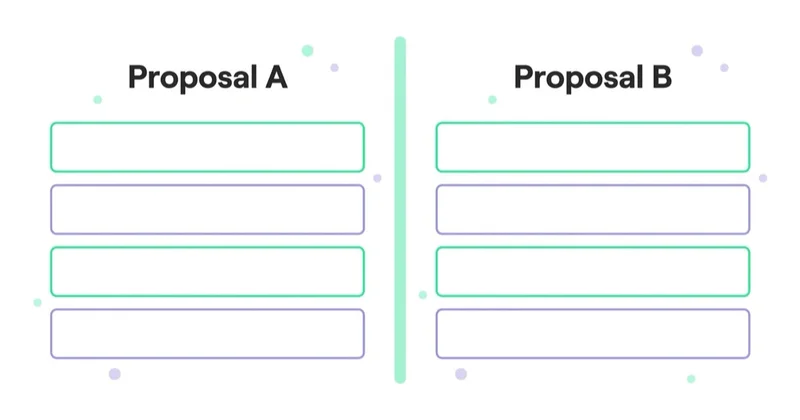
| Question | What a clear answer looks like |
|---|---|
| What outcomes and audiences are in scope? | Named priorities, not "grow awareness" alone |
| Which accounts and markets are covered? | Exact profiles, languages and responsibilities |
| How many core concepts and adaptations? | Both numbers, with formats and expected length |
| Who produces source assets? | Client, agency or creator, plus production allowance |
| What does community management cover? | Channels, hours, volume assumption, response target and escalation |
| Is paid social included? | Work, ad accounts, fee model and spend shown separately |
| Who is on the team? | Roles, senior oversight, production skills and continuity plan |
| How do approvals work? | Client deadlines, rounds of changes and late-approval impact |
| What is measured? | KPI definitions, sources, cadence and next-action ownership |
| What costs extra? | Rate card or change process rather than "as required" |
| Who owns accounts and assets? | Client ownership, access, source files and exit handover |
Then assess the strategic sample. Does the provider understand the customer, product and category? Can it explain why each platform is in the plan? Is the proposed content feasible with the budget and approval capacity? A polished calendar of generic observance days is not evidence of a commercial content system.
A plain-language scope of work
A useful scope answers what will happen without forcing the client to decode agency terminology. For example:
Each month, the agency will research and plan four core content ideas. It will turn those ideas into four short videos, four carousels and up to eight platform-specific adaptations for the named Instagram, TikTok and LinkedIn accounts. The client will provide products and one spokesperson for a four-hour shoot. The fee includes two review rounds per core asset. Comments and direct messages will be checked Monday to Friday, 09:00–17:00, with urgent issues escalated through the agreed contact list. Advertising, influencer fees, weekend cover and additional shoots are priced separately.
This is easier to operate than "ongoing end-to-end content activation." It also makes extra work straightforward: identify the new request, estimate cost or swap it for something already planned, then get approval before production.
The surrounding contract should cover account ownership, intellectual property, confidentiality, claims, music and image rights, creator disclosures, termination and handover. Use our social media management contract guide as a checklist and obtain legal advice for the relevant jurisdiction.
How much does in-house social media cost?
Do not compare an agency retainer with gross salary. Compare like-for-like annual operating systems.
in-house cost = salary + employer costs + recruitment + tools + freelancers/production + equipment + training + management time + cover
As an external reference point—not a social-media-manager price list—the U.S. Bureau of Labor Statistics reported a May 2024 median annual wage of $69,780 for public relations specialists. Employer taxes, benefits, recruitment, tools and production sit on top, and senior content, paid media, design or video capability may require additional people or partners.
In-house often wins when the brand needs constant access to products, experts and live customer context. An agency often wins when the requirement spans strategy, design, editing, paid media and continuity that one hire cannot reasonably cover. A hybrid can work especially well:
- an internal owner provides access, voice, expertise and fast approvals;
- an external team adds creative direction, production, paid media or specialist analytics;
- customer service owns cases, while community managers triage and communicate.
The right answer depends on the operating model. Four complex platforms with daily social care and frequent video are not one ordinary job merely because they sit under one heading.
Measure value, not just output
Social media can support several stages of growth, so define a small KPI set for each role.
| Role | Useful indicators | Avoid using alone |
|---|---|---|
| Discovery | Qualified reach, video retention, profile visits, branded search trend | Raw impressions |
| Consideration | Saves, shares, meaningful comments, engaged site sessions, assisted leads | Engagement rate without context |
| Conversion support | Qualified traffic, leads, assisted revenue, offer response | Last-click revenue only |
| Community | Response time, resolved/escalated cases, recurring issues, sentiment themes | Reply count |
| Creative learning | Hook retention, message response, paid creative performance, test conclusions | Number of posts produced |
Organic social rarely has a clean last-click path. Use consistent campaign tags, platform analytics, web analytics, CRM outcomes and periodic customer research. Separate paid and organic reporting, then show how creative learning moves between them.
Do not guarantee follower growth, viral reach or sales the provider cannot control. A premium proposal should guarantee process quality—research, production, release cadence, response standards, testing and transparent reporting—while treating business results as measured objectives.
Governance, compliance and account safety
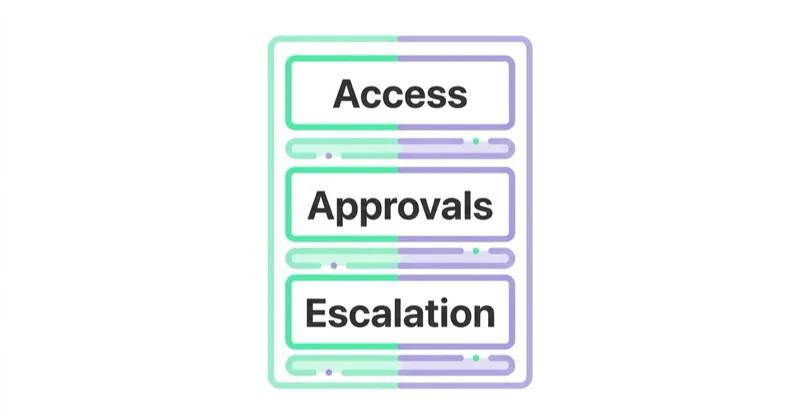
Social management also buys risk control. The scope should include:
- client-owned accounts and business-manager access rather than shared personal passwords;
- least-privilege roles, multifactor authentication and prompt access removal;
- an approved claims library and a list of prohibited topics;
- creator and influencer disclosure rules by target market;
- music, image, font and talent usage records;
- moderation guidance and escalation for threats, discrimination or sensitive data;
- incident contacts and authority to pause scheduled content;
- backup and handover of approved assets, calendars and reports.
For U.S. audiences, the FTC states that a material connection between an endorser and a brand should be clearly and conspicuously disclosed, and a platform's built-in disclosure tool may not always be sufficient by itself. Other markets have their own rules. The client and provider should assign compliance responsibility rather than assume the creator owns it alone.
Common mistakes
| Mistake | Better approach |
|---|---|
| Comparing proposals by monthly price and post count | Normalize strategy, production, adaptations, community and team level |
| Requiring daily posting before defining the channel role | Set cadence from audience need, objective and sustainable production |
| Treating one master asset as ready for every platform | Fund deliberate adaptation while reusing the core idea efficiently |
| Hiding ad spend inside a single total | Show media, management, production and creator costs separately |
| Assuming "community management" means 24/7 support | Define hours, volume, response target and escalation |
| Comparing a retainer with salary alone | Use loaded employment and full production/tool cost |
| Leaving stakeholder approval outside the plan | Set named approvers and deadlines on both sides |
| Buying content without account and asset ownership terms | Keep infrastructure client-owned and define handover |
| Reporting reach without a business hypothesis | Connect platform indicators to customer and commercial outcomes |
FAQ
How much does social media management cost per month? For planning, a limited small-business scope may start around $1,500–$3,500 per month, a managed multi-platform program around $3,500–$8,000, and content-led work with regular original video and active community management around $8,000–$15,000 or more. Market, production, languages, risk and paid scope can move the quote substantially.
What should a monthly social media retainer include? It should state the accounts, objectives, core concepts, formats, adaptations, production allowance, publishing, community hours, reporting, team, revisions, approval deadlines and exclusions. "Full service" without those details is not a comparable scope.
Is content creation included in social media management? Sometimes. Light copy and design may be included while shoots, creators and heavier edits are separate. Confirm who supplies raw assets and how many original productions and final edits the fee covers.
Is ad spend included in the agency fee? It should be shown separately. Ad spend is paid to the platform; management covers the work of planning, building, optimizing and reporting campaigns. The client should retain ownership and billing visibility in its ad account.
Does social media management include replying to comments and messages? Only when community management is explicitly included. Define platforms, business hours, expected volume, response target and which issues must be escalated to customer service, legal or leadership.
Is paid social management normally included? Not automatically. Organic content management and paid acquisition require overlapping but different skills, tools and accountability. A proposal should identify paid scope and fee separately even if one team runs both.
Is an agency cheaper than hiring in-house? It can be, especially when the requirement spans several specialist skills. In-house can be more effective when constant brand access and rapid response dominate. Compare the agency with loaded salary, tools, production, management, freelancers and coverage—not salary alone.
Why do social media proposals vary so much? They often count different work under the same label. Asset source, video complexity, platform adaptations, community hours, seniority, approvals, markets and paid management explain much of the gap.
How long should a social media contract run? Allow enough time to build the production rhythm and evaluate several content cycles, but include checkpoints, notice and handover terms. The appropriate term depends on setup effort, campaign calendar and procurement needs; it should not trap either party in an undefined service.
Sources and further reading
There is no authoritative global tariff for agency social media management. The budget bands in this article are planning ranges derived from the stated service levels, not a published market average.
- U.S. Bureau of Labor Statistics — public relations specialists
- Federal Trade Commission — Disclosures 101 for social media influencers
- Federal Trade Commission — endorsement guidance and questions
- Meta Help Center — ad billing and payment activity
Key takeaways
- Social media management commonly ranges from $1,500 to $15,000+ per month because the term covers radically different service levels.
- Strategy, platform roles, asset complexity, original production, community care, markets and paid integration drive price more than post count alone.
- Separate ad spend, creator fees and major production so the service cost remains visible.
- Compare proposals using the same deliverables, adaptations, hours, team, approvals, measurement and ownership rules.
- Compare agency cost with the fully loaded in-house system, not one salary.
- Use a plain-language scope that tells both sides what happens, when it happens and what costs extra.
- Measure audience and commercial progress, creative learning and community quality—not calendar volume.
Our approach to content, paid amplification and measurement is described on the social media marketing page and in the social media marketing strategy guide.
Continue reading
How Much Do LinkedIn Ads Cost?
LinkedIn Ads have no fixed CPC or CPM. Cost is set by the audience auction, objective, bidding and relevance. Use this framework to model an affordable CPL, opportunity cost and test budget.
Pinterest Performance+: What You Gain and What You Give Up
Pinterest Performance+ simplifies setup, bidding, targeting and creative, but some controls change materially — especially in catalogue Sales campaigns. Learn what is automated, what remains yours and how to test it fairly.
Video Ads: What You Are Actually Buying on Each Platform
A YouTube view, a Meta ThruPlay and a TikTok focused view are different events. Learn how to compare video delivery, attention, outcomes and creative without letting platform labels mislead you.