“We bought one million video views” sounds precise. It is not.
On YouTube, a TrueView view for a skippable in-stream ad can require 30 seconds, completion of a shorter ad or an interaction. On Meta, an advertiser may optimise for a two-second continuous video view or a ThruPlay, which means completion for videos under 15 seconds or at least 15 seconds for longer videos. TikTok reports starts, two- and six-second views, completion and focused views—with its video-view objective billed against a focused-view definition.
These are useful metrics inside their respective products. They are not the same unit. Comparing their cost per view directly is like comparing the price of a click with the price of a completed form because both are called “results”.
To understand what video ads actually buy, separate five layers: inventory, delivery, observable attention, response and incremental business effect.
TL;DR
- A “view” is a platform-defined event, not a cross-channel standard. Always record the exact metric and threshold.
- The campaign objective, optimisation event, billing event and default reporting column can be different. Check all four before comparing cost.
- YouTube in-stream, YouTube Shorts, Meta Feed, Reels and TikTok For You are different viewing environments, not merely different aspect ratios.
- Use view metrics to diagnose creative within comparable placements. Use outcomes and experiments to decide whether a channel creates business value.
- Even cost per purchase is not automatically comparable when attribution windows and credit rules differ. Reconcile to analytics or first-party data.
- Design for both sound-on and sound-off use. Captions, safe zones and visual product evidence matter; audio still plays a central role in Reels, Shorts and TikTok.
- Production should create a modular testing system: multiple hooks, bodies, proof elements and calls to action—not one “hero film” cut into arbitrary lengths.
The five things a video campaign can buy
1. Access to inventory
The first purchase is an opportunity to appear in a specific environment: before a YouTube video, between Shorts, inside Instagram Reels, in Facebook Feed or in TikTok's For You feed. Each environment has different user intent, screen layout, sound behaviour, controls and surrounding content.
2. Delivery
Delivery describes impressions, reach and frequency. A CPM tells you the price of one thousand impressions under the platform's counting rules. It does not tell you that a person paid attention, understood the message or was incrementally reached.
3. An observable attention proxy
Watch time, two-second views, focused views, quartiles and completions are behavioural signals recorded by the platform. They help identify where viewers leave and which opening retains more people. They are not proof of attention, memory or persuasion.
4. A response
Clicks, landing-page visits, leads, app events and purchases connect video delivery with a commercial action. They are closer to the business objective, but their reported count still depends on attribution windows, identity matching and the platform's credit rules.
5. An incremental effect
Incrementality asks whether the campaign caused additional searches, site visits, leads or revenue compared with what would have happened without it. This is the layer that resolves budget questions, but it usually requires a controlled holdout, geo experiment, lift study or another causal design.
A good report shows these layers separately. It does not call every metric “performance”.
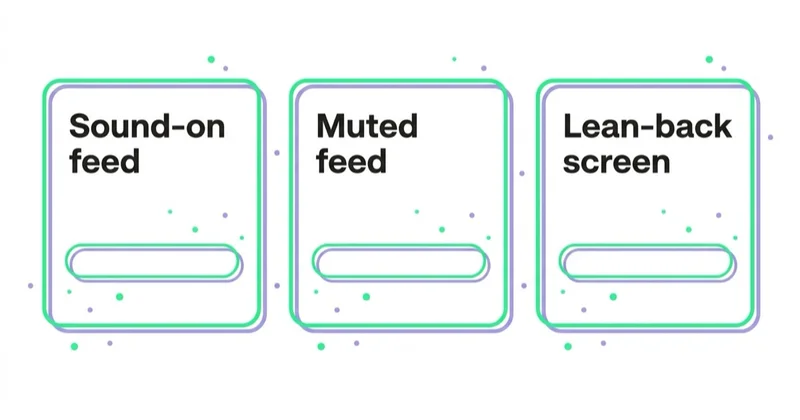
Three viewing environments—and why one edit rarely serves all
Skippable and non-skippable in-stream
The ad appears around content the viewer deliberately chose. In skippable in-stream, the viewer can leave after the initial non-skippable period, so the opening must establish relevance before the skip decision. Non-skippable formats buy completion by design; completion rate therefore does not mean the same thing as a voluntarily watched skippable ad.
Landscape still matters for conventional YouTube and connected-TV inventory, although responsive systems may also use square and vertical assets. Large-screen viewing changes legibility and interaction: remote-control viewers do not behave like mobile-feed users.
Feed video
The ad appears among posts, images, links and videos. It competes with the next scroll rather than a skip button. The first visible frame, on-screen proposition and motion pattern must communicate before a voiceover has time to develop.
Feed placements can support several ratios, but “accepted” does not mean “optimal”. Cropping, letterboxing and interface overlays can reduce clarity even when the file passes upload validation.
Full-screen short-form video
Reels, Shorts and TikTok create a swipe-driven, sound-rich environment where creator language, pacing and cultural fit influence whether the ad feels worth watching. Vertical 9:16 is the native canvas, and interface elements occupy meaningful parts of it.
The same opening can behave differently across all three short-form platforms because the auction, audience, recommendation context and interaction design differ. “Short-form” is a family, not one universal placement.
What counts as a video view in 2026?
The table below illustrates why the word must always be qualified. Platform definitions and availability can change, so confirm them in the current help centre and in the actual campaign setup.
| Platform and metric | Simplified current definition | What it is useful for |
|---|---|---|
| YouTube TrueView view: skippable in-stream | 30 seconds, completion if the ad is shorter, or an eligible interaction | Comparing engagement among eligible YouTube video formats |
| YouTube Shorts engagement/view criteria | Depends on video length; for videos over 10 seconds, five seconds or CTA click can count in relevant reporting | Diagnosing Shorts behaviour—not equating it with in-stream |
| Meta two-second continuous view | At least two continuous seconds; most such views have at least 50% of pixels on screen | An early-retention signal |
| Meta ThruPlay | Completion when under 15 seconds, or at least 15 seconds for a longer video | Comparing deeper viewing within Meta placements |
| TikTok video view | The video starts playing in an impression session | Delivery-level play count |
| TikTok two- or six-second view | Reaches the stated duration, with specific completion/interaction conditions | Retention checkpoints |
| TikTok focused view | Six or 15 seconds, accelerated-view eligibility or an interaction under the product's rules | Optimisation and billing for focused-view campaigns |
YouTube bumper and non-skippable in-stream ads do not generate TrueView views because the viewer cannot choose to keep watching in the same way. YouTube public view counts are also distinct from the TrueView metric used for Google Ads billing in a cost-per-view Video View Campaign.
Meta's organic “view” labels can differ from its paid optimisation metrics. TikTok's base “video views” can start at playback, while its focused-view objective uses a more demanding event. Pulling a generic “views” column from each dashboard therefore produces a polished but invalid comparison.
Objective, optimisation, billing and reporting are four settings
Before approving a media plan, ask:
- Campaign objective: what broad result is the campaign configured to pursue?
- Optimisation event: which users is the delivery system trying to find?
- Billing event: when does spend accrue—per impression, view, click or another event?
- Reporting metric: which column is displayed as “result” or “view” in the interface?
A YouTube Video View Campaign using CPV, a Meta awareness campaign optimising for ThruPlay and a TikTok focused-view campaign may all be described as buying video views. Their qualifying events, eligible placements and auction mechanics are different.
Billing method does not guarantee quality. CPM inventory can produce strong attention and outcomes; CPV buying can produce cheap qualifying views that do not change behaviour. Judge the purchased event in the context of reach quality, creative response and business effect.
A fair cross-platform measurement framework
Level 1: reconcile delivery
Compare spend, impressions, reach, frequency and CPM, but annotate placement mix and device. A connected-TV impression and a mobile feed impression are not interchangeable exposures even if both cost the same.
Look for:
- frequency distribution, not just average frequency;
- unique reach and overlap where measurable;
- geography, audience eligibility and delivery concentration;
- invalid-traffic and brand-safety controls;
- placement and device splits.
Level 2: create common attention checkpoints
Use watch time in seconds, quartiles and completion within similar creative lengths and placements. If a common duration is required, calculate an agreed checkpoint—such as cost per person reaching six seconds—only where each source can support a genuinely comparable definition.
Do not assume that a six-second in-stream exposure equals six seconds in a swipeable feed. The number is normalised; the experience is not.
Level 3: reconcile business outcomes
Compare landing-page visits, qualified leads, app events, purchases or contribution using the same business definition. Where possible, use first-party analytics or a warehouse as the common layer and document attribution rules.
Platform-reported cost per purchase is still not automatically comparable. One platform may claim a view-through conversion under a longer window while another receives only click-based credit. Deduplicate outcomes and report click-through and view-through contributions separately where the data allows.
Level 4: measure causality
Use brand-lift studies for awareness questions and conversion-lift, holdout or geo experiments for commercial questions. Blended revenue or marketing efficiency ratio can reveal whether total business results moved, but it cannot isolate a channel on its own.
Our guide to incrementality testing explains how to choose an experiment that matches the decision.
Creative diagnostics that lead to action
A useful creative report follows the viewer's progression:
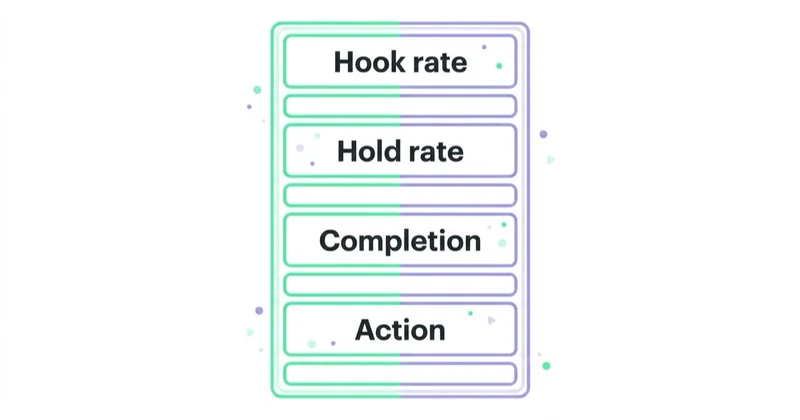
| Diagnostic | Question it helps answer | Possible response |
|---|---|---|
| First-frame clarity | Can the audience identify relevance immediately? | Change opening visual, audience cue or on-screen line |
| 2- or 3-second retention | Does the hook interrupt the scroll? | Test a different hook mechanism |
| 6-second retention | Did the ad establish a reason to continue? | Bring proposition or proof forward |
| Midpoint retention | Is the argument developing or repeating? | Tighten body and remove setup |
| Completion | Does the ending earn attention? | Shorten or restructure payoff |
| Click or engaged visit rate | Does interest translate into action? | Clarify CTA and landing-page promise |
| Conversion quality | Did the creative attract the right person? | Refine claim, qualification and offer |
Absolute benchmarks often mislead because length, placement, objective and audience change the denominator. Compare variants within the same controlled setup and use the metrics to locate a problem, not declare a universal winner.
Hooks do different jobs in different placements
An effective hook is not simply loud motion or a large caption.
For skippable in-stream, it can state the audience's problem or create an unresolved question before the skip decision. For feed, the first frame needs immediate visual meaning because the scroll is already in progress. For short-form, the opening often needs to match the platform's pacing and creator grammar without disguising the fact that it is advertising.
Useful hook families include:
- a specific problem the intended customer recognises;
- an unexpected product demonstration;
- a credible outcome with the mechanism immediately following;
- comparison or contrast;
- an objection answered directly;
- a story already in motion;
- a strong visual transformation.
Avoid hooks that win curiosity from the wrong audience. High retention followed by weak qualified action may mean the opening is entertaining but commercially misaligned.
Test hook variants against a stable body and CTA first. Then test proof, offer and format. The process is covered in our creative testing framework.
Production specifications that affect performance
Aspect ratio and framing
Create native masters for the placements that matter. A centre-cropped 16:9 film rarely becomes a convincing 9:16 ad. Plan close-ups, product demonstrations and negative space for both orientations during the shoot.
Safe zones
Usernames, captions, engagement controls and CTA buttons overlay the asset. Keep essential copy, faces, product detail and disclaimers inside the current placement-safe area. Check the preview tool rather than relying on one static template for every platform.
Audio, captions and accessibility
Meta Feed videos may autoplay without sound, while Reels defaults can be sound-on depending on user settings. TikTok and Shorts are strongly audio-led. Build an ad that communicates core meaning visually and becomes stronger with sound.
Provide accurate captions for speech, readable contrast and sufficient display time. Captions support accessibility and comprehension; they should not be used to cover the entire screen with a transcript.
Duration and pacing
There is no universally ideal duration. A 35-second demonstration can outperform a 10-second montage when the product requires proof. A simple offer may need six seconds. Remove every second that does not improve understanding, belief or action—but do not cut the evidence needed to make the claim credible.
Rights and disclosure
Clear music, talent, creator, stock and location rights for paid use, markets, duration and adaptations. Identify paid partnerships and apply required advertising disclosures. A viral organic sound is not automatically licensed for a brand campaign.
Build a creative system, not a single video
A scalable production plan uses modular components:
- 4–8 hooks for distinct motivations or objections;
- 2–3 bodies that explain different mechanisms or use cases;
- proof modules: demonstration, review, data, expert or comparison;
- offer and CTA variants;
- native 9:16 and 16:9 masters where both environments matter;
- short and longer assemblies based on the argument, not arbitrary cutdowns.
Name assets consistently and attach creative attributes to reporting. “Video 17” teaches little; “problem hook + product demo + customer proof + consultation CTA” creates reusable learning.
Do not change audience, bid strategy and creative simultaneously in a hook test. Hold the surrounding conditions stable enough to interpret the result and establish a minimum spend or outcome threshold before choosing a winner.
Brand safety, suitability and placement quality
Video can appear next to creator, publisher or user-generated content. Use platform inventory controls, exclusions and third-party verification where risk and budget justify it. Review actual placement reports when available.
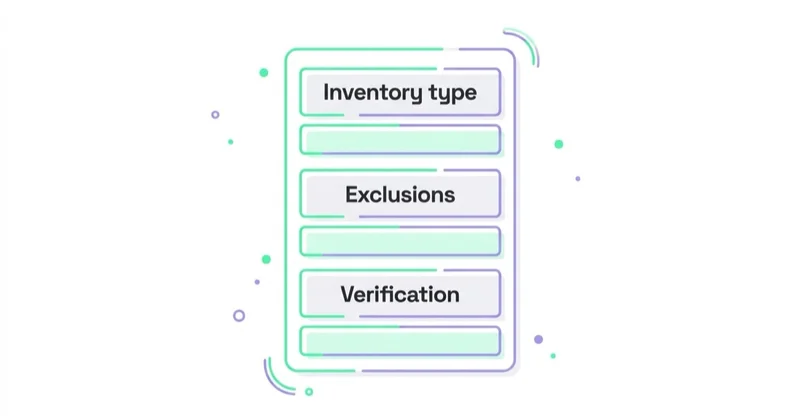
Brand safety asks whether content is broadly harmful. Brand suitability asks whether otherwise permitted content is appropriate for a specific advertiser. A family brand and a news publisher may make different suitability decisions without either being universally correct.
Overly restrictive controls can reduce reach and increase cost. Document the risk tolerance, apply controls proportionately and review the delivery impact rather than selecting every exclusion by default.
The Space Ads operating approach
We plan video campaigns from the business decision backwards:
- define whether the job is incremental reach, consideration, demand capture or conversion;
- select placements and optimisation events that match that job;
- specify native creative systems for those environments;
- establish platform-level creative diagnostics and a separate cross-channel scorecard;
- connect outcomes to first-party measurement;
- design a lift or incrementality test when channel contribution is the real question;
- feed creative learnings back into the next production cycle.
This avoids asking one cost-per-view column to make decisions it was never designed to support. How this connects to production is described on our video production page.
Common mistakes
| Mistake | Better practice |
|---|---|
| Compare generic “views” across platforms | Record the exact threshold and use views as placement-specific diagnostics |
| Assume CPV means paying for equal attention | Inspect format, qualifying event, viewability and retention |
| Compare platform cost per purchase without adjustment | Reconcile attribution windows and first-party outcomes |
| Force one landscape film into every placement | Produce native masters and modular variants |
| Design only for muted playback | Communicate visually and use sound as an additional creative layer |
| Optimise for retention alone | Connect attention to qualified action and incremental impact |
| Judge a channel on last click | Use blended evidence plus an appropriate causal test |
| Ignore content adjacency | Set proportionate safety and suitability controls |
FAQ
What counts as a video view?
It depends on the platform, format and selected metric. A view can mean playback started, two continuous seconds, six seconds, 15 seconds, 30 seconds, completion or an interaction. Always state the exact definition next to the number.
Can cost per view be compared between YouTube, Meta and TikTok?
Not directly. The qualifying events and inventory differ. Compare CPV only within the same definition, then use a common outcome framework and experimentation for cross-channel budget decisions.
Is a completed view a sign that the ad worked?
It shows that playback reached the end under the platform's rules. Completion can result from interest, short duration or a non-skippable format. Pair it with reach, watch-time distribution, response quality, brand lift or conversion evidence.
Should video ads be vertical or landscape?
Use the orientation native to the priority placement. Full-screen short-form generally needs 9:16; conventional in-stream and connected TV often need 16:9. Produce both when the media plan genuinely uses both rather than relying on automatic crops.
Do video ads need captions?
Yes when they contain speech or information needed for comprehension. Captions improve accessibility and support sound-off viewing. Keep them accurate, legible and inside safe zones while ensuring the visual story also works.
How long should a video ad be?
Long enough to establish relevance, explain the mechanism, provide sufficient proof and ask for the next step—without redundant setup. Test duration by placement and proposition rather than imposing one universal limit.
How should video channels be evaluated for sales?
Start with a consistent first-party definition of the sale or qualified lead, reconcile platform attribution differences and examine blended performance. Use a holdout, geo or conversion-lift study when deciding whether a channel caused additional outcomes.
Key takeaways
- Video platforms sell different inventory and define views differently.
- Separate campaign objective, optimisation event, billing event and reporting metric.
- Normalising a time threshold helps, but it does not make viewing environments identical.
- Creative diagnostics should explain where and why viewers leave, not serve as a channel-ranking shortcut.
- Native framing, safe zones, audio, captions, rights and modular production all affect the result.
- Business outcomes require attribution reconciliation; causal budget decisions require experiments.
For related comparisons, read TikTok vs Instagram Reels vs YouTube Shorts and static vs video ads.
Sources and further reading
- About YouTube ads and view metrics — Google Ads Help
- Awareness objective and video-view performance goals — Meta for Business
- Reels ads creative and safe zones — Meta for Business
- Video play metrics — TikTok Ads Manager Help
- Video views objective — TikTok Ads Manager Help
- Incrementality testing
- Ad creative for Meta, TikTok and Google
Continue reading
How Much Do LinkedIn Ads Cost?
LinkedIn Ads have no fixed CPC or CPM. Cost is set by the audience auction, objective, bidding and relevance. Use this framework to model an affordable CPL, opportunity cost and test budget.

Pinterest Performance+: What You Gain and What You Give Up
Pinterest Performance+ simplifies setup, bidding, targeting and creative, but some controls change materially — especially in catalogue Sales campaigns. Learn what is automated, what remains yours and how to test it fairly.
Social Media Management Cost: What Drives the Price
Social media management can mean scheduling client-supplied posts or running strategy, production, publishing and community care. This guide gives practical budget ranges and shows how to compare proposals on the work and outcomes included.