The 7Ps marketing mix is a framework for reviewing the main controllable elements of a marketing strategy: Product, Price, Place, Promotion, People, Process and Physical Evidence.
It expands the classic 4Ps model with three elements that are especially important for services, SaaS, ecommerce, digital products and experience-led businesses. The model is useful because it reminds teams that marketing is not only advertising. Sometimes the real growth problem is the offer, price, delivery process, proof, customer service or buying experience.
TL;DR
- The 7Ps are Product, Price, Place, Promotion, People, Process and Physical Evidence.
- The model expands the classic 4Ps by adding People, Process and Physical Evidence.
- 7P is especially useful for services, digital businesses, SaaS, ecommerce and any offer where experience affects trust.
- It helps diagnose whether the problem is truly promotion or whether pricing, product, process or proof is blocking conversion.
- Each P affects positioning, conversion rate, customer experience and profitability.
- In ecommerce, 7P covers product content, pricing, channels, ads, support, checkout and trust signals.
- In B2B and services, 7P helps connect sales, delivery, proof and customer experience.
- The model should be used as an audit tool, not as an academic list.
What is the 7Ps marketing mix?
The 7Ps marketing mix is a strategy framework that organizes seven areas:
- Product: what is offered and what problem it solves;
- Price: how value is priced and perceived;
- Place: where and how the offer is delivered;
- Promotion: how demand is created and captured;
- People: who influences the customer experience;
- Process: how the customer moves from interest to outcome;
- Physical Evidence: what proof makes the offer credible.
The original 4Ps model focused on Product, Price, Place and Promotion. The extended 7Ps model added People, Process and Physical Evidence to better reflect services and intangible experiences.
Why 7P matters in digital marketing
Digital marketing often over-focuses on promotion: ads, SEO, content, social media and email. Those channels matter, but they do not work in isolation.
If the product is unclear, the price is misaligned, the checkout is painful or trust signals are weak, campaigns will struggle. If sales follow-up is slow, more leads may not improve revenue. If the process after payment is confusing, repeat purchase may fall.
The 7Ps model helps identify whether the problem is inside the ad account or outside it.
For connected planning, read How to Write an Effective Marketing Plan Step by Step.
1. Product
Product means the offer itself. It can be a physical product, service, subscription, software, course, consultation, package, marketplace listing or digital asset.
Product analysis should answer:
- What problem does the offer solve?
- Who is it best for?
- What outcome is promised?
- What features support that outcome?
- What proof shows the offer works?
- What alternatives does the customer compare?
- What is included and excluded?
- What makes the offer different?
- What creates repeat purchase or retention?
In services, the product often includes process, expertise, support, delivery quality and accountability. In SaaS, the product includes onboarding, integrations, support, reliability and feature depth. In ecommerce, product includes assortment, variants, photos, descriptions, reviews and availability.
Useful product checks:
| Business type | Product questions |
|---|---|
| Ecommerce | Are descriptions, images, variants and stock clear enough to buy? |
| SaaS | Does the product solve a specific workflow problem better than alternatives? |
| Agency or service | Is the scope clear, or is the offer too vague? |
| Education | Is the learning outcome and difficulty level clear? |
| Marketplace | Is the inventory quality consistent enough to trust? |
2. Price
Price is not only the amount charged. It communicates positioning, value, risk and expectations.
Pricing decisions include:
- price level;
- package structure;
- discount policy;
- payment terms;
- subscription model;
- free trial;
- guarantee;
- delivery cost;
- setup fee;
- margin;
- customer acquisition cost;
- lifetime value.
Low price can reduce friction, but it can also reduce perceived quality. High price can increase margin, but it requires stronger proof and clearer value.
Pricing should be evaluated together with the offer and target audience. A price that works for one segment can block another.
In ecommerce, price strategy also includes shipping thresholds, bundles, promotions, marketplaces, return rates and product-level margin. In B2B, price includes procurement risk, contract length, implementation cost and internal approval.
3. Place
Place means where and how the customer can buy, access or start the service.
In digital businesses, place can include:
- website;
- ecommerce store;
- marketplace;
- app;
- landing page;
- sales call;
- partner channel;
- social commerce;
- local store;
- booking system;
- distributor;
- self-service portal.
Good distribution matches customer behavior. If users want to compare online but must call for basic information, friction increases. If a product is advertised heavily but unavailable in key markets, promotion wastes budget.
Place should answer:
- Where does demand appear?
- Where does the audience prefer to buy?
- Is the experience mobile-friendly?
- Are channels consistent?
- Can the customer complete the next step easily?
- Does distribution support the brand promise?
- Are delivery, access and availability clear?
For online selling context, read What Is Internet Marketing and What Do You Need to Know?.
4. Promotion
Promotion covers how the market learns about the offer and why it should care.
It can include:
- SEO;
- Google Ads;
- Meta Ads;
- TikTok Ads;
- YouTube;
- Demand Gen;
- email marketing;
- PR;
- influencer or creator activity;
- content marketing;
- events;
- sales outreach;
- affiliates;
- referrals.
Promotion works best when the first three Ps are clear. Advertising cannot permanently solve a weak offer, unclear pricing or poor availability.
Promotion should have channel roles. Search captures existing demand. Content and YouTube can educate. Meta and TikTok can create demand and test creative angles. Email can retain and reactivate. CRO improves the value of all traffic.
For channel selection, read Effective Online Advertising: Which Type of Advertising Works Best?.
5. People
People includes everyone who affects the customer experience:
- sales;
- support;
- consultants;
- account managers;
- implementation teams;
- creators;
- delivery partners;
- store staff;
- founders;
- customer success;
- reviewers and community members.
In services and B2B, people are often part of the product. A client buys trust in the team, not only a list of deliverables. In ecommerce, support quality, delivery communication and returns handling influence repeat purchase.
Questions:
- Who interacts with the customer?
- Are promises and delivery aligned?
- Does sales understand the offer?
- Does support reduce friction?
- Are experts visible enough?
- Are reviews and testimonials credible?
- Is response time acceptable?
- Is customer feedback reaching marketing?
People also affect E-E-A-T signals. Expert authors, visible teams, clear credentials, credible case studies and transparent support channels make the offer easier to trust.
6. Process
Process describes how the customer moves from first contact to successful outcome.
Examples:
- landing page to form submission;
- product view to checkout;
- checkout to delivery;
- lead to sales call;
- onboarding to activation;
- trial to paid subscription;
- service request to implementation;
- complaint to resolution;
- purchase to repeat purchase.
A strong process is predictable, clear and easy to follow. A weak process creates uncertainty and support load.
Process questions:
- What steps does the customer need to complete?
- Which steps create drop-off?
- Are expectations clear?
- Are forms and checkout easy?
- Is response time acceptable?
- Is onboarding structured?
- Are returns, cancellations or support paths clear?
- Is tracking measuring the key steps?
For conversion-focused process work, read What Is Conversion Rate Optimization (CRO) and How Does It Increase Sales?.
7. Physical Evidence
Physical Evidence is proof that makes an intangible or uncertain offer feel real.
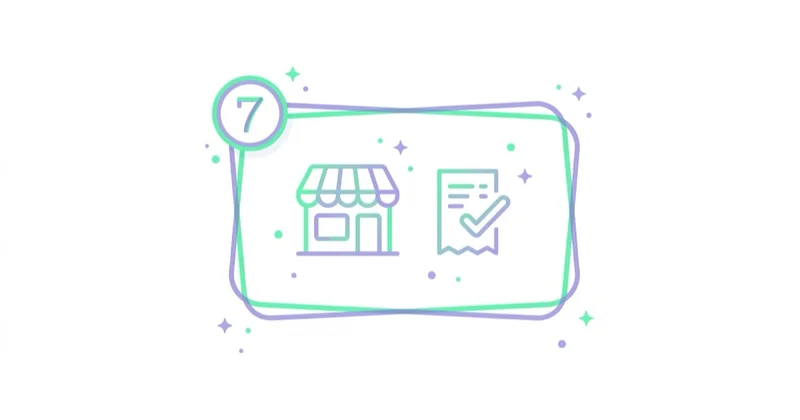
In modern digital marketing, physical evidence includes:
- reviews;
- case studies;
- testimonials;
- screenshots;
- product photos;
- demo videos;
- certifications;
- awards;
- client logos;
- reports;
- delivery information;
- return policy;
- security badges;
- team profiles;
- office or facility photos;
- legal and company details.
This is especially important when the customer cannot fully evaluate quality before buying. A service, SaaS product, agency project or high-value ecommerce purchase needs proof.
Physical evidence should be placed near decision points. A testimonial hidden in a separate page may not help a user hesitating on a pricing page, product page, demo page or checkout.
4P vs 7P
| Model | Elements | Best use |
|---|---|---|
| 4P | Product, Price, Place, Promotion | Simple product strategy and classic go-to-market planning |
| 7P | Product, Price, Place, Promotion, People, Process, Physical Evidence | Services, ecommerce, SaaS, digital journeys and experience-led businesses |
4P can still be enough for simple product planning. 7P is better when customer experience, trust and delivery process strongly affect conversion.
For the classic model, read What Is 4P Marketing and How to Use It?.
7P examples by business type
Service business
- Product: defined service package and outcome.
- Price: project fee, retainer or hourly model.
- Place: website, call, local presence or remote delivery.
- Promotion: SEO, Search Ads, referrals, LinkedIn, content.
- People: consultants, sales, support.
- Process: discovery, proposal, onboarding, delivery, reporting.
- Physical Evidence: case studies, reviews, certifications, portfolio.
SaaS
- Product: software features and use cases.
- Price: plans, trial, seat pricing, usage limits.
- Place: website, app, integrations, marketplaces.
- Promotion: content, Search, review sites, product-led growth, paid social.
- People: sales, support, customer success, implementation.
- Process: onboarding, activation, support, renewals.
- Physical Evidence: demos, screenshots, security documentation, reviews, case studies.
Ecommerce
- Product: assortment, variants, descriptions, photos, availability.
- Price: product price, promotions, delivery cost, bundles, margin.
- Place: store, marketplace, mobile, social commerce, pickup.
- Promotion: Google Shopping, SEO, Meta Ads, TikTok Ads, email.
- People: customer service, advisors, delivery partners, reviews.
- Process: filters, product page, cart, checkout, delivery, returns.
- Physical Evidence: reviews, product photos, trust badges, return policy, company details.
B2B lead generation
- Product: service, audit, consultation, implementation or platform.
- Price: retainer, project fee, quote or custom pricing.
- Place: website, sales call, webinar, event, partner channel.
- Promotion: SEO, thought leadership, LinkedIn, Search Ads, email nurture.
- People: experts, sales, delivery team, leadership.
- Process: lead capture, qualification, discovery, proposal, implementation.
- Physical Evidence: case studies, credentials, client logos, methodology, testimonials.
How to use 7P as an audit
Use the framework as a practical diagnostic tool.
Step 1: Score each P
Score each area from 1 to 5:
- 1 means weak or unclear;
- 3 means acceptable but not differentiated;
- 5 means strong, clear and proven.
Step 2: List evidence
Do not score based on opinion only. Use:
- analytics;
- conversion data;
- sales feedback;
- customer support tickets;
- user research;
- reviews;
- competitor comparison;
- product performance;
- ad account data;
- ecommerce reports.
Step 3: Identify the bottleneck
The weakest P often explains why promotion underperforms. For example:
- many clicks but low conversion may indicate product page, price, process or proof issues;
- many leads but poor sales may indicate audience, offer, people or qualification issues;
- high traffic but low repeat purchase may indicate process, delivery or support issues.
Step 4: Prioritize actions
Do not fix all seven areas at once. Prioritize by impact, effort and risk.
Step 5: Assign owners
Some Ps belong partly outside marketing. Pricing may need finance. Process may need operations. People may need sales and support. Physical evidence may need delivery teams and customers.
7P audit checklist
| P | Audit question |
|---|---|
| Product | Is the offer clear, relevant and differentiated? |
| Price | Does pricing match value, margin and audience expectations? |
| Place | Can customers access or buy the offer where they expect? |
| Promotion | Are channels matched to demand, intent and funnel stage? |
| People | Do sales, support and delivery strengthen trust? |
| Process | Is the journey from interest to outcome easy and measurable? |
| Physical Evidence | Is there enough proof near decision points? |
How we approach this at Space Ads
Advertising is one "P" of seven: promotion. We see it again and again — a campaign "isn't delivering" when the real trouble sits elsewhere, in a price out of step with the market, a weak offer, or a checkout that falls apart. So a "fix our ads" brief starts with a look at the whole mix. Advertising amplifies what's already there; it doesn't supply what's missing. The sharpest optimisation won't rescue a product pricier and harder to get than a rival's — it'll only reveal that faster. That's one of the genuinely useful things paid traffic does: it stress-tests the rest of the mix, quickly and without mercy. When ads underperform despite good management, we read it as a clue to where the real cause lives.
Common mistakes
| Mistake | Why it hurts | Better approach |
|---|---|---|
| Treating marketing as promotion only | The real issue may be offer, price or process | Audit all seven Ps |
| Listing the 7Ps without decisions | The model becomes academic | Turn each P into actions |
| Ignoring People in digital businesses | Service and support affect trust | Include sales, support and delivery |
| Ignoring Process | Users drop off after clicking | Review checkout, forms, onboarding and follow-up |
| Weak Physical Evidence | Buyers do not trust the promise | Add proof near decision points |
| Copying competitors blindly | Positioning becomes generic | Use customer and business evidence |
| Fixing everything at once | Execution becomes chaotic | Prioritize bottlenecks |
FAQ
What are the 7Ps of marketing?
The 7Ps are Product, Price, Place, Promotion, People, Process and Physical Evidence. They are used to review the main controllable parts of a marketing strategy and customer experience.
What is the difference between 4P and 7P?
4P includes Product, Price, Place and Promotion. 7P adds People, Process and Physical Evidence, which are especially useful for services, SaaS, ecommerce and experience-led businesses.
Is the 7Ps marketing mix only for services?
No. It is especially useful for services, but it also works for ecommerce, SaaS, education, marketplaces, B2B and digital products because customer experience and proof affect conversion.
How does 7P help with digital marketing?
It helps diagnose whether marketing performance problems come from promotion or from offer clarity, price, distribution, support, process, checkout, onboarding or lack of proof.
Which P is most important?
There is no universal answer. The most important P is the one currently limiting growth. For some businesses it is Product. For others it is Process, Price or Physical Evidence.
How often should a 7P audit be done?
A lightweight review can be done quarterly. A deeper audit is useful before a redesign, new market entry, pricing change, major campaign launch or conversion optimization project.
Key takeaways
The 7Ps marketing mix is useful because it keeps marketing connected to the whole customer experience. Promotion is only one part of growth. Product, price, distribution, people, process and proof all shape whether users trust the offer and take action.
Use 7P as an audit tool: score each area, gather evidence, identify the bottleneck, prioritize actions and assign owners. The model becomes valuable when it changes decisions, not when it sits in a strategy deck.
Sources and further reading
- Chartered Institute of Marketing - The 7Ps of marketing
- Google Search Central - Creating helpful, reliable, people-first content
- Content Marketing Institute - What is content marketing?
- Stratrix - Marketing Mix 4Ps/7Ps framework
Continue learning
- What Is 4P Marketing and How to Use It?
- How to Write an Effective Marketing Plan Step by Step
- What Is Brand Marketing and How to Use It?
- Target Audience: How to Define Who Your Customers Are
- What Is Conversion Rate Optimization (CRO) and How Does It Increase Sales?
- What Is an Online Advertising Campaign and How to Run One?
Continue reading
What Is Brand Marketing and How to Use It?
Brand marketing builds recognition, trust, memory and preference so a company is easier to choose when buyers enter the market.
What Is 4P Marketing and How to Use It?
4P marketing maps Product, Price, Place and Promotion into one diagnostic view of the business, so underperforming campaigns are not blamed before the offer, margin, access and message are checked. This guide explains how to audit the marketing mix across ecommerce, services, B2B and SaaS, and how to turn the 4Ps into practical growth decisions.
What Is Blue Ocean Strategy and How to Use It?
Blue Ocean Strategy helps businesses create new market space instead of competing only on price and similar features. Learn value innovation, Strategy Canvas, ERRC Grid and practical examples.