Internet marketing is the promotion of a brand, product, service or content through online channels such as search engines, paid advertising, social media, email, websites, marketplaces, video, analytics and conversion optimisation. It is sometimes used interchangeably with digital marketing, but in practice internet marketing focuses mainly on online activity and measurable web-based customer journeys.
Good internet marketing is not a collection of random channels. It is a system: attract the right audience, answer their questions, convert demand into action, measure what happened and continue the relationship after the first visit, lead or purchase.
TL;DR
- Internet marketing includes SEO, paid ads, social media, content, email, video, analytics, CRO, automation and online reputation.
- It works best as a connected system, not as isolated campaigns run by separate teams.
- Different channels solve different problems. Search captures demand, social and video can create demand, email nurtures and analytics connects activity with outcomes.
- Measurement is the main operational advantage, but only when tracking, consent, attribution and business definitions are clear.
- Internet marketing is not only for ecommerce. It is useful for B2B, SaaS, local services, education, recruitment, healthcare, professional services and offline businesses.
- AI search and answer engines make useful, structured, trustworthy content more important.
- The right starting point is strategy, not tools. Define the goal, audience, offer, measurement and priority channels first.
What internet marketing means
Internet marketing is any marketing activity that uses the internet to reach, influence or retain customers.
It can include:
- organic search;
- paid search;
- display advertising;
- paid social;
- organic social media;
- video platforms;
- email marketing;
- content marketing;
- affiliate marketing;
- influencer marketing;
- marketplace marketing;
- online PR;
- webinars;
- landing pages;
- analytics;
- CRM and marketing automation;
- conversion rate optimisation.
The channel list is less important than the job each channel does. A business does not need every channel. It needs the right combination for its market, budget, buying cycle and operational capacity.
For a broader definition, read What Is Digital Marketing and Why Is It Important?.
Internet marketing vs digital marketing
The terms are often used together, but there is a useful distinction.
| Term | Practical meaning |
|---|---|
| Internet marketing | Marketing activity conducted through online channels and web-based customer journeys |
| Digital marketing | A broader term that can include internet channels plus other digital touchpoints, data systems and technology |
In everyday business language, the difference is not always important. What matters more is whether the strategy connects channels, measurement and business outcomes.
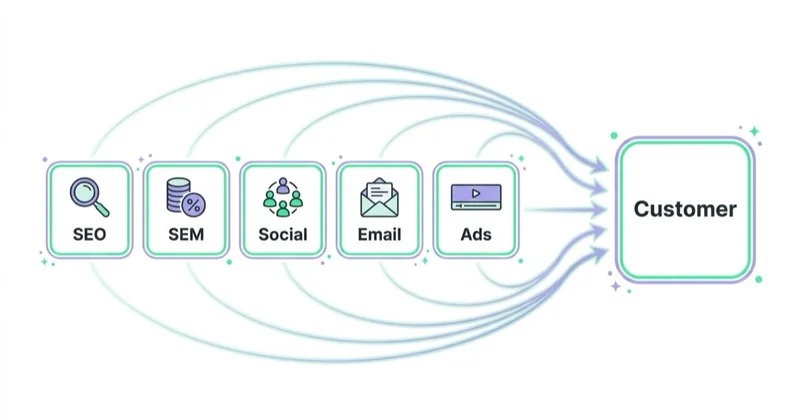
For example, a campaign may start with a YouTube ad, continue through Google Search, bring the user to a landing page, trigger a remarketing audience, send a follow-up email and later connect to a CRM opportunity. That is internet marketing as a journey, not as a single ad.
Why internet marketing is important
Buyers research online
Most buying decisions now include an online stage. A person may search Google, read reviews, compare prices, ask an AI assistant, watch a video, check a social profile, read a case study or look for proof before contacting a company.
This applies beyond ecommerce. A B2B buyer researches vendors. A local service customer checks reviews and opening hours. A patient compares clinics. A student compares courses. A recruiter checks employer brand. An investor checks credibility.
If the brand is absent or unclear during those moments, competitors shape the decision.
Online channels are measurable
Internet marketing can connect activity with outcomes:
- visits;
- leads;
- purchases;
- booked calls;
- subscriptions;
- downloads;
- revenue;
- repeat purchase;
- margin;
- pipeline;
- customer lifetime value.
Measurement is not automatic. It requires analytics, conversion tracking, consent handling, clean campaign naming, defined events and agreement on what counts as a valuable result.
Testing is faster
Online campaigns make it easier to test messages, offers, landing pages, audiences, search terms, creatives, pricing hooks and calls to action. That speed reduces guesswork.
Fast testing is useful only when the business keeps learning. Running ten campaigns without clear hypotheses is not experimentation. It is noise.
Channels can support the full funnel
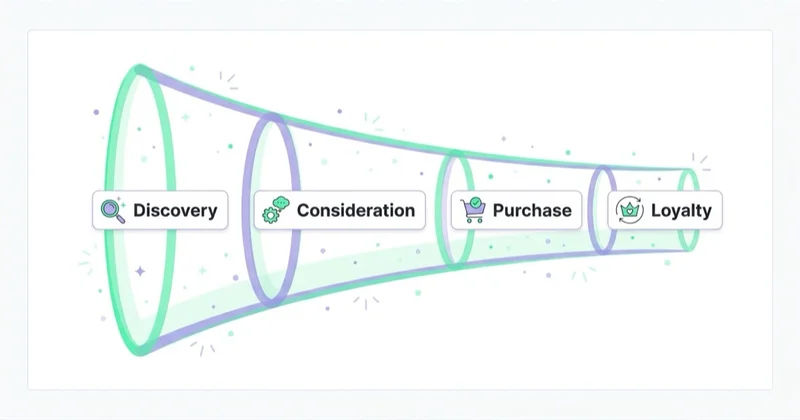
Internet marketing can support awareness, consideration, conversion and retention.
Examples:
- SEO guide creates first discovery.
- Search ad captures high-intent demand.
- Social video explains the problem.
- Email sequence nurtures the lead.
- Case study reduces risk.
- Remarketing brings back comparison shoppers.
- Onboarding content improves retention.
The strongest systems connect these steps instead of judging every channel by immediate last-click sales.
Main areas of internet marketing
SEO
SEO helps a website appear in organic search results. It includes technical accessibility, indexation, content quality, search intent, internal linking, structured data, authority and page experience.
SEO is especially useful when people actively search for solutions, comparisons, instructions, definitions or local services.
It is not instant. It requires useful content, technical consistency and patience. But strong organic visibility can reduce dependence on paid traffic over time.
For deeper technical work, read What Is an SEO Audit and How to Do It Properly?.
Paid search
Paid search includes Google Ads, Microsoft Advertising and other search-based advertising. It captures existing demand because users are already typing queries related to a product, service or problem.
Paid search is useful for:
- high-intent queries;
- lead generation;
- ecommerce sales;
- local services;
- competitor comparison;
- testing landing pages;
- validating keyword demand.
The risk is paying for clicks without understanding intent, margin, conversion quality or sales follow-up.
Paid social
Paid social includes Meta Ads, TikTok Ads, LinkedIn Ads, Pinterest Ads, Snapchat Ads and other platform-based ad systems.
Paid social is usually stronger for demand creation, remarketing, creative testing and audience development than for capturing explicit search demand. It can work very well when the creative explains a problem, shows proof or makes the offer easy to understand.
The platform choice should follow the audience and objective. A B2B enterprise offer may use LinkedIn and Google Search. A visual consumer product may use Meta, TikTok and creators. A local service may combine Meta, Google Search and local SEO.
Content marketing
Content marketing uses useful content to attract, educate and convert an audience. It supports SEO, email, social media, sales enablement, brand authority and AI search visibility.
Examples:
- blog articles;
- guides;
- comparison pages;
- case studies;
- checklists;
- calculators;
- videos;
- webinars;
- newsletters;
- product documentation;
- templates.
The best content answers real questions with practical depth. It should not exist only because a keyword has search volume.
Read more in Content Marketing: A Way to Build a Professional Image of the Company.
Social media
Organic social media can distribute ideas, build trust, show expertise and create recurring contact with an audience. It works best when the brand has a clear voice, useful content and a reason for people to return.
Social media does not have to be the primary sales channel. In many businesses, its role is proof, recall, recruitment, education, community or creative testing.
Email marketing
Email is important because it is closer to an owned audience than paid reach. It can nurture leads, recover carts, onboard customers, distribute content, educate users and drive repeat purchase.
Useful email flows include:
- welcome sequence;
- lead nurture;
- abandoned cart;
- product education;
- post-purchase onboarding;
- renewal reminder;
- win-back;
- newsletter;
- event invitation.
Email performance depends on list quality, consent, segmentation, deliverability and relevance.
Analytics and conversion tracking
Analytics turns online activity into decision-making. Without measurement, it is difficult to know whether traffic is useful, which campaigns produce quality leads or where users drop out.
A practical measurement setup may include:
- GA4 events and key events;
- Google Ads conversion tracking;
- Meta Pixel and Conversions API;
- TikTok Pixel or Events API;
- Consent Mode where required;
- CRM lead stages;
- call tracking;
- ecommerce revenue and margin reporting;
- Looker Studio dashboards;
- UTM governance.
For analytics foundations, read Google Analytics 4: Why Implement It and What Are the Benefits?.
CRO
Conversion rate optimisation improves the percentage of users who take a valuable action. It can involve landing page structure, copy, forms, checkout, page speed, proof, mobile UX, pricing clarity and trust signals.
CRO matters because more traffic is not always the answer. Sometimes the highest-impact move is improving the page that already receives traffic.
For conversion context, read What Is Conversion Rate and How to Increase It?.
How to choose internet marketing channels
Start with the objective.
| Objective | Useful channels |
|---|---|
| Capture existing demand | SEO, paid search, comparison pages, local SEO |
| Create demand | paid social, video, influencer, PR, educational content |
| Generate leads | search, LinkedIn, landing pages, webinars, email nurture |
| Sell ecommerce products | Shopping, Performance Max, Meta Ads, SEO categories, email, remarketing |
| Build trust | content, case studies, reviews, social proof, newsletters |
| Retain customers | email, CRM, loyalty, onboarding, customer education |
| Improve efficiency | CRO, analytics, feed optimisation, landing page testing |
Do not choose channels only because competitors use them. Choose channels because they match audience behaviour, intent, budget and operational capability.
Internet marketing in ecommerce
Ecommerce is one of the clearest internet marketing use cases, but it should not dominate every marketing discussion.
For online stores, important areas include:
- product feed quality;
- Merchant Center;
- Shopping campaigns;
- Performance Max;
- Meta catalogue ads;
- category SEO;
- product page content;
- email automation;
- abandoned cart flows;
- post-purchase retention;
- reviews;
- returns policy clarity;
- checkout conversion;
- margin and stock reporting.
The key ecommerce point is profitability. Revenue without margin is not a marketing success. Campaigns should be evaluated with product margin, return rate, repeat purchase and customer value in mind.
Internet marketing for B2B and services
B2B and service businesses often need a different rhythm.
Useful areas include:
- educational SEO;
- problem-aware content;
- service pages;
- comparison content;
- case studies;
- Google Search campaigns;
- LinkedIn Ads;
- webinars;
- lead magnets;
- CRM-integrated reporting;
- lead scoring;
- email nurture;
- remarketing;
- sales enablement content.
The main risk is optimising for lead volume instead of lead quality. A form submission is not always a valuable lead. The best reporting connects campaigns with qualified opportunities, sales conversations and revenue.
For funnel context, read What Is a Sales Funnel and How to Use It?.
AI search and answer visibility
Internet marketing now includes more than classic search results. People use AI Overviews, ChatGPT, Perplexity and other answer engines to summarise, compare and shortlist information.
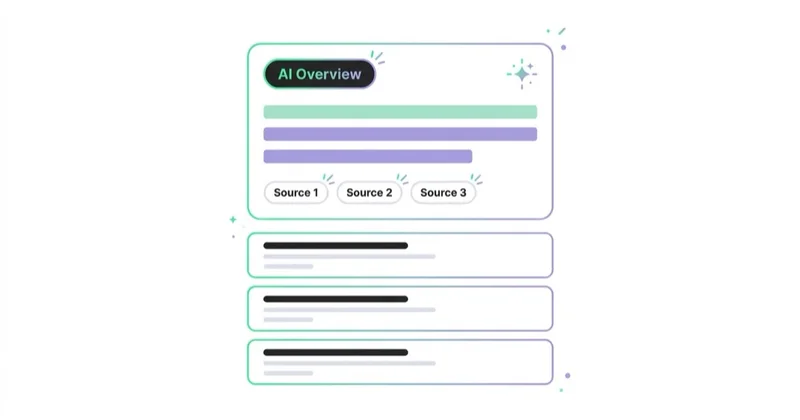
This changes content requirements:
- definitions should be clear;
- pages should answer real questions directly;
- expertise should be visible;
- claims should be sourced;
- entities should be named consistently;
- content should include examples, comparisons and caveats;
- pages should be technically accessible;
- the brand should be present across credible sources, not only its own website.
AI visibility does not replace SEO. It raises the standard for clarity, trust and topical depth.
A practical 90-day plan
Days 1-30: foundation
- define business goals;
- define target audience and offer;
- audit website conversion paths;
- check analytics and conversion tracking;
- review current traffic sources;
- identify priority services or products;
- map existing content;
- choose one or two primary acquisition channels.
Days 31-60: launch focused tests
- create or improve key landing pages;
- launch paid search or paid social tests;
- publish first priority SEO content;
- set up email capture or lead nurture;
- create reporting dashboard;
- test core messages and offers;
- review search terms, audiences and landing page behavior.
Days 61-90: optimise and scale
- cut low-quality traffic;
- improve pages with traffic but weak conversion;
- expand winning keywords or creative angles;
- build remarketing audiences;
- connect CRM or sales feedback;
- refine budget allocation;
- plan next content cluster;
- document learning and repeat the cycle.
The goal of the first 90 days is not to do everything. It is to build a measurable system and learn where the strongest opportunities are.
How we approach this at Space Ads
Most companies have the channels; few have them connected. The edge in internet marketing rarely comes from adding another channel — it comes from the connective tissue between them: shared measurement, and channels that feed each other. Search harvests demand that social created. Email earns from customers the ads brought in. Content hands campaigns a warm audience. Looked at in isolation each one can seem average, which is how a perfectly good channel gets switched off for "not delivering on its own" — when in fact it was feeding the rest. We read internet marketing as one connected system, not a checklist of separate tactics.
Common mistakes
| Mistake | Why it hurts | Better approach |
|---|---|---|
| Starting with tools | Tools do not define strategy | Start with goal, audience and offer |
| Spreading budget too thin | No channel gets enough data | Prioritise fewer channels |
| Measuring only clicks | Clicks can be low quality | Measure leads, sales, revenue and quality |
| Ignoring landing pages | Traffic cannot convert well | Improve page relevance, speed and trust |
| Treating every channel as direct sales | Some channels create demand | Assign channel roles by funnel stage |
| No retention work | Acquisition cost keeps rising | Build email, CRM and lifecycle marketing |
| Weak content | SEO and AI visibility suffer | Publish useful, expert and structured content |
| No consent or tracking governance | Data becomes unreliable or risky | Configure measurement responsibly |
FAQ
Is internet marketing the same as digital marketing?
The terms are often used interchangeably. Internet marketing usually focuses on online channels, while digital marketing can also include broader digital touchpoints and data systems.
What is the best internet marketing channel?
There is no universal best channel. SEO and paid search work well when people already search for the offer. Paid social and video can create demand. Email and CRM are strong for nurture and retention.
How much budget is needed to start?
The budget depends on market, competition, goal and channel. A small budget can work when focused on one or two priorities. Spreading a small budget across too many channels usually slows learning.
Does internet marketing work for offline businesses?
Yes. Many offline decisions start online. Local SEO, Google Ads, reviews, content, social proof and appointment booking can support businesses that sell services or products offline.
Should SEO or paid ads come first?
Paid ads can test demand faster. SEO builds more durable visibility over time. In many cases, the best approach is to use paid data to learn quickly while building SEO assets for the long term.
What should be measured first?
Start with the business action that matters: purchase, lead, booked call, subscription, quote request, demo, store visit or qualified pipeline. Then measure the steps that lead to it.
Conclusion
Internet marketing is most effective when it works as a system. SEO, ads, social media, content, email, analytics and CRO should not compete for attention as disconnected activities. They should support the same business objective.
The best starting point is simple: define the customer, clarify the offer, choose the right channel role, measure meaningful actions and improve the user journey. Ecommerce, B2B, local services and SaaS all use internet marketing differently, but the principle is the same: attract the right demand and turn it into measurable business value.
Sources and further reading
- Google Search Central: SEO Starter Guide
- Google Search Central: Creating helpful, reliable, people-first content
- Google Ads Help: About conversion measurement
- Google Analytics Help: GA4 engagement rate and bounce rate
- Meta Business Help Center: Meta Pixel
- TikTok Business Help Center: TikTok Pixel
Continue learning
- What Is Digital Marketing and Why Is It Important?
- Effective Online Advertising: Which Type of Advertising Works Best?
- How to Write an Effective Marketing Plan Step by Step
- Content Marketing: A Way to Build a Professional Image of the Company
- What Is a Sales Funnel and How to Use It?
- What Is Conversion Rate and How to Increase It?
- How to Plan a Marketing Budget for Effective Digital Marketing
Continue reading
What Is Performance Marketing? (And How It Differs From Growth and Brand)
Performance marketing connects media investment with measurable business outcomes and improves those outcomes through continuous testing. Learn how it works, which channels it covers, how to measure it beyond platform ROAS and how it complements growth and brand marketing.
Content Marketing in B2B: How to Create Content That Supports Sales Pipeline
Content marketing in B2B should help buyers understand problems, compare options, trust the vendor and move through the sales pipeline. This guide shows how to plan content beyond traffic.
Customer Acquisition Strategy: How to Scale Growth Without Wasting Ad Spend
A customer acquisition strategy explains where demand will come from, how channels work together, what a qualified customer is worth, and when paid media can scale without damaging margins.