The Google Search Network is the part of Google Ads where ads can appear next to search results when a user's query is relevant to the advertiser's keywords, products, pages or campaign signals. It includes Google Search surfaces and, if enabled, Google search partner sites and apps.
The Search Network is valuable because it is built around active intent. A person is searching for something now: a product, service, brand, location, comparison, price, problem or solution. That makes Search one of the most important performance channels, but it also makes mistakes expensive. Poor keyword control, weak ads, bad landing pages and unreliable conversion tracking can turn high intent into wasted budget.
TL;DR
- The Google Search Network shows ads around search activity, mainly on Google Search and eligible search partner inventory.
- Search campaigns respond to intent. They work best when keywords, ads and landing pages match what the user is trying to do.
- Search partner traffic can be useful, but it should be reviewed separately because quality and context may differ from Google Search.
- Responsive search ads are the standard text ad format, using multiple headlines and descriptions that Google combines.
- Keyword match types, negative keywords and search term analysis are still central even as automation and Smart Bidding play a larger role.
- Quality Score is a diagnostic tool, not a KPI to optimise in isolation.
- Search should usually work with Performance Max, Shopping, Demand Gen, Display and YouTube, not try to do every job alone.
- For ecommerce, Search is strongest for brand, category, high-intent and strategic query control, while Shopping and Performance Max often handle product-led demand.
What is the Google Search Network?
The Google Search Network is a group of search-related websites and apps where ads can appear. Google's documentation explains that ads can show near search results when someone searches with terms related to the advertiser's keywords.
In practice, Search Network advertising can include:
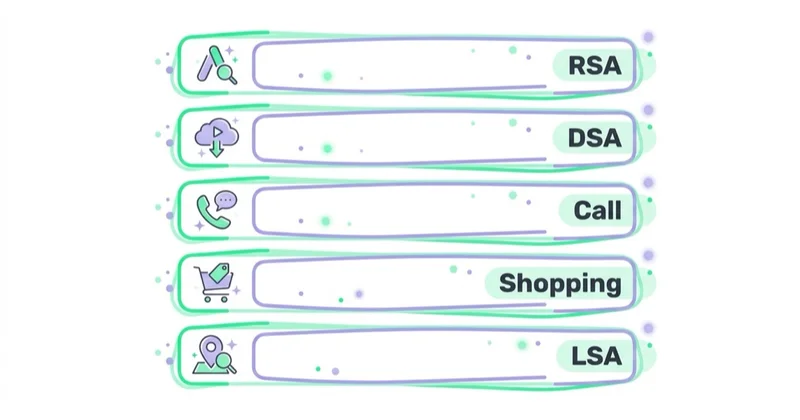
- text ads on Google Search results;
- ads on Google Maps and search-related Google surfaces where eligible;
- Shopping ads connected with product searches;
- Dynamic Search Ads based on website content;
- call-focused ads in relevant contexts;
- ads on Google search partner sites when the setting is enabled.
The key idea is intent. A Search ad is triggered by something a user searched for or by closely related signals. That makes the channel different from Display, YouTube or Demand Gen, where the advertiser often reaches people before they actively search.
Where Search ads can appear
Search ads may appear on Google search results and on other search-related surfaces. Google lists examples such as Google Search, the Shopping tab, Google Images, Google Maps and the Maps app. Search partner inventory can include search pages and other partner contexts.
This does not mean every advertiser should blindly accept every surface. The right network setting depends on the campaign goal, budget, geography, conversion quality and reporting discipline.
Google Search
Google Search is the core surface most advertisers think of first. It is usually where intent is clearest and where campaign performance is easiest to interpret.
Google search partners
Search partners can extend reach beyond Google Search. Google says search partners are included by default when a Search Network campaign is created, and advertisers can remove them in campaign settings.
Search partners can be useful, especially in accounts that need more volume. They can also produce traffic that behaves differently from Google Search. For that reason, partner performance should be segmented and reviewed. If conversion quality, lead quality or ROAS is weaker, testing Google Search only may be better.
Google also notes that clickthrough rate on search partner sites does not affect Quality Score on Google.
Search Network vs Display Network
| Area | Search Network | Display Network |
|---|---|---|
| Trigger | Search query or search intent | Browsing, apps, placements, audiences, content |
| User state | Actively searching | Reading, watching, browsing or using an app |
| Main creative | Text ads, assets, Shopping-style formats | Images, responsive display, video and visual assets |
| Best for | Demand capture and high-intent action | Awareness, remarketing and demand support |
| Risk | Wrong query intent | Weak placement quality or cold audience |
| Measurement | Often closer to conversion | Often more assistive |
Search is not always better. It is simply different. It captures existing demand. Display, YouTube and Demand Gen can help create or shape demand before the search happens.
For the display side, read What Is the Google Display Network and How to Use It?.
Types of ads on the Search Network
Responsive search ads
Responsive search ads let advertisers add multiple headlines and descriptions. Google Ads then tests combinations and shows versions that may be more relevant to a user's search.
Good responsive search ads need modular copy. Each headline should make sense alone and in combination. If a claim must always appear, pinning can be used carefully, but excessive pinning can reduce flexibility.
For a deeper explanation, read What Are Responsive Search Ads in Google Ads?.
Dynamic Search Ads
Dynamic Search Ads use website content to match relevant searches and generate ad headlines. They can help cover long-tail searches that are hard to map manually.
DSA is useful for large sites, ecommerce categories, content-heavy websites and accounts that want to discover missing query demand. It is not a substitute for good website structure or negative keyword control.
Read more in What Are Dynamic Search Ads (DSA) and Are They Worth Using?.
Shopping ads
Shopping ads can appear on search-related surfaces and show product information such as image, title, price and merchant details. They are feed-driven and especially important for ecommerce.
Shopping should not be mixed mentally with ordinary text ads. Product feed quality, Merchant Center setup, price competitiveness and product page quality affect outcomes.
Call-focused ads
Call-focused ads can be useful for businesses where phone calls are the main conversion path, such as local services, urgent repairs, healthcare appointments, legal enquiries or restaurant bookings.
The risk is call quality. A campaign can generate calls that are short, irrelevant or outside working hours if tracking and scheduling are weak.
Search partner image and video contexts
Google documentation notes that search partners can host image and video ads. This is one reason network settings should be reviewed carefully. The Search Network is not always a pure Google results page environment when partners are included.
How Search campaigns work
A Search campaign usually includes:
- campaign objective;
- budget;
- bidding strategy;
- location and language settings;
- network setting;
- ad groups;
- keywords;
- match types;
- negative keywords;
- responsive search ads;
- ad assets;
- landing pages;
- conversion goals;
- audiences for observation or targeting where appropriate.
When a user searches, Google evaluates whether keywords, ads, bids, quality, landing pages and other signals are eligible for the auction. Winning an auction is not only about paying more. Relevance and expected user experience also matter.
Keywords and match types
Keywords are the advertiser's way of telling Google which search intent should be considered. Match types decide how closely a query needs to match the keyword.
| Match type | Main role | Risk |
|---|---|---|
| Exact match | Highest steering and control | Less reach |
| Phrase match | Moderate control and reach | Can still match wider intent than expected |
| Broad match | Most reach and automation signal use | Needs strong tracking and negatives |
| Negative keywords | Exclude unwanted searches | Can block useful queries if overused |
Google's current matching systems use more than literal words. Broad match can consider signals such as recent search activity, landing pages, assets and other keywords in an ad group. This can be powerful when conversion tracking and bidding are strong. It can be wasteful when the account has poor data or vague landing pages.
For the full topic, read What Are Keyword Match Types in Google Ads and How to Choose Them?.
Search partners: when to include or remove them
Search partners should be treated as a testable network setting, not a default belief.
Consider including search partners when:
- the campaign has strong conversion tracking;
- Google Search volume is limited;
- lead or sales quality remains acceptable;
- CPA or ROAS is stable;
- the account has enough budget to test;
- reports are segmented by network.
Consider removing search partners when:
- traffic quality is weaker;
- lead quality drops;
- spend increases without business outcomes;
- reporting becomes unclear;
- brand safety or context concerns matter;
- the campaign is a tight high-intent test.
The practical workflow is simple: launch with a clear hypothesis, segment results by network and make the setting earn its place.
Campaign structure for the Search Network
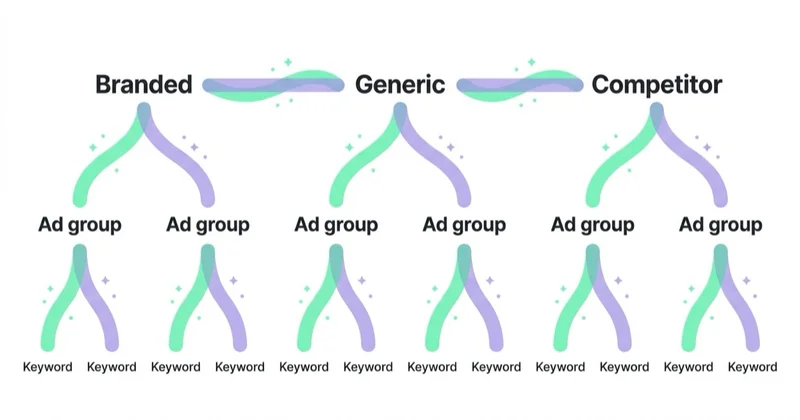
Good Search structure separates different intent types.
Brand campaigns
Brand campaigns target searches for the company, product or brand name. They often have strong performance, but they should be reported separately because they capture existing demand.
Generic campaigns
Generic campaigns target non-brand product, service and category intent. They are usually more expensive and more important for growth.
Competitor campaigns
Competitor campaigns can sometimes work, but they need legal caution, careful copy, lower expectations and clean reporting. They often have weaker Quality Score and conversion rate than brand or generic campaigns.
Category or service campaigns
These campaigns group searches by product category, service line, location or customer problem. They are easier to optimise when each ad group has a clear landing page.
DSA or long-tail coverage
Dynamic Search Ads can cover long-tail demand and reveal missing keyword opportunities. They need exclusions and URL control.
Search in ecommerce
In ecommerce, Search Network campaigns can support:
- brand protection;
- category searches;
- product type searches;
- high-margin categories;
- competitor comparisons;
- seasonal campaigns;
- sale searches;
- local inventory where relevant;
- queries that Shopping or Performance Max does not handle with enough message control.
Example: a store may use Performance Max and Shopping for product feed coverage, while Search controls messages for strategic categories such as "waterproof hiking boots for women" or "organic baby skincare set".
Search is useful when the text of the query matters and the advertiser wants control over ad copy and landing page choice.
Search for B2B and services
For B2B and service businesses, Search can target high-intent problem and solution queries:
- "google ads audit agency";
- "salesforce implementation partner";
- "cybersecurity consultant";
- "commercial cleaning quote";
- "accounting firm for startups";
- "consent mode v2 implementation".
B2B Search should be measured by lead quality, pipeline fit and sales outcomes, not only form submissions. A broad campaign that generates many weak leads can look good in Google Ads and still waste sales time.
Quality Score and landing pages
Quality Score is a diagnostic tool available at keyword level. Google describes it as a way to understand how ad quality compares with other advertisers. It is based on expected CTR, ad relevance and landing page experience.
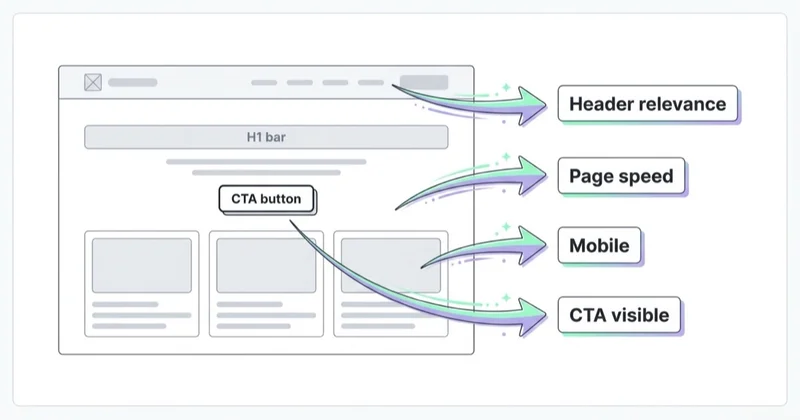
It should not be treated as the main KPI. A campaign can have decent Quality Score and still be unprofitable. It can also have strategic keywords with lower scores because the auction is competitive or the query is difficult.
Use Quality Score to find improvement areas:
- Does the ad match the search intent?
- Does the landing page answer the query?
- Is the page fast and usable on mobile?
- Is the offer clear?
- Are keywords grouped by intent?
- Are ads too generic?
For more detail, read Quality Score in Google Ads: What It Is and How to Improve It.
Ad assets on the Search Network
Ad assets add extra information to Search ads. They can include sitelinks, callouts, structured snippets, calls, locations, prices, promotions and other eligible assets.
Assets improve usefulness when they help the user choose the next step. They are weak when they repeat generic claims.
Good examples:
- category sitelinks for ecommerce;
- pricing page link for SaaS;
- phone asset for urgent local services;
- location asset for physical branches;
- promotion asset for a sale period;
- structured snippets for service types.
Read more in What Are Google Ads Extensions (Assets) and How to Use Them?.
Measurement and optimisation
Important Search Network metrics include:
- cost;
- impressions;
- clicks;
- CTR;
- CPC;
- conversions;
- conversion value;
- CPA;
- ROAS;
- impression share;
- search lost IS due to budget or rank;
- search terms;
- network segment;
- Quality Score diagnostics;
- landing page conversion rate;
- lead or sale quality.
Do not optimise only for CTR. A high CTR on the wrong query is expensive. Do not optimise only for CPA if lead quality is poor. Search should be judged by business outcomes.
How we approach this at Space Ads
On most accounts the Search Network is where we start. It catches demand that already exists: someone is actively searching, so intent runs highest and the measurement is cleanest, and you know what you're paying for. Search comes first — protect the brand, claim the high-intent generic phrases — before we add the channels that create demand, like social or video. The order is not cosmetic: cut Search to chase a fashionable new format and you usually leave the cheapest, most profitable conversions on the table. On its own Search rarely scales a business, since it's capped by the size of existing demand, but it's almost always the safest place to begin and the benchmark we measure everything else against.
Common mistakes
| Mistake | Why it hurts | Better approach |
|---|---|---|
| Leaving search partners unreviewed | Partner traffic may behave differently | Segment by network and test |
| Mixing brand and generic results | Reports look better than acquisition reality | Separate campaign types |
| Broad match without tracking | Automation has weak signals | Fix conversions first |
| No negative keyword routine | Irrelevant queries accumulate | Review search terms regularly |
| One landing page for every intent | Relevance and conversion rate drop | Match page to query intent |
| Generic RSA copy | Ads fail to answer the search | Use modular, intent-specific messages |
| Optimising Quality Score as the goal | It is diagnostic, not a business KPI | Use it to guide improvements |
| Ignoring assets | Ads provide less useful information | Build assets by intent and stage |
FAQ
What is the Google Search Network?
The Google Search Network is the group of search-related sites and apps where Google Ads can appear when a user's search is relevant to the advertiser's keywords, products or campaign signals.
Is the Google Search Network the same as Google Search?
No. Google Search is the core search results surface. The Search Network can also include Google search partners and other eligible search-related surfaces depending on settings.
Should search partners be enabled?
They can be tested, but they should not be ignored. Segment performance by network and compare conversion quality, CPA, ROAS and lead quality.
What ads appear on the Search Network?
Common formats include responsive search ads, Dynamic Search Ads, Shopping ads, call-focused ads and eligible partner inventory formats.
Is Search better than Performance Max?
Search gives more control over queries and messages. Performance Max covers more Google inventory with more automation. Many accounts need both, with clear reporting separation.
Why are negative keywords important?
Negative keywords stop ads from showing on unwanted searches. They protect budget and help keep traffic aligned with business intent.
Does Quality Score affect the auction?
Google describes Quality Score as a diagnostic tool, not a KPI and not a direct auction input. It is still useful for identifying ad, keyword and landing page issues.
Conclusion
The Google Search Network is still one of the most important places to capture high-intent demand. Its strength is also its risk: when someone searches with clear intent, a poorly matched ad or landing page wastes expensive opportunity.
Use Search when query intent matters. Separate brand, generic, competitor and long-tail logic. Review search partners instead of assuming they are good or bad. Build responsive search ads and assets around real user intent. Connect Search with Performance Max, Shopping, YouTube, Display, Demand Gen and remarketing so it captures demand that the rest of the system helps create.
If you want the search network to work as part of a deliberate system, we can run your Google Ads campaigns for you.
Sources and further reading
- Google Ads Help: About the Google Search Network
- Google Ads Help: Create a Search campaign
- Google Ads Help: About keywords in Search Network campaigns
- Google Ads Help: About keyword matching options
- Google Ads Help: About responsive search ads
- Google Ads Help: About Quality Score for Search campaigns
- Google Ads API: Get started with Search campaigns
Continue learning
- What Are Keyword Match Types in Google Ads and How to Choose Them?
- What Are Responsive Search Ads in Google Ads?
- What Are Google Ads Extensions (Assets) and How to Use Them?
- Quality Score in Google Ads: What It Is and How to Improve It
- What Are Dynamic Search Ads (DSA) and Are They Worth Using?
- Performance Max Campaigns: What to Know and How to Create Them
Continue reading

Margin-Based Conversion Value in Google Ads: When Ecommerce Should Use It
If Google Ads receives gross revenue as conversion value, value-based bidding optimises toward gross revenue. For ecommerce stores with different product margins, a value closer to gross margin or contribution margin can give Shopping and Performance Max a better signal.

Returns and Conversion Adjustments in Google Ads for Ecommerce
Returns, cancellations and partial refunds change the real value of ecommerce orders after the purchase. If Google Ads only sees gross revenue from the conversion day, campaigns can optimise toward products that look efficient before returns but weak after them.
Google AI Max for Search: What Changes in Google Ads and What to Do Now
A practical guide to Google AI Max for Search campaigns: what it changes, how keywordless matching, URL expansion and text customisation work, and how to test it without losing control.