Email marketing benchmarks are summaries of a provider's own customer base under its own definitions. They vary by industry, country, list source, sender size, message type, attribution window, and reporting period. A percentage from another platform may not be comparable to yours even when the label is identical.
Open tracking needs particular caution. Apple Mail Privacy Protection downloads remote content privately, which can trigger an “open” without proving that a person read the message. Opens remain useful for limited operational comparisons when the method and audience are stable, but they are not a direct measure of attention.
TL;DR
- Use a named dataset, not a universal average. Record the provider, year, sample, industry, geography, and exact metric formula.
- Open rate is an estimated technical event. Apple MPP and image blocking make it an imperfect proxy for reading.
- CTOR inherits the open-rate problem. Clicks divided by distorted opens are not automatically more reliable.
- Clicks can also contain automated activity. Security scanners and bot clicks require filtering and downstream validation.
- Flows and campaigns need separate baselines. In Klaviyo's 2026 dataset, flows represented 5.3% of sends but nearly 41% of attributed email revenue; that is provider-specific context, not a guarantee for every program.
- List quality and type dominate. A small engaged list beats a large stale one; a welcome email beats a cold blast.
- Attributed revenue is not incremental revenue. Holdouts are the stronger test of whether a message caused additional orders.
- Deliverability has its own scorecard: authentication, delivery errors, spam complaints, unsubscribes, reputation, and inbox-placement testing where available.
The directional benchmarks (and their heavy caveats)
Klaviyo's 2026 benchmark page says its dataset covers more than 183,000 customers. It reports materially different averages for campaigns and flows, including click rates of 1.69% for campaigns and 5.58% for flows. Use figures like these only against the matching provider, message type, industry, and reporting definition.
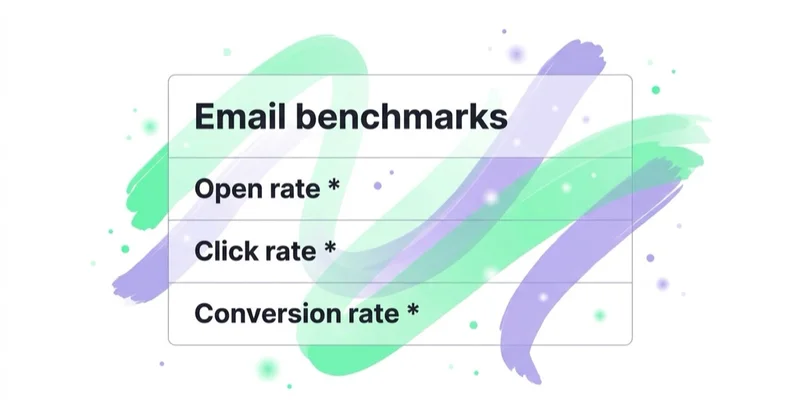
| Metric | Formula to verify | Main limitation |
|---|---|---|
| Open rate | Unique recorded opens ÷ delivered messages, typically | Apple MPP, image blocking, client and provider definitions |
| Click rate | Unique clickers ÷ delivered messages or recipients | Bot/security clicks, link type, provider filtering |
| CTOR | Unique clickers ÷ unique recorded openers | Both numerator and MPP-affected denominator |
| Unsubscribe rate | Unsubscribes ÷ delivered messages, typically | Message-level signal; legal and provider requirements still apply at any rate |
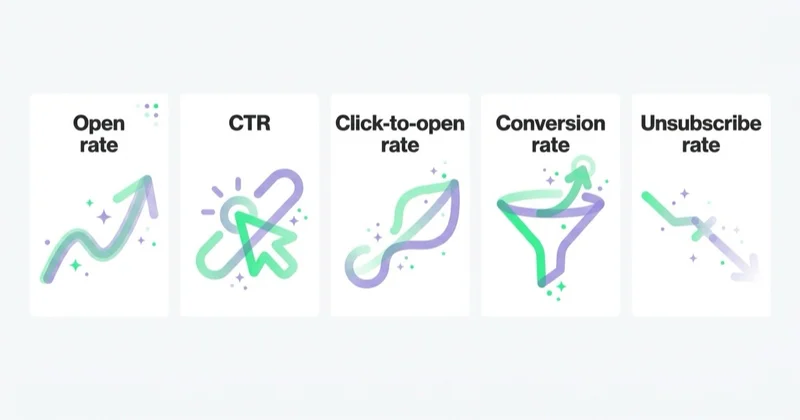
| Order or conversion rate | Attributed orders or converters ÷ delivered messages/recipients | Attribution window, identity matching, organic return, refunds |
| Revenue per recipient | Attributed revenue ÷ recipients | Revenue rather than margin; attribution is not causality |
Mailchimp says its public benchmark page was last updated in December 2023, while Klaviyo publishes a 2026 ecommerce dataset. Recency alone does not make one more comparable: their populations and products differ. Benchmark a welcome flow against welcome flows in the same provider and a campaign against comparable campaigns. Apply the same discipline used for ecommerce conversion rate benchmarks.
What Apple Mail Privacy Protection changed
Open tracking usually relies on a remote image requested when an email is rendered. Apple states that Mail Privacy Protection hides the recipient's IP address and loads remote content privately. This means the sender cannot reliably infer location or treat the image request as proof of a human read. Other clients may block images, producing the opposite problem.
Do not use opens alone to trigger “engaged” segments, suppress subscribers, time follow-ups, or declare a subject-line winner. A sudden change can still be a useful diagnostic for instrumentation, audience mix, or delivery, but it needs confirmation from clicks, site behavior, conversions, and mailbox-provider data. Gmail explicitly says it does not track open rates and cannot verify third-party open-rate accuracy.
Build a metric hierarchy
No email metric is perfect. Use a hierarchy that moves from technical delivery to customer and business outcomes:
- Delivery and reputation: accepted, bounced, deferred, complaint, unsubscribe, authentication, and Postmaster signals.
- Human action: filtered unique clicks, sessions, and on-site actions after the message.
- Commercial outcome: orders, qualified leads, contribution margin, and revenue per eligible recipient.
- Customer outcome: repeat rate, retention, complaints, returns, and downstream quality.
- Incrementality: difference between a randomised treatment and holdout group where scale permits.
Revenue per recipient is useful for comparing like-for-like sends, but it can rise through longer attribution windows, deeper discounts, a more valuable audience, or orders that would have happened anyway. For profit decisions, use contribution per eligible recipient and an incrementality test where practical.
Glossary
- Open rate — share of recipients recorded as opening; inflated by Apple MPP since 2021.
- Click-through rate (CTR) — share of recipients who clicked a link.
- Click-to-open rate (CTOR) — recorded clickers divided by recorded openers; historically used as a content diagnostic, but now heavily affected by open-tracking distortion.
- MPP (Mail Privacy Protection) — Apple feature that auto-loads images, inflating opens.
- Revenue per recipient — attributed revenue divided by recipients; useful, but sensitive to attribution and margin.
- Deliverability — the sender's ability to have mail accepted and delivered; inbox placement is the narrower question of whether accepted mail reaches the inbox rather than spam or another folder.
- Flow vs campaign — automated triggered email vs one-off broadcast; different benchmarks.
Flows vs campaigns: don't blend the benchmark
Flows and campaigns differ in audience eligibility, timing, volume, and purpose. A checkout-abandonment message reaches a behavior-defined group; a product launch campaign may reach a much broader subscriber segment. Blending them hides the operating model.
Compare the same flow purpose, lifecycle stage, delay, market, and eligibility logic. Do not build a flow merely because a provider average is higher: the store still needs a valid event, customer need, permission, suppression rule, and positive incremental economics. Relevant candidates are covered in the Klaviyo flows every store needs.
List quality and deliverability underlie every number
Two factors sit beneath the reporting. List quality starts with specific permission, accurate addresses, clear expectations, and a relevant reason to subscribe. Bought or scraped data creates legal, reputation, and relevance risk. Use a documented sunset policy based on several signals—delivery, clicks, site activity, purchases, and customer status—rather than suppressing people solely because they did not record an open.
Deliverability: acceptance by a mailbox provider is not the same as inbox placement. Follow current sender requirements, authenticate the domain, align SPF/DKIM where required, implement DMARC and one-click unsubscribe for applicable bulk promotional mail, monitor complaints and delivery errors, and avoid sudden volume spikes. Gmail recommends keeping user-reported spam below 0.1% and avoiding 0.3% or higher in Postmaster Tools; that is a Gmail-specific operational threshold, not a universal content benchmark. See choosing an email marketing agency.
How Space Ads approaches email benchmarks
At Space Ads, every benchmark is labelled with provider, period, population, message type, and formula. We separate campaigns from flows, then segment by purpose and audience. The operating scorecard starts with delivery and complaints, moves through filtered clicks and sessions, and ends with orders, contribution, customer quality, and incremental lift where volume permits.
Open rate remains a diagnostic with an explicit MPP caveat, not the definition of engagement. We also review attribution settings before comparing revenue per recipient, because a dashboard can change without customer behavior changing. This work lives in email marketing and marketing automation, read through analytics tied to revenue.
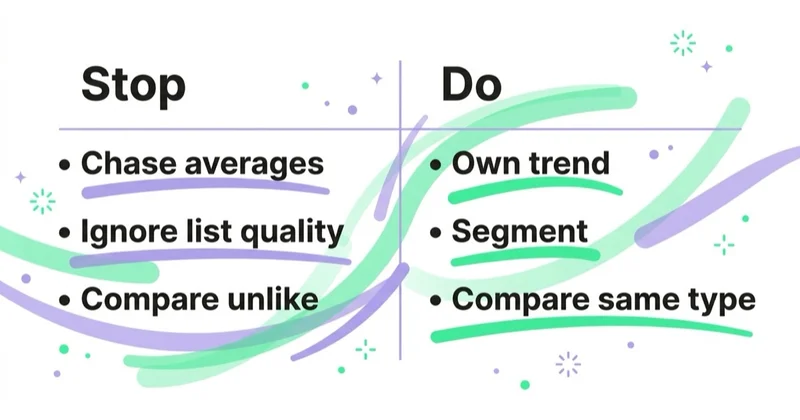
Stop doing / Do instead
| Stop doing | Do instead |
|---|---|
| Treating opens as human attention | Label MPP limitations and confirm with downstream behavior |
| Treating clicks or attributed revenue as perfect | Filter automation and test incrementality where practical |
| Blending flows and campaigns in one benchmark | Compare flows to flows, campaigns to campaigns |
| Assuming a low rate is a content problem | Check list quality and deliverability first |
| Chasing an industry average as a target | Use it to pressure-test; trust your own trended baseline |
| Ignoring unsubscribe and complaint rates | Watch them as list-health and deliverability warnings |
Common mistakes
Common errors include comparing different provider formulas, using an old dataset as current, blending campaigns and flows, ignoring Apple MPP and automated clicks, changing attribution windows mid-comparison, treating accepted mail as inbox placement, and reading attributed revenue as incremental profit. Another is suppressing people solely because an MPP-affected open event says they are inactive.
FAQ
What is a good email open rate?
There is no universal good open rate. Compare the same provider, message type, audience, and tracking method over time, and treat opens as technical events rather than confirmed reading. Use clicks, site behavior, commercial outcomes, and reputation signals to validate the interpretation.
What is a good email click-through rate?
Klaviyo's 2026 ecommerce dataset reports average click rates of 1.69% for campaigns and 5.58% for flows across its population, but those figures are not universal targets. Compare the relevant provider, industry, message type, and formula, filter automated clicks, and connect the metric to site and business outcomes.
Why did my email open rate suddenly go up (or become unreliable)?
Apple Mail Privacy Protection loads remote content privately and hides IP information, so a tracking-pixel request may not represent a human read. Audience or client mix, provider filtering, and implementation changes can therefore move the recorded rate without a corresponding change in attention.
Which email metrics actually matter now?
Use a hierarchy: authentication and delivery, complaints and unsubscribes, filtered unique clicks and sessions, orders or qualified leads, contribution per eligible recipient, and incremental lift. CTOR is less attractive after MPP because its denominator is distorted. Every metric needs a documented formula and scope.
Are email benchmarks different for automated flows vs campaigns?
Yes. Their audiences, triggers, timing, volume, and objectives differ. Klaviyo's 2026 dataset shows much stronger average click and attributed revenue efficiency for flows within its customer base, but a business should build only flows supported by customer need, reliable events, permission, and positive economics.
Why are my email metrics below the industry benchmark?
First verify that the benchmark uses the same provider, formula, industry, message type, and period. Then inspect permission, list source, authentication, delivery errors, complaints, automated-click filtering, audience relevance, offer, and landing-page behavior. Do not assign the cause to copy or deliverability without evidence.
Key takeaways
- Use a benchmark only when provider, year, population, industry, message type, and metric formula are clear.
- Apple MPP makes a recorded open an unreliable proxy for human attention; CTOR inherits that limitation.
- Clicks may include automated activity, and attributed revenue does not prove incremental profit.
- Compare flows with equivalent flows and campaigns with equivalent campaigns.
- Monitor deliverability, downstream customer behavior, contribution, and incremental lift as a connected scorecard.
Sources and further reading
- Klaviyo — 2026 email marketing benchmarks by industry
- Mailchimp — Email marketing benchmarks
- Apple — Mail Privacy Protection
- Gmail Help — Email sender guidelines
Continue learning
Continue reading
The Welcome Email Series That Converts New Subscribers
A welcome series should deliver the signup promise, establish expectations and help an eligible subscriber take the next useful step. Learn how to design, sequence, govern and measure it without relying on a universal template.
Klaviyo Flows Every Ecommerce Store Needs (and the Order to Build Them)
Klaviyo flows automate relevant email and SMS messages around key customer actions. This guide explains which flows to prioritise, how to set their triggers and exclusions, and how to measure their real contribution to revenue.
Email Authentication Explained: SPF, DKIM and DMARC for Marketers
SPF authorises sending infrastructure, DKIM signs selected message content, and DMARC connects those results to the domain recipients see in From. Learn how alignment works, what Gmail, Yahoo and Outlook require, and how to move from inventory to monitored enforcement safely.