A landing page can cost from a few hundred dollars for implementation in an existing template to more than $10,000 for a strategically important page with original research, copy, design, development, integrations, compliant measurement and multiple variants. A conversion programme is normally priced separately because testing and improvement continue after launch.
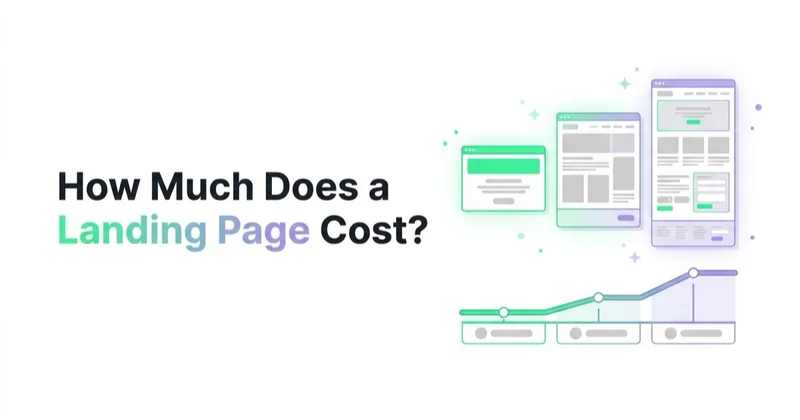
Those figures are planning bands, not a universal market tariff. Geography, complexity, supplier model and the quality of the inputs make direct comparisons unreliable. A $750 build and a $7,500 project may both be fairly priced: the first might turn approved copy into a template, while the second must determine the audience, offer, message and measurement plan before anyone opens a design file.
The useful question is not simply “How much is a landing page?” It is: what work must be done, what business risk does the page carry, and how will we know whether it improves the economics of the campaign?
TL;DR
- A practical planning range is $500–$2,500 for implementation to a supplied brief, $2,500–$7,500 for a conversion-ready agency project, and $10,000+ for complex, high-stakes or multi-variant work.
- These are orientation bands, not fixed prices or Space Ads packages. Request a scope-based quote for an accurate figure.
- Establish whether the quote includes research, message strategy, copy, responsive design, development, analytics, consent, integrations, QA and post-launch support.
- A template is not automatically poor and a custom build is not automatically persuasive. The right choice depends on the offer, traffic value, evidence and internal capability.
- Treat the first version as a commercial hypothesis. Reserve budget for measurement and iteration rather than spending everything on visual polish.
- Compare the project cost with the media and revenue that will flow through the page, not with another page in isolation.
- A conversion uplift cannot be guaranteed. Assess suppliers by their process, evidence standards and measurement design.
Landing page cost by scope
The following bands help create an initial budget. Currency, taxes, localisation, paid tools and ongoing optimisation may sit outside them.
| Scope | Indicative one-off budget | Usually suitable for | What should be clear |
|---|---|---|---|
| Self-build in an existing tool | Subscription plus internal time | A proven offer and capable internal team | Who owns copy, tracking, QA and maintenance |
| Implementation to supplied brief | $500–$2,500 | Approved structure, copy and brand assets | Devices, revisions, form behaviour and analytics scope |
| Conversion-ready agency page | $2,500–$7,500 | A campaign needing research, copy, design and measurement | Discovery depth, deliverables, integrations and launch support |
| Complex or high-stakes build | $10,000+ | Multiple audiences, regulated claims, bespoke tools or valuable traffic | Technical specification, compliance, security, QA and variants |
| Ongoing CRO programme | Recurring fee | Enough traffic and value to support structured experimentation | Research cadence, test development, decision rules and reporting |
The ranges overlap because page length is a poor proxy for work. A short lead-generation page for a difficult enterprise offer can require more research and stakeholder alignment than a long ecommerce campaign page assembled from an established design system.
Four different products share the same name
1. A template populated with supplied content
The supplier implements approved assets and copy in a builder or existing component library. This can be fast and commercially sensible when the business already knows the audience, proposition and required journey.
The lower fee does not include the strategic work simply because it is not needed—or because the client is expected to do it. Confirm that expectation before accepting the quote.
2. Design and development to a brief
The brief defines the sections, content, brand rules and functionality. The supplier turns it into a responsive page, connects the agreed form and completes technical QA.
This is appropriate when the inputs are genuinely ready. If the copy is still a collection of product features and internal terminology, building it faithfully will not solve the message problem.
3. A conversion-ready campaign page
This scope starts before design. It can include audience and search-intent research, stakeholder interviews, offer design, proof gathering, message hierarchy, copywriting, wireframes, responsive design, development, event design, consent-aware tagging and launch QA.
The buyer is paying for a page and for the decisions that make the page coherent. That is why the quote can be several times higher than implementation alone.
4. An optimisation programme
The page is the first controlled version, not the final deliverable. The programme adds qualitative research, analytics review, experiment prioritisation, variant production, QA and interpretation.
Ongoing work only makes sense when the page receives enough relevant traffic—or when each conversion is valuable enough to justify other forms of evidence. A low-volume B2B page may benefit more from sales-call analysis, user interviews and session reviews than from a conventional A/B test that will not reach a useful sample.
What should a landing page quote include?
A useful quote describes outputs, assumptions, exclusions and acceptance criteria. Look for these workstreams.
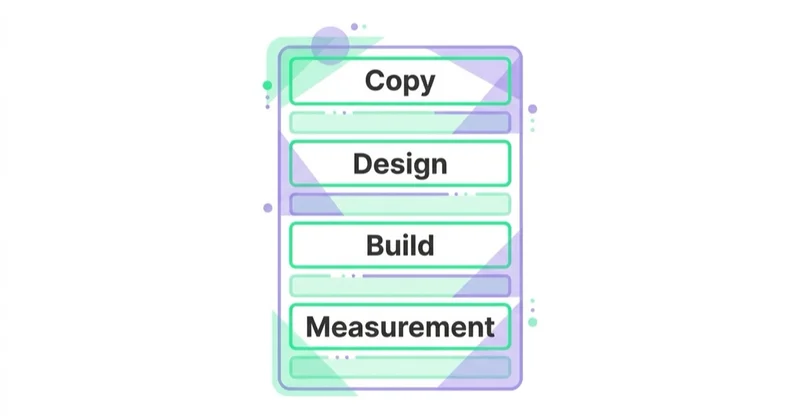
Research and strategy
The team should understand:
- the audience, need and stage of awareness;
- the campaign source and promise that precede the click;
- the offer, commercial objective and desired action;
- the alternatives a buyer considers;
- objections, proof and claim limitations;
- mobile context, market and language requirements.
Research may be light for a proven campaign and extensive for a new category. The quote should say which.
Message development and copy
Copywriting is not filling blank boxes after the design is approved. It includes choosing the page's argument: what to say first, which claims deserve emphasis, what evidence supports them and how the call to action matches buying readiness.
Google's own landing-page guidance recommends consistency between ad, keyword, offer and call to action, as well as useful, original information. Message continuity matters to the visitor and can contribute to landing-page experience in Google Ads.
Clarify whether the fee covers interviews, copy drafts, legal review, proof collection, microcopy, form labels and revisions.
UX and responsive design
The desktop comp is only one state. A real scope accounts for mobile layout, form interaction, validation, navigation, error states, thank-you experience and accessibility.
WCAG 2.2 provides a recognised framework for accessibility. Depending on the project, work may include descriptive headings and labels, keyboard operation, visible focus, sufficient contrast and clear error assistance. Compliance requirements should be agreed rather than implied by the word “responsive”.
Development and performance
Implementation cost changes with the platform and technical environment. Building in an established component system is different from introducing a new framework, connecting a headless CMS or supporting old custom code.
The specification may include:
- reusable components and CMS editing;
- responsive behaviour across agreed browsers;
- image and font optimisation;
- form delivery and spam protection;
- CRM, booking, payment or product integrations;
- structured data where it accurately describes visible content;
- security and deployment requirements;
- performance QA.
Core Web Vitals can be useful engineering diagnostics, but passing them does not prove that the message converts. Equally, persuasive copy does not excuse a broken or frustrating page. Google Ads requires destinations to be functional, useful, safe and easy to navigate.
Measurement and privacy
“Tracking included” is too vague. The measurement plan should name the events, platforms, parameters, QA method and ownership.
For a lead page, that may include:
- form start, validation error and successful submission;
- qualified-lead or booked-meeting feedback from the CRM;
- phone calls or booking completion where relevant;
- campaign parameters and click identifiers;
- a thank-you state that cannot be triggered accidentally;
- test submissions and platform diagnostics.
Consent management is not merely a banner design task. Google states that Consent Mode receives choices from a consent banner or consent-management platform and adjusts tag behaviour; it does not create the banner itself. Requirements vary by jurisdiction and technology, so privacy implementation should be reviewed for the markets in scope rather than copied from another site.
QA, launch and handover
Agree who tests:
- copy and links;
- mobile devices and supported browsers;
- forms, notifications and CRM field mapping;
- analytics and advertising events;
- consent states;
- accessibility basics;
- redirects, domains and deployment;
- page ownership, documentation and future edits.
Cheap quotes often become expensive during launch because no one priced this responsibility.
What changes the price most?
Quality of the starting inputs
A complete brief with approved claims, product knowledge, brand assets and proof reduces discovery and revision. A vague request to “make it convert” transfers significant decision-making to the supplier.
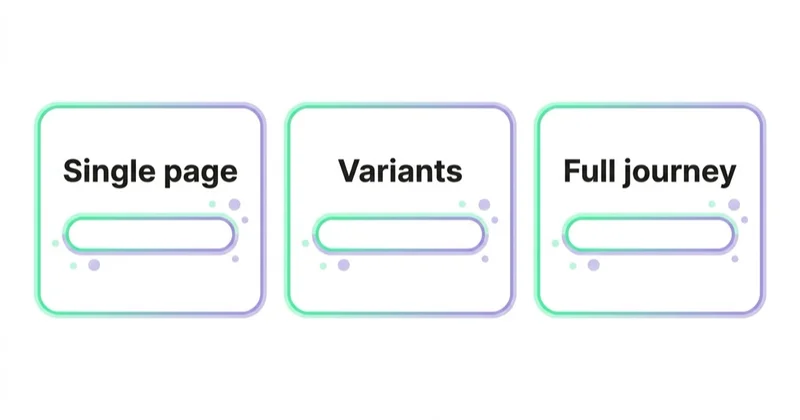
Number of audiences, markets and variants
One page translated into three languages is not necessarily three pages, but localisation involves more than replacing words. Claims, evidence, form logic, legal text, layouts and campaign intent can differ by market.
Separate pages for job roles, industries or traffic intents require meaningful message variation. Changing only the headline may not justify a full-page production fee, while distinct offers and proof often do.
Bespoke functionality and integrations
A standard form is comparatively predictable. A pricing calculator, eligibility flow, live inventory check, payment process or multi-system data transfer needs product, engineering and QA work. Define what happens when an integration fails, not only the ideal path.
Stakeholders and compliance
Regulated sectors, enterprise security reviews and multiple approval groups add work even when the visible page remains simple. Include review rounds, decision owners and permitted claims in the scope.
Evidence and content production
Case studies, photography, video, product renders, expert review and customer quotes may be separate workstreams. A design cannot manufacture credible proof from generic icons.
Testing requirements
Producing two polished designs is not the same as running a valid experiment. Testing may require hypothesis development, traffic allocation, analytics configuration, sample planning, QA, monitoring and interpretation. Ask whether the quote covers variants only or the full decision process.
The hidden and ongoing costs
The build fee is rarely the complete economic picture. Budget may also be needed for:
- page-builder, hosting, experimentation or analytics tools;
- copy, design and development revisions;
- CRM and automation setup;
- consent-management tooling and legal review;
- localisation and new campaign variants;
- maintenance after platform or browser changes;
- ongoing research and optimisation;
- internal stakeholder time;
- media required to generate usable evidence.
A page with no owner often decays: offers expire, proof becomes stale, forms break and tracking changes. The proposal should state the warranty period, support arrangement and ownership of accounts, source files and reusable components.
How to judge whether the investment is viable
Compare the page cost with its expected commercial use. Start with a simple model:
expected landing-page conversions = relevant visits × conversion rate
expected customers = conversions × qualified rate × sales close rate
expected contribution = customers × contribution per customer
Use a range for every uncertain input. Conversion rate alone can mislead: a shorter form may produce more leads but fewer qualified opportunities. For ecommerce, revenue and margin matter more than form submissions. For B2B, pipeline progression may be more informative than lead volume.
Illustrative example
Assume a campaign is expected to send 5,000 relevant visits during the first six months. The business models three scenarios:
| Scenario | Page conversion rate | Leads | Lead-to-customer rate | Customers |
|---|---|---|---|---|
| Conservative | 2.0% | 100 | 5% | 5 |
| Central | 3.0% | 150 | 7% | 10.5 |
| Strong | 4.0% | 200 | 8% | 16 |
These are hypothetical inputs, not benchmarks. Add expected contribution per customer, media cost, sales cost and page cost to assess payback. The exercise shows whether a $2,000 saving on production is material relative to the commercial value exposed to the page.
Budget for learning, not guaranteed uplift
No responsible supplier can guarantee a conversion rate before observing the offer, audience, traffic and sales outcome. Even a well-researched page is a hypothesis.
Post-launch optimisation should follow an evidence hierarchy:
- verify traffic quality, technical function and measurement;
- examine conversion and qualification by source, device and intent;
- gather qualitative evidence from users and sales conversations;
- prioritise problems by expected value and confidence;
- choose an appropriate validation method;
- record the decision, not only whether a variant “won”.
An A/B test is one method, not a ritual. When traffic is insufficient, use moderated research, message testing, usability review, sales feedback and staged releases without pretending they provide experimental certainty.
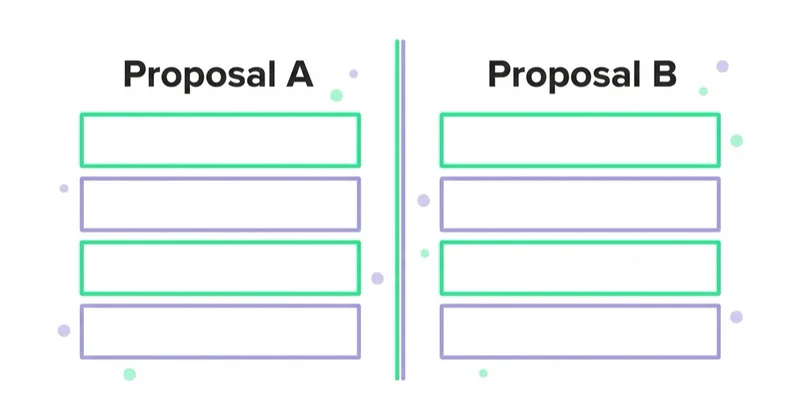
How to compare landing page proposals
Normalise each quote into the same table.
| Question | Why it matters |
|---|---|
| Who defines audience, offer and message? | Reveals whether strategy is included or supplied by the client |
| Is copywriting included? | Separates content population from message development |
| Which devices, browsers and accessibility requirements apply? | Makes “responsive design” testable |
| What integrations are included? | Prevents late CRM, booking or payment costs |
| Which events and platforms will be validated? | Turns “analytics setup” into an auditable deliverable |
| How many concepts and revision rounds? | Controls scope and stakeholder expectations |
| What does the client need to provide, and when? | Exposes dependencies that can delay launch |
| Who owns accounts, source files and components? | Protects future portability |
| What happens after launch? | Clarifies warranty, maintenance and optimisation |
| What is explicitly excluded? | Makes the headline price comparable |
Red flags include a conversion guarantee, a fixed price before any scope questions, fabricated testimonials, unclear account ownership and analytics treated as an optional final add-on.
Space Ads approach to landing page projects
We connect the page to the campaign economics before choosing a layout. The work starts with traffic intent, audience, offer, evidence and the outcome that should be returned to the advertising and analytics systems.
The scope then reflects what the project actually needs: message research, copy, responsive design, implementation, integrations, consent-aware measurement and QA. We distinguish assumptions from observed evidence and do not present an aesthetic preference as a conversion fact.
After launch, we review both conversion volume and outcome quality. For lead generation, that means progressing beyond form submissions to qualified leads and pipeline where the available systems allow it. For ecommerce, it means revenue, contribution and customer behaviour—not simply button clicks.
FAQ
How much does a landing page cost?
As an initial planning guide, implementation to an approved brief may cost about $500–$2,500, a conversion-ready agency project about $2,500–$7,500, and complex or high-stakes work $10,000 or more. Actual fees depend on market, research, copy, technical scope, integrations, compliance and support.
Why do landing page quotes vary so much?
Suppliers may be pricing different deliverables under the same name. One quote may cover template implementation; another may include research, offer and message development, original copy, custom design, analytics, CRM integration and optimisation. Compare line-by-line scope and dependencies.
Is a custom landing page better than a template?
Not automatically. A strong template with a relevant offer, clear evidence and reliable measurement can outperform an attractive custom page with weak messaging. Custom work is valuable when the audience, brand, functionality or experimentation plan cannot be served well by existing components.
What is usually excluded from a cheap landing page quote?
Common exclusions include research, copywriting, custom assets, analytics and advertising tags, consent configuration, CRM integration, accessibility review, post-launch changes and testing. Never assume; ask for explicit inclusions and exclusions.
How long does a landing page take to build?
A simple implementation can take days once all inputs are approved. A researched, written and integrated project can take several weeks, while compliance, bespoke functionality and stakeholder review can extend the timeline. The proposal should separate production time from time waiting for client inputs and approvals.
Should landing page tracking be included?
Yes, if the page is expected to produce a measurable business outcome. The scope should name the events, platforms, consent behaviour and QA—not merely say “tracking”. CRM outcome feedback may be a separate integration but should be planned from the beginning.
Should I pay for ongoing optimisation?
It is worthwhile when the value and volume of traffic support further research and changes. Ask what evidence will be used, how priorities are chosen and how decisions are recorded. A recurring fee without sufficient traffic, research or delivery capacity is not an optimisation programme.
Can a landing page agency guarantee more conversions?
No credible agency can guarantee a specific uplift without controlling the offer, traffic, market and sales process. It can guarantee process and deliverables: research, implementation quality, measurement, QA and an agreed optimisation method.
Key takeaways
- A landing page price is meaningful only when matched to scope.
- Use $500–$2,500, $2,500–$7,500 and $10,000+ as broad planning bands, not fixed market rates.
- Research, copy, integrations, measurement, compliance and QA can cost more than assembling the visible page.
- Preserve budget for post-launch evidence and iteration.
- Compare total project and acquisition economics, including media and sales outcomes.
- Require clear ownership, exclusions, acceptance criteria and measurement deliverables.
See how Space Ads approaches landing page design and development, or continue with our guide to building a landing page.
Sources and further reading
- Optimise your ads and landing pages — Google Ads Help
- Google Ads destination requirements
- About Consent Mode — Google Analytics Help
- Web Content Accessibility Guidelines 2.2 — W3C
- Core Web Vitals — web.dev
- High-converting landing page design best practices
- Landing page mistakes that kill conversions
Continue reading

Website Audit: What to Check Before You Spend More on Ads
More ad spend magnifies both a website's strengths and its leaks. Use this evidence-led audit to find measurement, speed, accessibility, message and conversion constraints before scaling.
WCAG 2.2 and Conversion: Where Accessibility Pays for Itself
Many WCAG 2.2 criteria address the same barriers a sound usability review finds in forms, checkout and login: invisible focus, missing labels, unclear errors and controls that are hard to operate. Learn how to test them, prioritise remediation and understand the EAA context.
UX Audit: Heuristic Evaluation, Usability Testing and Behaviour Data
A practical UX audit combines expert review, usability testing and behaviour data in a scope matched to the product and decision. Learn how to choose methods, recruit participants and turn evidence into a backlog a team can ship.