
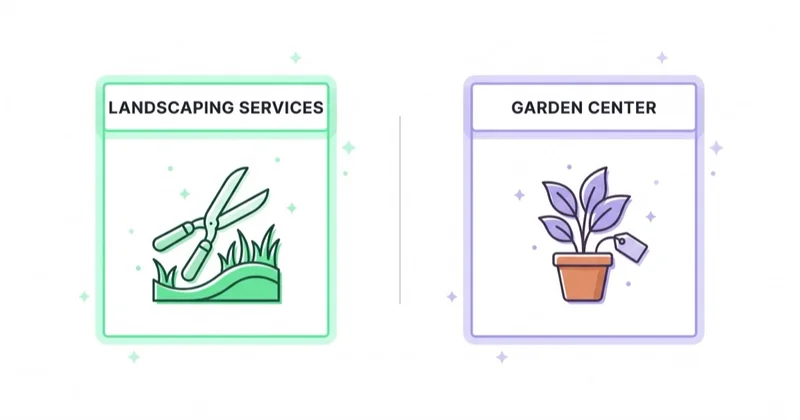
Landscaping and Garden Center Marketing should not be planned as one broad campaign about "gardens." Landscaping, lawn care and garden design are local service businesses: the commercial outcome is a qualified inquiry, an estimate, a site visit, a signed project or a recurring maintenance contract. A garden center is local retail: the commercial outcome is store traffic, product availability, seasonal sales and repeat visits.

The two models share a seasonal demand curve, but they need different channels, landing pages, conversion actions and reporting. A landscaping company can afford a higher cost per lead when the lead becomes a maintenance contract. A garden center needs local visibility, inventory confidence and timely reasons to visit before the weekend. Treating both as one campaign usually creates a noisy account where cheap product clicks hide the value of higher-intent service inquiries.
This guide covers a practical operating model for local services marketing, garden center retail and hybrid businesses that run both.
TL;DR
- Service and retail need separate strategies. Landscaping marketing is lead generation; garden center marketing is local retail and foot traffic.
- Seasonality is the planning layer. Campaigns should be ready before the spring spike, not rebuilt while demand is already peaking.
- Local Services Ads can matter for landscapers. Google lists landscaper and lawn care among eligible home service categories, and Local Services Ads charge when prospects get in touch rather than for standard clicks.
- Search campaigns need service intent. Lawn care, garden design, irrigation, tree services, commercial maintenance and DIY product searches should not live in one ad group.
- Garden centers need local availability signals. Google Business Profile, products, local inventory ads where applicable and seasonal Meta campaigns support in-store demand.
- Lead quality matters more than lead volume. The best reporting connects calls and forms to estimates, contracts, recurring maintenance and actual revenue.
Landscaping services and garden center retail are different funnels
The most important strategic decision is the split between services and retail. A person searching for "landscaper near me" is not making the same decision as a person searching for "compost bags garden center," "hydrangeas in stock," "irrigation repair," "commercial lawn maintenance" or "garden design cost." The language is related, but the buying process is not.
| Area | Landscaping / lawn care | Garden center |
|---|---|---|
| Business model | Local service lead generation | Local retail |
| Primary outcome | Qualified call, estimate, project, contract | Store visit, local product sale, repeat purchase |
| Decision driver | Trust, portfolio, availability, service area, estimate process | Distance, opening hours, stock, price, promotion, parking |
| Strongest channels | Local Services Ads, Google Search, Business Profile, remarketing, CRM feedback | Business Profile, local Search, local inventory, Shopping, Meta, email/SMS |
| Main metric | Cost per qualified estimate and signed contract value | Store traffic, product sales, seasonal category revenue |
| Risk | Too many small, low-budget or out-of-area inquiries | Broad reach that does not translate into local visits or margin |
Hybrid companies need separate campaigns, pages and conversion actions for the service division and the store division. A garden center with a landscaping arm should not send "lawn maintenance contract" traffic to a retail plant category page, and "roses near me" traffic should not be judged by form-fill volume.
Seasonality is not a footnote
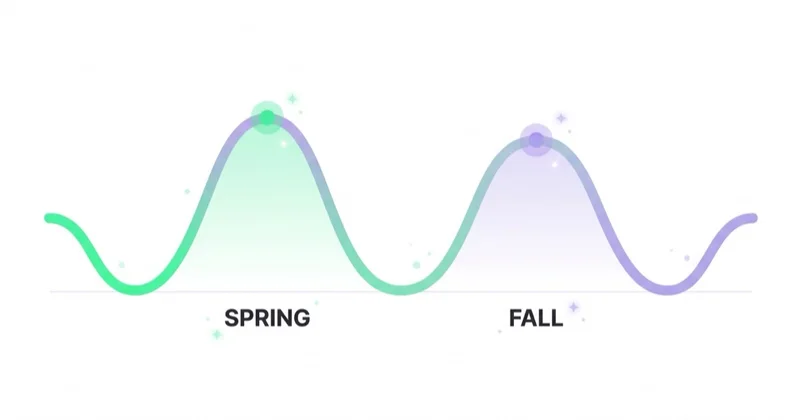
Landscaping and garden retail demand is seasonal, but the useful calendar is more detailed than "spring is busy." Budget, creative, landing pages and staffing should reflect the way decisions are made throughout the year.
| Period | Landscaping and lawn care | Garden center retail |
|---|---|---|
| January-February | Commercial bids, maintenance renewals, design consultations, account cleanup | Product planning, Business Profile cleanup, catalog work, early seasonal creative |
| March-April | Garden builds, lawn restoration, irrigation, spring cleanup, first site visits | Soil, mulch, seedlings, tools, fertilizers, first high-traffic weekends |
| May-June | Peak lead flow, maintenance, planting, mowing, installation capacity pressure | Peak plant demand, containers, outdoor living, local promotions |
| July-August | Irrigation, lawn recovery, maintenance, storm cleanup, upsells | Watering, fertilizers, outdoor decor, category markdowns |
| September-October | Fall planting, pruning, lawn repair, winter prep | Bulbs, fall plants, cleanup tools, seasonal displays |
| November-December | Contract renewals, design planning, snow services where relevant | Holiday plants, trees, decor, gifts, retention campaigns |
The account should be prepared before demand accelerates. Search terms, negative keywords, forms, call tracking, landing pages and budget pacing are cheaper to fix before spring. During the peak, the operational question shifts from "how to get leads" to "which leads are worth taking with limited crew capacity."
Google Ads for landscaping companies
Google Search captures active demand for local services. The account structure should follow service type, location and value, not a generic "landscaping" bucket.
Useful campaign or ad group themes include:
- local contractor intent: "landscaper [city]," "landscaping company near me," "lawn care service [area]";
- specific services: lawn care, garden design, irrigation installation, irrigation repair, tree trimming, patio or hardscape work, pruning, hedge trimming;
- seasonal problems: lawn repair, spring cleanup, fall cleanup, storm damage, drainage, sprinkler repair;
- maintenance intent: recurring lawn care, garden maintenance, estate maintenance, HOA landscaping, commercial landscaping;
- project intent: garden design cost, backyard redesign, front yard landscaping, landscape installation;
- emergency or urgent service: storm cleanup, broken sprinkler, fallen branch, overgrown yard cleanup.
Each theme should point to a relevant landing page. A visitor looking for irrigation repair needs proof of repair capability, service area, urgency options, photos and a short contact path. A commercial property manager needs insurance, contract process, service-level expectations, references and a way to request a site assessment.
Keyword discipline matters. Google recommends grouping keywords by themes related to products, services or categories. For landscaping, that means keeping service keywords close to the ad and landing page theme, then reviewing search terms for jobs, courses, DIY instructions, materials-only searches and areas outside the service zone. A strong negative keyword process prevents the account from paying for "landscaping jobs," "free garden plan," "how to landscape a yard," "lawn mower parts" or retail searches when the campaign is selling services.
Local Services Ads for landscapers
Google lists landscaper and lawn care among eligible home service categories for Local Services Ads. The format appears in local search contexts, can display a Google Verified badge and charges when prospects contact the business through the ad rather than for ordinary click volume.
That does not make LSA a standalone growth strategy. It is a lead source that needs the same operational discipline as Search:
- service categories and service areas should match actual capacity;
- profile information, reviews, photos and business details should be current;
- lead disputes and lead quality should be reviewed regularly;
- calls should be answered quickly during peak demand;
- LSA leads should be tagged in CRM so estimate rates and contract values can be compared with Search and Meta.
For some landscaping businesses, LSA becomes the first layer of local demand capture. For others, Search produces better control over service intent, commercial segments or project types. The right mix depends on eligible categories, geography, review strength, response speed and margin.
Google Business Profile as a conversion surface
Google Business Profile is part of the funnel for both service and retail businesses. Google describes local ranking as mainly based on relevance, distance and prominence, and complete business information helps the profile match relevant searches.
For a landscaping company, the profile should support trust before the first call:
- service categories and service area;
- current opening hours and phone details;
- photos of completed work, before-and-after views and crew/process shots;
- clear service descriptions for design, installation, maintenance, irrigation and seasonal work;
- review response discipline;
- posts or updates around seasonal availability.
For a garden center, the profile should reduce friction before a store visit:
- accurate opening hours, holiday hours and directions;
- product categories and seasonal availability cues;
- photos of the current sales floor, outdoor yard, parking and displays;
- questions answered directly on the profile;
- reviews that mention product quality, staff help, availability and local convenience.
The practical point is simple: many local buyers make a decision from the search results page before visiting a website. A weak profile can reduce conversion even when ads are technically correct.
Garden center marketing: local retail, not lead generation
A garden center needs to make local shoppers confident that the store has the right products at the right time. Search and Meta should therefore support availability, timing and location.
The channel mix can include:
- Business Profile and local SEO for "garden center near me," "plant nursery [city]," "soil near me," "mulch near me" and category searches;
- local Search campaigns for high-intent product categories and store queries;
- Shopping or Performance Max when ecommerce, feed quality and product margins justify it;
- local inventory ads and free local listings when the store can provide inventory data to Merchant Center and wants to show pickup or in-store availability;
- Meta Ads for seasonal drops, weekend promotions, workshops, events, local reach and visual category demand;
- email/SMS retention for loyal customers, seasonal reminders and high-margin categories.
The garden center landing experience should not look like a service lead page. It needs location, hours, store photos, category availability, delivery or pickup options, parking details, current promotions and a clear distinction between in-store availability and online ordering.
Meta Ads for landscaping and garden centers
Meta works best when the creative shows something concrete: a transformed lawn, a finished patio, a clean seasonal cleanup, a garden before and after, a weekend delivery of plants, a wall of planters, a workshop or a limited seasonal category. Generic green lifestyle imagery is usually weaker than real local proof.
For landscaping, Meta usually supports consideration and remarketing:
- portfolio views after Search visits;
- before-and-after project sequences;
- seasonal reminders for spring cleanup, irrigation or fall prep;
- lead forms only when qualification fields are strong;
- retargeting to people who visited high-intent service pages.
For garden centers, Meta can drive local retail moments:
- weekend stock arrivals;
- category promotions tied to season and margin;
- workshops and events;
- gift, holiday and decor campaigns;
- reminders to existing customer lists where consent and platform policy allow it.
Creative should be operationally honest. Ads should not promote products that are already out of stock, services outside the service area or discounts that the store team cannot explain. A campaign that drives local visits but creates disappointment at the counter damages future performance.
Landing pages and forms should qualify the inquiry
Many landscaping accounts do not have a lead shortage. They have a lead-quality problem: small one-off jobs, distant properties, unrealistic timelines, low budgets or project types the crew does not want. The landing page and form should filter gently before the sales team spends time on the lead.
For service pages, useful elements include:
- service scope and examples of suitable projects;
- service area and response expectations;
- real project photos and process notes;
- property type, property size or project area fields;
- timeline and urgency;
- recurring maintenance vs one-time project;
- residential vs commercial;
- photo upload when useful;
- budget range or minimum engagement where the brand position requires it;
- phone option for urgent requests.
This is also where landing page quality affects profitability. A shorter form may create more leads, but a better form can create more sellable estimates. The correct balance depends on sales capacity and average contract value.
Recurring maintenance changes the economics
The most important landscaping lead is not always the largest one-off project. Recurring lawn care, estate maintenance, HOA landscaping, commercial maintenance and seasonal service plans can create more predictable revenue than isolated jobs.
That changes bidding and reporting:
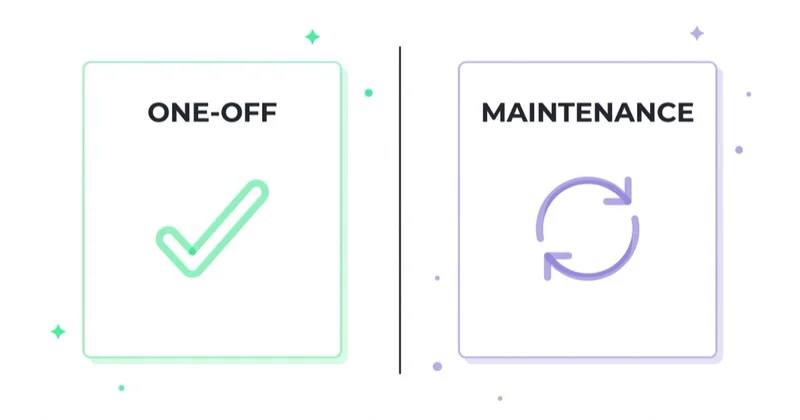
- a maintenance lead should not be valued the same as a one-time mowing request;
- commercial or HOA contracts usually need separate campaigns and sales follow-up;
- conversion values should reflect estimated contract value when the CRM can support it;
- remarketing can be used to move one-time project clients into maintenance plans;
- lead source reporting should include estimate rate, close rate and retained value.
Without this layer, the account may optimize toward cheap leads that consume estimator time and underweight fewer, more valuable inquiries.
Measurement: from calls to contracts and store sales
Landscaping measurement should move beyond form submissions. Google Ads call reporting can show call details when using forwarding numbers, and call tracking helps separate real sales conversations from weak inquiries. For stronger optimization, the CRM should track:
- call or form source;
- service requested;
- location and property type;
- qualified or unqualified status;
- site visit booked;
- estimate sent;
- estimate accepted;
- project or contract value;
- recurring maintenance status;
- lost reason.
At sufficient volume, qualified stages and values can be imported back into advertising platforms so bidding systems see more than top-of-funnel conversions. This is the same logic covered in call tracking for PPC and Smart Bidding strategy.
Garden center measurement is less direct because many sales happen offline. Still, useful indicators include direction clicks, calls, product page clicks, local inventory clicks, coupon redemptions, campaign codes, loyalty data, online orders, pickup requests and POS category sales during campaign windows. The goal is not perfect attribution; the goal is better decisions than "reach went up."
Space Ads operating approach
At Space Ads, seasonal local businesses are treated as a system of demand, capacity, margin and measurement. Across daily audits of 25+ client accounts and roughly 14M monthly data points analyzed through Space Ads OS, the recurring issue is rarely only media buying. It is usually a mismatch between campaign structure, sales capacity and what the business actually wants to sell.
For a landscaping company, the operating model usually starts with service segmentation, location control, LSA/Search balance, call tracking, negative keywords and CRM feedback. For a garden center, the work shifts toward Business Profile quality, seasonal retail planning, local inventory or Shopping readiness, Meta creative and store-visit proxies. A hybrid business needs both systems without mixing the reporting.
When current campaigns generate inquiries but the team cannot tell which ones became profitable work, the best entry point is a marketing audit. Ongoing acquisition and measurement sit under performance marketing, with channel execution across Google, Meta and local search.
30-day action plan
- Separate service lead generation from garden center retail in campaign structure, conversion tracking and reporting.
- Build a seasonal calendar for budget, services, product categories, creative and staffing.
- Audit Google Business Profile for categories, photos, hours, reviews, products and service areas.
- Split Google Search by service intent, geography and commercial value.
- Review Local Services Ads eligibility, profile quality, service categories and lead handling.
- Add negative keywords for jobs, courses, DIY, free plans, irrelevant materials and out-of-area traffic.
- Create service landing pages with project proof, service area, form qualification and call paths.
- For garden centers, prepare local inventory, product-category pages, store details and seasonal promotion pages.
- Launch Meta creative using real projects, seasonal stock, events and retargeting audiences.
- Connect calls, forms, estimates, contracts and store signals into one weekly performance review.
Common mistakes
| Mistake | Better approach |
|---|---|
| One generic campaign for all garden-related terms | Split services, retail, location and value of intent |
| Flat spend all year | Plan budget around pre-season, peak, fall and winter roles |
| Optimizing to raw form fills | Track qualified estimates, contracts and recurring value |
| Sending service traffic to the homepage | Use service-specific landing pages with proof and qualification |
| Ignoring Business Profile | Treat the profile as a local conversion surface |
| Running Meta with stock-style visuals | Use real projects, real inventory and seasonal store moments |
| Promoting local retail without inventory confidence | Align ads with actual stock, pickup, store hours and margin |
| Mixing residential and commercial work | Separate targeting, copy, landing pages and CRM stages |
FAQ
How should a landscaping company get more leads?
The strongest starting point is local intent capture: Local Services Ads where eligible, Google Search for service-specific queries, a complete Business Profile, call tracking and landing pages that qualify the inquiry. Lead volume should be judged by estimates, accepted proposals and contract value, not by form submissions alone.
Is landscaping eligible for Local Services Ads?
Google lists landscaper and lawn care among eligible home service categories for Local Services Ads. Availability, verification requirements and exact category coverage vary by market, so eligibility should be checked at account setup. LSA should still be compared with Search by lead quality and contract value.
When should landscaping ads start before spring?
Campaign planning should start before the first visible demand spike. Late winter or very early spring is usually the practical window for cleaning up tracking, search terms, negative keywords, landing pages, creative and budget pacing. Waiting until the busiest weeks leaves less time to correct weak traffic and poor lead handling.
How is garden center marketing different from landscaping marketing?
Garden center marketing is local retail. It focuses on store visits, product availability, seasonal categories, local promotions, pickup options and repeat customers. Landscaping marketing is service lead generation and should be measured by qualified inquiries, estimates, projects and maintenance contracts.
Do garden centers need Shopping campaigns?
Shopping can help when product data, ecommerce or local inventory feeds are reliable enough to support it. If the business cannot maintain product availability, prices and pickup or delivery details, Business Profile, local Search, Meta and seasonal landing pages may be more practical until feed operations improve.
What should be measured in landscaping marketing?
The minimum is calls, forms and booked estimates. Better reporting includes lead quality, service type, location, site visit, proposal sent, proposal accepted, contract value, recurring maintenance and lost reason. This prevents optimization toward cheap inquiries that do not become profitable work.
In short
Landscaping and Garden Center Marketing performs best when the account respects the difference between service lead generation and local retail. Landscaping campaigns need local intent, lead qualification, call tracking, negative keywords and contract-value reporting. Garden centers need Business Profile strength, local product availability, seasonal creative and store-visit proxies.
The biggest advantage is preparation before demand peaks. A campaign fixed in January or February can enter spring with cleaner tracking, stronger landing pages and a better lead-quality loop. A campaign repaired in May usually pays for mistakes while the most valuable demand is already active.
Sources
- Google Business Profile Help - Improve local ranking on Google
- Google Ads - Local Services Ads
- Google Ads Help - Keywords in Search Network campaigns
- Google Ads Help - Call reporting
- Google Merchant Center Help - Local inventory ads and free local listings
- Meta - Advertising Standards
Continue learning
Continue reading

Language School Marketing: Two Businesses, One Building
Language schools often combine consumer enrolment and corporate training. Market them as separate buying journeys, then connect campaigns to attendance, enrolment, group contribution and continuation.

Driving School Marketing: Selling Instructor Hours, Not Courses
A practical system for growing a driving school around real instructor capacity: local demand, transparent lesson offers, compliant proof, responsive booking and completed-pupil value.

Bike Shop Marketing: The Workshop Pays the Rent
A practical marketing system for bike retailers and workshops: model capacity and contribution, capture local service demand, promote in-stock bikes, and turn first visits into lasting customer relationships.


































