Plastic and Cosmetic Surgery Marketing should not look like ordinary beauty advertising. The decision is high-value, personal, health-adjacent and trust-driven. A prospective patient is not only comparing price or availability. They are evaluating surgeon credentials, safety, procedure fit, recovery expectations, realistic outcomes, privacy and whether the clinic communicates responsibly.
The best campaigns do not pressure people into a procedure. They create a path to a qualified consultation. Google Ads captures active procedure and local intent. Meta and Instagram support education, credibility and consideration. SEO helps answer research-stage questions. Tracking connects calls and forms to consultations, accepted treatment plans and actual revenue without exposing sensitive health information to ad platforms.
This guide is marketing guidance, not legal, medical or compliance advice. Clinics should review platform policies, healthcare advertising rules, privacy requirements and local regulations before launching campaigns.
TL;DR
- The goal is a qualified consultation. Cheap form fills are not the metric if the inquiry is not clinically appropriate, realistic or likely to book.
- Google Search captures active intent. Procedure + city, consultation, surgeon name, pricing and recovery queries should be separated by procedure and decision stage.
- Meta requires careful creative. Cosmetic procedure ads must target adults and avoid negative self-perception tactics; certain wrinkle and anti-aging depictions should not use side-by-side comparisons.
- Health personalization is restricted. Google treats invasive medical procedures, cosmetic surgery and injections as health-sensitive in personalized advertising, limiting advertiser-curated audiences.
- Tracking must protect health information. Booking pages, intake forms, patient portals and procedure-specific data should be reviewed before any pixel, tag or conversion API sends data to an ad platform.
- Treatment value beats CPL. Reporting should connect lead source to consultation attended, qualification, booked procedure and treatment value.
Why plastic surgery marketing is different
Plastic surgery and cosmetic procedure marketing has five constraints that do not apply to ordinary local services.
First, the decision is medically and emotionally sensitive. Messaging that would be acceptable for a salon promotion can become risky when it implies a person has a defect, insecurity or health condition.
Second, visual proof is powerful but restricted. Before-and-after content, close-up body areas and transformation claims need platform, consent, privacy and legal review. The ad creative, landing page and social organic content may have different risk levels.
Third, the value range is wide. A filler consultation, laser package, rhinoplasty consultation and body contouring procedure do not have the same economics. One bidding target across all procedures usually creates distorted optimization.
Fourth, privacy is not optional. Health-related browsing, forms, appointments and procedure interest can create sensitive data concerns. Tracking needs to be designed before traffic scales.
Fifth, trust carries conversion. Credentials, consultation process, realistic expectations, reviews, patient education and intake quality matter more than aggressive calls to book.
Cosmetic surgery vs aesthetic clinic marketing
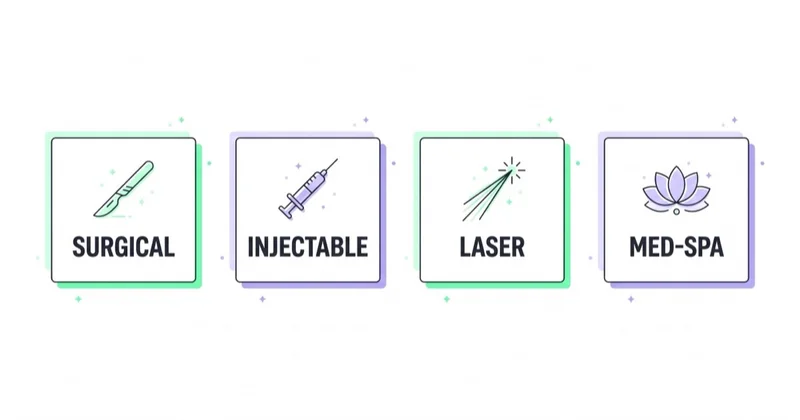
The category often overlaps with med spa and aesthetic clinic marketing, but surgical practices usually need stricter segmentation.
| Area | Examples | Marketing implication |
|---|---|---|
| Surgical procedures | rhinoplasty, breast surgery, abdominoplasty, facelift, blepharoplasty | longer research cycle, surgeon credibility, consultation-first funnel |
| Non-surgical injectables | wrinkle treatment, fillers, biostimulators where allowed | policy-sensitive language, adult targeting, qualification and repeat visits |
| Skin and laser treatments | resurfacing, pigmentation, scars, hair removal | education, package logic, realistic time-to-result communication |
| Reconstruction or medical procedures | post-trauma, post-cancer, functional corrections | medical context, careful privacy, referral and insurance considerations |
| Med spa services | peels, microneedling, non-invasive devices | closer to aesthetic clinic marketing but still policy-sensitive |
The account structure should reflect those differences. A high-value surgical consultation should not compete for the same budget and conversion target as a lower-value recurring treatment.
Policy and compliance layer
Plastic and cosmetic surgery marketing needs review across several layers:
- Google healthcare and medicines policy;
- Google personalized advertising restrictions for health-sensitive categories;
- Meta Health and Wellness policy;
- Meta Personal Attributes policy;
- HIPAA or local privacy rules where applicable;
- local medical advertising, professional-board and consent requirements;
- evidence standards for safety, efficacy and result claims;
- clinic-specific compliance review.
Google's healthcare policy expects ads and destinations to follow applicable law and industry standards, and some healthcare-related content can be advertised only in certain locations or by advertisers that apply and are certified. Google also treats invasive medical procedures, cosmetic surgery, surgical procedures and injections as health-sensitive topics in personalized advertising; advertiser-curated audiences such as Customer Match or site-based data segments may be restricted in those categories.
Meta allows ads for cosmetic products, procedures and surgeries when targeting people at least 18 years old, but prohibits messaging that generates negative self-perception or body-shaming. Meta also restricts some creative formats, including side-by-side comparisons for wrinkle treatments such as Botox, dermal fillers and other anti-aging treatments.
The practical conclusion: compliance is not a launch checklist item at the end. It shapes targeting, creative, tracking, landing pages and reporting from the beginning.
Google Ads for plastic surgery
Google Search is usually the clearest paid channel for active intent because people search for procedures, locations, surgeons, recovery, price ranges and consultation options.
Useful Search structures include:
- procedure + city: "rhinoplasty surgeon [city]," "breast reduction consultation [city]," "facelift clinic [city]";
- consultation intent: "plastic surgery consultation," "cosmetic surgeon consultation," "aesthetic surgery consultation";
- procedure education: recovery time, candidacy, risks, consultation process, what to expect;
- brand and surgeon terms: clinic name, surgeon name, brand variants and misspellings;
- pricing and financing: cost queries, financing questions and deposit or consultation fee topics where policy and legal review allow;
- revision or complex cases: handled carefully, with neutral wording and appropriate qualification.
Every procedure group should have its own landing page or clearly matched section. A rhinoplasty visitor needs different proof, process and recovery information than someone researching blepharoplasty or injectables. A generic "book now" page wastes high-intent traffic and may create poor candidate quality.
Negative keywords matter. Typical exclusions to review include jobs, training, courses, pictures-only searches, cheap/free, DIY, extreme claims, unrelated products, markets outside the clinic area and procedures the practice does not offer. The process in negative keywords for Google Ads is especially important because health and appearance queries can attract research traffic with low consultation intent.
Meta and Instagram creative
Meta and Instagram can support education and trust, but the creative bar should be higher than in ordinary beauty marketing. Cosmetic procedure ads should not imply that the viewer has a personal flaw, health condition, age problem or body issue. They should also avoid shame-based urgency.
Safer creative directions include:
- surgeon or provider introduction;
- consultation process explanation;
- clinic standards, safety and environment;
- educational videos about candidacy and recovery;
- neutral procedure explainers;
- patient journey content reviewed for consent and compliance;
- aftercare and expectation-setting;
- appointment availability phrased calmly;
- testimonials reviewed for local rules and platform policy.
Riskier directions include:

- appearance-correction language around body or face concerns;
- implying that the viewer has wrinkles, loose skin, scars or another personal attribute;
- countdown pressure around procedures requiring careful consideration;
- unrealistic transformation language;
- over-edited or inconsistent imagery;
- side-by-side comparisons where the platform restricts them;
- claims that a result is certain, instant or identical for every person.
For many clinics, the best paid social role is not immediate conversion. It is education, credibility and retargeting within the limits of health and personalized advertising policies. Where remarketing is restricted, broader compliant education and high-quality landing pages become more important.
Before-and-after content
Before-and-after content can help patients understand realistic possibilities, but it needs careful governance.
A practical framework:
- use only properly consented material;
- maintain consistent lighting, angle, distance and expression where possible;
- avoid digital manipulation that changes the perceived outcome;
- explain that outcomes vary by patient, anatomy, indication and clinical plan;
- avoid implying that every patient will see the same result;
- separate organic gallery, landing page and ad creative rules;
- review procedure-specific restrictions before using side-by-side formats;
- archive consent, context and version history.
Meta's Health and Wellness policy allows general cosmetic products, procedures and surgeries depicting transformation without negative self-perception tactics, but it separately restricts side-by-side comparisons for wrinkle treatment categories such as Botox and dermal fillers. This is why one visual rule cannot be applied to every procedure or every placement.
Landing pages for procedures and consultations
The landing page should make the consultation feel responsible, not impulsive. It should help the prospective patient understand whether the clinic is relevant and what happens next.
Strong procedure pages include:
- procedure name and clinic location;
- who performs the procedure and relevant credentials;
- consultation and qualification process;
- indications described in neutral language;
- limits, risks or reasons the procedure may not be appropriate;
- recovery expectations and follow-up care;
- realistic outcome framing;
- consented visual examples where allowed;
- pricing or pricing factors where appropriate;
- financing information only when compliant and transparent;
- privacy and data-use notices;
- call, form and scheduling paths;
- emergency or medical disclaimer where needed.
Forms should avoid collecting unnecessary sensitive details in the first paid-media step. A lighter consultation request can capture name, contact method, location, procedure interest and preferred time, while detailed medical history belongs in a secure intake workflow reviewed by the clinic.
This is where landing page strategy and healthcare caution meet. A page can increase leads by being aggressive, but it can also lower lead quality, increase compliance risk and create unrealistic expectations.
Privacy-safe measurement
Tracking for plastic surgery and cosmetic procedures must be designed around privacy. HHS guidance explains that tracking technologies can collect information such as IP address, appointment details, email, device identifiers and information typed or selected on health-related pages, and that HIPAA rules can apply when regulated entities disclose PHI through tracking technologies.
Practical safeguards include:
- avoid client-side pixels on patient portals, authenticated areas, intake forms and appointment workflows that may contain health information;
- review unauthenticated procedure and booking pages for sensitive selections, appointment data and identifiers;
- do not put procedure, condition or sensitive health details in URLs that ad platforms receive;
- use server-side or offline conversion workflows only after removing sensitive health information;
- keep consent, privacy notice and vendor arrangements under legal and compliance review;
- separate analytics used for operations from advertising optimization where needed;
- import downstream conversion stages only in aggregated or privacy-safe ways.
The goal is to help campaigns optimize without sending sensitive patient context to advertising systems. For many practices, call tracking and CRM status imports are useful, but they should be configured around privacy, consent and minimum necessary data principles.
Consultation funnel and qualification
The ad should not sell the procedure. It should start the consultation process with the right expectations.
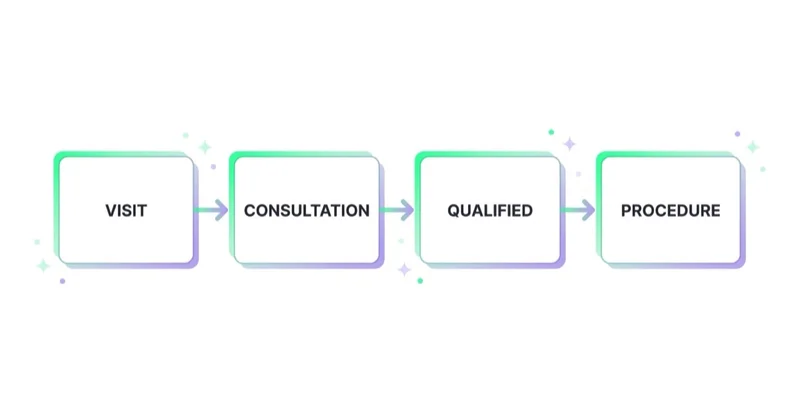
Useful stages to track:
- Ad click or organic visit.
- Call, form, chat or scheduling action.
- Contacted lead.
- Procedure interest confirmed.
- Consultation booked.
- Consultation attended.
- Candidate qualified or referred elsewhere.
- Treatment plan accepted.
- Procedure performed or package started.
- Revenue, margin or treatment-value proxy.
This structure prevents the account from optimizing toward the cheapest inquiries. A high-value surgical consultation that attends and qualifies can be worth far more than multiple low-fit inquiries about discounts. If values are available in a privacy-safe way, Smart Bidding should learn from qualified consultation and treatment-value signals rather than raw forms.
SEO and AEO for cosmetic surgery
Organic content is critical because cosmetic surgery decisions often involve weeks or months of research. AEO and LLM-facing content should be clinically careful, not sales-heavy.
Useful content assets include:
- procedure pages with candidacy, process, recovery and realistic expectations;
- surgeon bio pages with credentials and special interests;
- FAQ sections for consultation-level questions;
- local pages where the clinic has a real presence;
- before-and-after gallery governance pages;
- financing and consultation fee pages where compliant;
- safety, anesthesia and facility information;
- recovery timelines written with medical review;
- comparison pages that do not overstate or dismiss alternatives;
- content explaining when consultation is required.
E-E-A-T matters here because the topic touches health and body-image decisions. Content should be reviewed by qualified clinical stakeholders, updated when procedures or policies change and written in a way that helps a person ask better questions at consultation.
Space Ads operating approach
At Space Ads, health-adjacent and regulated categories are audited as a complete acquisition system: intent, policy, creative, landing pages, privacy, CRM and revenue quality. Across daily reviews of 25+ client accounts and roughly 14M monthly data points analyzed through Space Ads OS, the recurring issue in aesthetic and surgical marketing is not simply high media cost. It is poor signal quality.
The work starts by separating surgical, injectable, laser and med-spa categories, then mapping each to policy-safe creative, procedure pages and CRM stages. Google Search is used for active intent. Meta supports education and credibility within platform rules. Tracking is reviewed before scaling so campaigns optimize toward qualified consultations and treatment value instead of raw lead count.
When a practice is unsure whether campaigns are compliant, privacy-safe and measuring real business value, a marketing audit is the right entry point. Ongoing acquisition work sits under performance marketing, often with direct channel work in Google Ads, Meta Ads, SEO and CRO.
30-day action plan
- Segment procedures by surgical, non-surgical, skin/laser, reconstructive and med-spa categories.
- Review platform policy, privacy requirements, consent language and local medical advertising rules.
- Audit every landing page for claims, visuals, disclosures, credentials, tracking tags and form fields.
- Build Google Search campaigns by procedure, city, consultation intent and brand/surgeon demand.
- Add negative keywords for jobs, courses, DIY, free, pictures-only searches and unsupported procedures.
- Create Meta assets around consultation, education, clinic trust and realistic expectations.
- Review before-and-after usage by procedure, placement and consent status.
- Remove or redesign tracking that can expose sensitive health information.
- Connect CRM stages from inquiry to consultation, qualification and treatment value.
- Run weekly reviews with marketing, clinic leadership and compliance owners.
Common mistakes
| Mistake | Better approach |
|---|---|
| Treating surgery like beauty retail | Build a consultation-first system around trust and qualification |
| Chasing cheap leads | Optimize toward qualified consultations and treatment value |
| Using shame-based creative | Use neutral, educational and process-led messaging |
| Applying one before-and-after rule everywhere | Review procedure, placement, consent and platform policy separately |
| Sending all traffic to a generic page | Use procedure-specific pages with realistic expectations |
| Passing sensitive data to ad platforms | Review tags, forms, URLs, server-side events and CRM imports |
| One bid target for every procedure | Segment by value, decision cycle and qualification rate |
| Publishing generic medical content | Use clinically reviewed, procedure-specific educational content |
FAQ
What is plastic surgery marketing?
Plastic surgery marketing is the system used to attract, educate and qualify prospective patients for cosmetic or reconstructive consultations. It includes Google Ads, Meta Ads, SEO, reputation, procedure pages, privacy-safe tracking, consultation follow-up and measurement from inquiry to accepted treatment plan.
Can plastic surgery practices advertise on Google?
Google allows some healthcare-related advertising in certain locations and circumstances, but healthcare ads and destinations must follow applicable law, industry standards and Google policy. Some healthcare categories require certification or are limited by location. Cosmetic surgery campaigns should be reviewed against healthcare policy, personalized advertising restrictions and local rules before launch.
Can Meta ads show before-and-after photos for cosmetic procedures?
Meta allows ads for cosmetic products, procedures and surgeries when targeting adults, but ads must not use negative self-perception tactics. Meta also restricts certain side-by-side comparison formats for wrinkle treatments such as Botox, dermal fillers and other anti-aging treatments. Each procedure and placement should be reviewed before creative goes live.
What should a cosmetic surgery landing page include?
A good landing page should explain the procedure, consultation process, credentials, candidacy, limits, recovery expectations, realistic outcomes, privacy notice and next step. It should not promise a specific result or collect unnecessary sensitive details in an unsecured paid-media form.
How should cosmetic surgery conversions be tracked?
Tracking should connect ad source to calls, forms, consultations, qualification, accepted treatment plans and treatment value while protecting sensitive health information. Client-side pixels on booking, intake or patient pages should be reviewed carefully, and downstream conversion imports should avoid sending procedure or patient details to ad platforms.
What is the best metric for cosmetic surgery marketing?
The best metric is cost per qualified consultation and cost per accepted treatment plan, supported by treatment value. Cost per lead is secondary because many inquiries may be low-fit, unrealistic, outside scope or unlikely to attend.
In short
Plastic and Cosmetic Surgery Marketing performs best when it is calm, precise and consultation-led. The strongest campaigns do not exploit insecurity. They answer real questions, build trust, respect platform policy, protect health information and route qualified prospects into a responsible clinical process.
Google Search should capture active procedure intent. Meta should educate and build credibility without negative self-perception tactics. SEO should support research and trust. Reporting should optimize toward qualified consultations and treatment value, not raw form volume.
Sources
- Google Ads Policy Help - Healthcare and medicines
- Google Ads Policy Help - Health in personalized advertising
- Meta Transparency Center - Health and Wellness advertising standard
- Meta Transparency Center - Privacy Violations and Personal Attributes
- HHS - Online tracking technologies and HIPAA
- FTC - Health products compliance guidance
Continue learning
Continue reading

Language School Marketing: Two Businesses, One Building
Language schools often combine consumer enrolment and corporate training. Market them as separate buying journeys, then connect campaigns to attendance, enrolment, group contribution and continuation.

Driving School Marketing: Selling Instructor Hours, Not Courses
A practical system for growing a driving school around real instructor capacity: local demand, transparent lesson offers, compliant proof, responsive booking and completed-pupil value.

Bike Shop Marketing: The Workshop Pays the Rent
A practical marketing system for bike retailers and workshops: model capacity and contribution, capture local service demand, promote in-stock bikes, and turn first visits into lasting customer relationships.