Aesthetic clinic marketing should be built around qualified consultations, not raw lead volume. The buyer is making a decision about appearance, health, procedure risk, provider trust and expected outcome. That requires a different operating model from a med spa or beauty salon campaign.
The strongest aesthetic clinic campaigns are measured, specific and restrained. They capture high-intent treatment demand, explain the consultation process, avoid pressure around body image, protect sensitive tracking data and report on consultation quality rather than cheap enquiries.
Key Takeaways
- Qualified consultations are the main metric. Track enquiry quality, booked consultation, show rate, treatment start and repeat care.
- Search should be structured by procedure and intent. Treatment, location, price, consultation and provider terms should not be merged into one broad campaign.
- Creative must be policy-aware. Google and Meta health, cosmetic-procedure and personalized-advertising rules should shape the brief before production.
- Treatment pages need clinical clarity. Indications, qualification, contraindications, process, expectations and aftercare matter more than broad claims.
- Tracking should avoid sensitive payloads. Treatment names, conditions, appointment reasons and identifying data should not be sent casually to ad platforms.
- Provider trust is the conversion asset. Credentials, process, reviews and realistic expectations reduce friction before consultation.
Aesthetic clinic vs med spa
The terms overlap in the market, but they do not always describe the same business. A med spa may focus on a broader mix of injectables, laser, skincare, memberships and repeat wellness-style services. An aesthetic clinic often presents itself with a more clinical or procedure-led positioning, especially when medically qualified providers, advanced devices or invasive procedures are central to the offer.
That distinction affects marketing:
| Area | Med spa | Aesthetic clinic |
|---|---|---|
| Primary acquisition metric | booked appointment | qualified consultation |
| Communication style | local trust plus repeat care | clinical trust plus suitability |
| Content emphasis | treatment experience, reviews, maintenance | qualification, risks, expectations, provider authority |
| Paid social | education and re-engagement | restrained education and consultation framing |
| Measurement | appointment and repeat value | consultation quality, treatment start and patient value |
Both need policy-safe marketing. Aesthetic clinics usually need stricter message control because the treatments may be more invasive, higher value or more sensitive.
The consultation is the product of the campaign
For an aesthetic clinic, the campaign should not promise that a specific procedure is right for the user. It should help the user book a consultation where suitability can be assessed.
The conversion path:
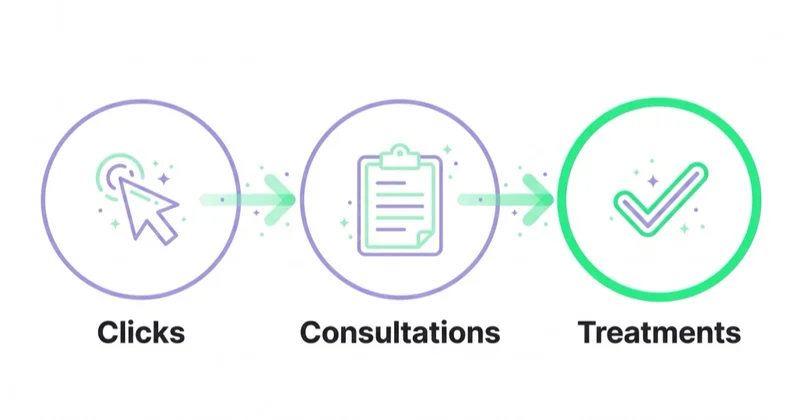
- User researches a concern, procedure or provider.
- User compares clinics, credentials and reviews.
- User reads the treatment page.
- User books or requests a consultation.
- Clinic qualifies the user.
- User attends.
- Treatment plan is agreed or declined.
- Revenue and repeat care are measured.
That path is slower than a normal local service. It also produces better data if the clinic records stages properly. A form submit is not the same as a qualified consultation. A booked consultation is not the same as a shown appointment. A treatment start is not the same as long-term value.
Google Search for aesthetic clinics
Search is usually the strongest paid channel when the clinic has local demand and treatment pages that can support it.
Structure campaigns by:
- procedure or treatment category;
- location;
- consultation intent;
- price and cost intent;
- provider or clinic brand;
- educational concern where legally and clinically appropriate.
Ad copy should avoid exaggerated promises. It can speak clearly about consultation, location, provider credentials, treatment category and booking path. For prescription-related or regulated terms, the clinic needs policy and legal review before launch.
Negative keywords should remove training, jobs, wholesale products, DIY, unrelated medical conditions, forum-style research and low-fit price shopping where it does not support the clinic model.
Meta and Instagram for aesthetic clinics
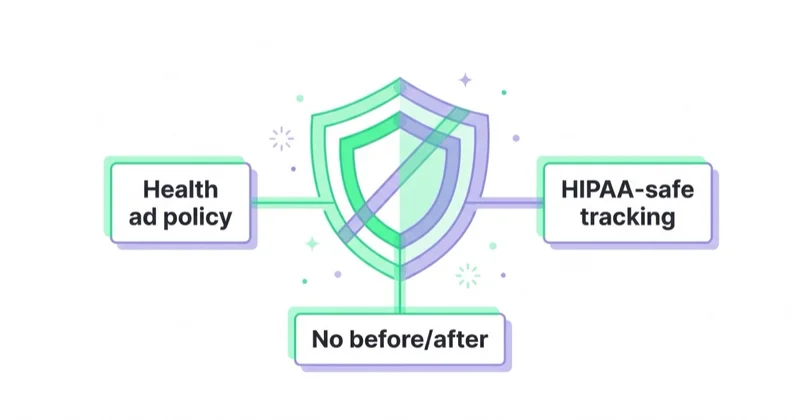
Meta and Instagram can support education and trust, but they are not the place for aggressive transformation messaging. Meta's policy requires cosmetic products, procedures and surgeries to target adults. Ads must not imply negative self-perception or suggest there is an ideal appearance the viewer should seek.
For wrinkle treatments such as Botox, dermal fillers and other anti-aging treatments, Meta does not allow side-by-side comparisons after use of a product or transformation. Even where a before-and-after format may be allowed in a narrower cosmetic context, many clinics should avoid transformation-dependent paid creative because it increases review risk and can weaken premium positioning.
Better creative:
- provider explaining how consultation works;
- treatment category education;
- questions to ask before a procedure;
- what affects suitability;
- aftercare and downtime education;
- clinic environment and team;
- patient journey without identifying or pressuring the viewer.
Avoid:
- "fix your flaw" language;
- direct claims that the viewer has a condition or appearance problem;
- outcome certainty;
- side-by-side transformation creative in sensitive categories;
- product-like claims for prescription treatments.
Treatment pages and trust assets
Aesthetic clinic landing pages should reduce uncertainty without overselling.
Include:
- treatment category and location;
- who may be suitable;
- when consultation is required;
- contraindications or a clear qualification note;
- expected process;
- downtime and aftercare where relevant;
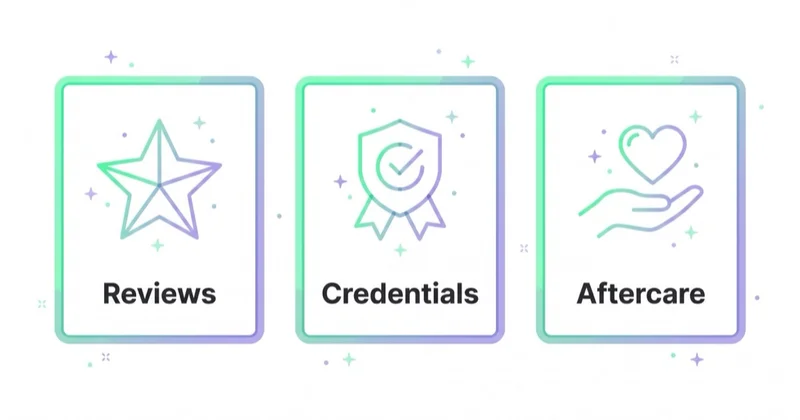
- provider credentials;
- pricing or consultation fee where appropriate;
- reviews or patient experience signals;
- booking path.
The page should make it easy to book a consultation and equally clear that consultation determines suitability. That protects the user and improves lead quality.
Privacy-aware tracking
Tracking is one of the highest-risk areas for aesthetic clinic advertising. A normal marketing pixel can capture URL paths, button text, form metadata, query strings and selected treatment categories. Depending on the clinic and jurisdiction, that data may be sensitive.
Safer operating principles:
- use generic conversion names such as
consultation_requested; - avoid passing treatment names or conditions in event names;
- strip URLs, query strings and form details where unnecessary;
- do not send names, emails, phone numbers or appointment reasons without a permitted basis and review;
- use server-side controls where possible;
- document vendor roles and consent flows;
- involve healthcare privacy counsel for HIPAA, state privacy laws and similar obligations.
HHS guidance on tracking technologies warns that regulated entities can disclose PHI through tracking vendors without a permitted basis, authorization or business associate agreement. The details depend on the clinic and data flow, so no ad-platform setup should be described as automatically compliant.
Measurement model
The reporting model should follow quality.
| Stage | Why it matters |
|---|---|
| Raw enquiry | demand volume, but noisy |
| booked consultation | first serious commercial signal |
| shown consultation | reflects intent and operational follow-up |
| qualified consultation | shows fit and suitability |
| treatment start | connects marketing to revenue |
| repeat care | shows long-term value |
Where volume is sufficient and privacy permits, qualified stages can be imported back into ad platforms. If not, they should still appear in management reporting. The clinic should know which channel produces cheap enquiries and which produces qualified patients.
Budget and economics
Aesthetic procedures can have higher first-treatment value than standard local services, but the allowable acquisition cost depends on more than top-line price. Use gross margin, provider time, product cost, consultation-to-treatment rate, repeat rate and required margin.
Useful formula:
allowable consultation cost =
(show rate x qualification rate x treatment start rate x gross profit)
+ expected repeat gross profit
- required margin
This keeps the account from chasing a universal lead target. A high-intent consultation can be worth more than ten low-quality forms. A low-cost enquiry can be poor economics if it does not show or qualify.
How Space Ads approaches aesthetic clinic marketing
At Space Ads, aesthetic clinic marketing starts with message control and measurement quality. We review treatment pages, Google Search structure, Meta creative, conversion tracking, privacy payloads and CRM stages before scaling spend.
The operating model:
- capture high-intent treatment and provider searches;
- position paid social as education and trust, not pressure;
- use consultation-focused landing pages;
- protect sensitive event data;
- measure booked, shown and qualified consultations;
- report treatment starts and repeat value where available.
This is where Google Ads, Meta Ads and marketing audit work best together: the campaign, message and measurement have to support the same clinical decision path.
Practical setup order
- Audit treatment claims, policy exposure and landing pages.
- Define consultation, qualification and treatment-start stages.
- Remove sensitive tracking payloads or route them through reviewed controls.
- Build Search campaigns by treatment category and local intent.
- Create consultation-focused landing pages.
- Launch Meta education with adult targeting and restrained creative.
- Review enquiry quality, show rate and treatment starts before scaling.
FAQ
What is aesthetic clinic marketing?
Aesthetic clinic marketing is paid and owned media for clinics offering cosmetic or aesthetic procedures. It focuses on qualified consultations, provider trust, policy-safe education and measurement from enquiry to treatment start.
How is aesthetic clinic marketing different from med spa marketing?
There is overlap, but aesthetic clinic marketing usually needs a more clinical communication model. It puts more emphasis on suitability, provider credentials, risks, consultation quality and privacy-aware tracking.
Can aesthetic clinics advertise on Meta?
Yes, but cosmetic procedure ads must follow Meta's health and wellness rules, including adult targeting and restrictions around negative self-perception. Sensitive transformation creative should be reviewed carefully before use.
What should aesthetic clinics optimise Google Ads toward?
Optimise toward qualified consultations where possible. If volume is low, start with booked consultation and use reporting to connect those bookings to qualification and treatment starts.
What should be on an aesthetic clinic landing page?
The page should include treatment category, location, suitability, consultation process, contraindication or qualification notes, provider credentials, expectations, aftercare where relevant and a clear consultation booking path.
In Short
Aesthetic clinic marketing is a trust and qualification system. Search captures procedure intent, Meta supports education, treatment pages build confidence and measurement should follow the user from enquiry to qualified consultation and treatment start.
Sources
- Google Ads Help - Healthcare and medicines policy
- Google Ads Help - Restricted targeting in personalized advertising
- Meta Transparency Center - Health and Wellness ad standards
- HHS - Use of Online Tracking Technologies by HIPAA Covered Entities and Business Associates
- Google Business Profile Help - Tips to improve your local ranking on Google
Continue Learning
Continue reading
Weight Loss Clinic Marketing: GLP-1 Demand Without Risky Claims
Weight loss clinic marketing in the GLP-1 era has to generate qualified consultations without risky body claims, prescription-drug shortcuts or privacy leakage. This guide covers Meta, Google Search, telehealth funnels, HIPAA-conscious tracking and program LTV.
Wedding Venue Marketing: Tours, Dates and Signed Bookings
Wedding venue marketing should fill the calendar with qualified tours and signed bookings, not just raw inquiries. This guide covers Google Search, Google Business Profile, wedding marketplaces, Instagram, Pinterest, galleries, off-peak dates, CRM follow-up and measuring tour-to-booking value.
Catering Marketing: Google Ads, Meta and Booked Events
Catering marketing works when event catering, corporate accounts and drop-off orders are measured separately. This guide covers Google Search, Meta, marketplaces, food trust, seasonality, quote quality and booked-event value.