Switching marketing agencies should be a controlled transfer of access, knowledge and decision-making—not a rebuild by default. The safest transition preserves the advertiser's accounts and data, keeps campaigns monitored, validates billing and conversion signals, and gives one team clear authority at every stage.
The work starts before notice is served. First identify which assets the company owns, which assets are merely shared by the agency and which critical dependencies live in a manager account, vendor login or employee's personal email. Then plan the contractual, technical and operational handover around the actual risk.
Switching agencies: the short version
- Review termination, notice, work-in-progress, intellectual-property, data-return and deletion terms before setting a date.
- Make the client the long-term owner and administrator of domains, analytics, tag management, core ad accounts and first-party data systems wherever platform rules allow.
- Do not assume an agency-owned account is impossible to transfer or easy to transfer. Google, LinkedIn and TikTok have different ownership and support processes; Meta and other platforms have their own restrictions.
- Preserve the existing advertising account when it is safe and commercially appropriate. Recreating it can lose campaign history, audiences, permissions, billing setup and manager-owned conversion dependencies.
- Use an overlap for observation and knowledge transfer, but appoint one execution owner so two agencies do not edit the same campaign at once.
- Freeze unnecessary structural changes around the handover. Fix urgent tracking, policy, security or budget risks immediately; schedule redesign after the baseline is understood.
- Revoke outgoing access only after the incoming team has passed the access and measurement checks—then remove it promptly and document completion.
1. Read the contract before giving notice
The contract determines timing and what the outgoing agency must deliver. Check:
- notice period, minimum term and renewal date;
- required form and recipient of notice;
- unpaid invoices and commitments already approved;
- treatment of work in progress, booked production and non-cancellable media;
- ownership and license terms for creative, copy, code, landing pages and research;
- whether editable source files are included;
- data export, return and deletion obligations;
- confidentiality and continuing restrictions;
- account access and transition assistance;
- subcontractors, software and client-specific licenses;
- portfolio or case-study rights after termination;
- dispute, governing-law and liability provisions.
Do not withhold undisputed payment as leverage or copy data outside the agreed legal basis. If ownership is contested, involve procurement or qualified counsel before changing credentials or removing access. This article is an operational checklist, not legal advice.
Set a target termination date only after comparing the contract with business events. Avoid major launches, seasonal peaks, migrations or finance close where possible. If the relationship creates an immediate security, compliance or spending risk, the response may need to be faster and guided by the contract and incident plan.
2. Separate ownership, access and billing
These terms are often treated as synonyms but they are not.
- Ownership or control determines which business container or account ultimately controls the asset under platform rules.
- Access is permission granted to a person, partner or manager account.
- Billing ownership determines who pays the platform and may have its own transfer process.
- Data controller/processor roles determine how personal data may be used, returned or deleted; they do not necessarily match platform ownership.
A company can have admin access to a campaign account while the agency owns the business container or manager-level conversion actions. It can own the ad account but depend on the agency's card, feed, API integration or customer list. Audit the full dependency rather than stopping when the interface shows "Admin."
3. Build an asset and access register
Record the asset ID, current owner, billing owner, internal administrators, agency access, technical dependencies and handover action. Include at least:
| Area | Assets to verify | Transition risk |
|---|---|---|
| Paid media | Google, Meta, Microsoft, LinkedIn, TikTok and programmatic accounts | Manager ownership, billing, shared audiences, automated rules |
| Measurement | GA4, GTM, server-side tagging, pixels, CAPI, consent platform, call tracking | Data gaps, duplicate events, agency-owned endpoints |
| Commerce and feeds | Merchant Center, catalogues, feed tools, marketplace and app-store accounts | Product disapprovals, broken schedules, lost access |
| First-party data | CRM, CDP, email/SMS, MMP, data warehouse and offline conversion jobs | Personal-data exposure, failed uploads, changed schemas |
| Web infrastructure | Domains, DNS, CMS, hosting, landing-page builders and repositories | Site outage, expired domain, inaccessible code |
| Organic and social | Search Console, Business Profile, social profiles and community tools | Publishing lockout, reviews/messages unmanaged |
| Creative | Approved exports, source files, footage, fonts, stock, music and talent rights | Uneditable work or expired usage rights |
| Operations | Dashboards, alerts, project tools, budgets, test logs and runbooks | Decisions repeated and incidents missed |
Use company-controlled email addresses and at least two suitable internal administrators for critical systems. Enable multifactor authentication, store recovery methods securely and avoid shared personal passwords. Agencies should normally receive partner or role-based access rather than the client's master login.
Platform ownership is not one universal rule
The claim that "an agency-owned ad account can never be transferred" is too broad. Platform behavior differs and changes.
Google Ads
An individual Google Ads account can be linked to and unlinked from manager accounts. Google states that unlinking does not remove the individual account's own campaign history or features. Manager ownership can be transferred, and billing can have a separate transfer process.
However, dependencies matter. If the account uses the outgoing manager's cross-account conversion actions or shared remarketing lists, unlinking can stop new conversion recording through that setup or remove list access. A monthly invoiced account can stop serving if it is unlinked from its paying manager before a new billing setup is active.
The sequence is therefore: establish direct admin access, map manager-owned conversions and audiences, arrange billing, validate replacement signals, link the new manager and only then remove the old dependency.
Google Analytics and Tag Manager
A GA4 property can be moved between Analytics accounts when eligibility and access requirements are met, and the property ID and reporting data move with it. Some configurations and organization relationships can restrict a move, while prior change history remains in the source account.
Google explicitly recommends that Tag Manager be administered by someone in the organization rather than only an external agency and recommends more than one administrator. A container can be exported as JSON, but importing a configuration into a new container is not the same as preserving the deployed container ID, permissions and uninterrupted collection.
LinkedIn Business Manager allows one Business Manager to own an ad account and share it with partners. LinkedIn's official onboarding material states that Support can facilitate an ownership transfer if the relevant parties agree. Confirm billing and page ownership separately.
TikTok
TikTok Business Center distinguishes owned and partner assets. TikTok documents transfer into a Business Center for eligible accounts and warns that an account already owned by another Business Center cannot use that self-service transfer path. Some ownership changes require a representative or support and may be irreversible or temporarily affect account availability.
Meta and other platforms
Meta provides role and business-portfolio controls, but asset history and ownership constraints depend on how the account, Page, pixel, catalogue and billing were created. Confirm the live configuration with official support before promising a transfer. Apply the same rule to Microsoft, Amazon, app stores and programmatic platforms: verify, do not infer from another platform.
If transfer is impossible, compare the cost and risk of negotiation, continued limited access and a controlled rebuild. Document exactly which history, audiences, approvals, integrations and billing features will not carry over.
4. Protect measurement before changing managers
The largest transition risk is often not campaign ownership but a hidden measurement dependency.
Create a conversion map containing:
- business event and source system;
- browser, server, app or offline collection method;
- tag/container and endpoint owner;
- platform conversion-action ID and whether it is primary;
- value, currency, count method and attribution window;
- consent behavior and privacy owner;
- deduplication key;
- CRM stages and upload schedule;
- last successful event and normal daily range;
- alerts and person responsible.
Check manager-level tracking. In Google Ads, an account can use account-specific or manager-created cross-account conversion actions. Removing the manager without replacing that dependency can stop conversion recording for new clicks. Similar dependencies exist with pixels, server-side APIs, MMP links, catalogue feeds and cloud jobs.
Run parallel validation where the platform supports it, but avoid double-counting primary conversions. Compare order IDs or lead IDs through analytics, CRM, platform and finance. Capture screenshots and exports of settings before any change, then monitor volume and value immediately after handover.
5. Preserve knowledge, not only files
Exports do not explain why the account looks the way it does. Ask the outgoing team for a written and recorded handover covering:
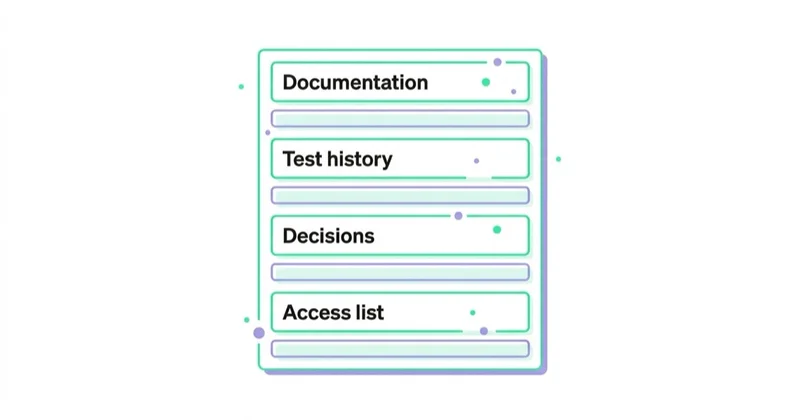
- current strategy, priorities and budget constraints;
- campaign and account architecture;
- conversion definitions and known data gaps;
- active experiments and their decision dates;
- creative hypotheses, fatigue and usage rights;
- audiences, exclusions, negatives and brand-safety settings;
- seasonality, promotions, inventory and margin constraints;
- platform representatives and open support cases;
- disapprovals, policy risks and recurring incidents;
- reports, alerts, automations, scripts and API jobs;
- what was tested, what happened and why it was stopped;
- next 30-, 60- and 90-day commitments.
Distinguish evidence from opinion. "Broad match did not work" is not useful without dates, budget, conversion setup, search-term quality and bidding conditions. A test register prevents the incoming agency from repeating a past experiment under the mistaken belief that it is new.
6. Plan overlap with one accountable operator
Overlap is valuable for read-only audit, questions, access validation and live knowledge transfer. It becomes dangerous when both agencies change bids, budgets, tags and creative at the same time.
Use a responsibility table:
| Period | Outgoing agency | Incoming agency | Client |
|---|---|---|---|
| Discovery | Continue agreed operations | Read-only audit and dependency map | Confirm contract, owners and priorities |
| Handover | Execute campaigns and explain decisions | Validate access, tracking and runbooks | Approve transition plan and resolve ownership |
| Cutover | Stop edits at agreed time, remain available for questions | Become named execution owner | Confirm authority and escalation contacts |
| Stabilization | Limited contractual support if agreed | Monitor, fix urgent issues, preserve baseline | Provide approvals and business context |
| Closure | Return/delete data, remove access and confirm | Confirm continuity and open risks | Revoke credentials and sign off checklist |
If overlap is not possible, require access and a documented snapshot before responsibility changes. Pause campaigns only when the business decision and risk justify it; leaving spend running unattended and stopping all demand blindly can both be costly.
7. Use a controlled cutover checklist
Before cutover
- Incoming access accepted and tested with each team member's own login.
- Client has internal administrator and recovery access.
- Billing method, credit line, spend limit and invoice contact confirmed.
- Conversion, feed and offline-upload tests passed.
- Budgets, schedules, promotions and inventory constraints documented.
- Open drafts, experiments and production work assigned.
- Baseline reports and settings exported.
- Escalation channel and after-hours decision maker named.
- Change freeze start and end agreed.
On cutover day
- Record campaign, ad, feed, conversion and billing status.
- Confirm who may publish or edit.
- Check spend pacing and disapprovals across platforms.
- Verify live landing pages, forms, checkout and phone routing.
- Confirm event receipt in analytics and ad platforms.
- Rotate shared secrets and API credentials where required.
- Do not remove the outgoing team until critical continuity checks pass.
After cutover
- Remove outgoing users, partners, apps, API tokens and notification routes according to the contract.
- Confirm data return or deletion in writing where required.
- Review change history daily during the initial period.
- Monitor spend, conversion count/value, feeds, site availability and lead flow.
- Close or reassign support cases, dashboards, scheduled exports and automations.
- Keep a transition issue log with owner, severity and resolution time.
Revoking a visible user is not sufficient if an integration, service account or server token remains active. Review business integrations and cloud credentials as well as platform roles.
Should the new agency rebuild the account?
There is no universal ban on early restructuring. Immediate action is justified when the inherited setup creates material risk—for example broken primary conversions, uncontrolled overspend, policy violations, insecure access or a campaign promoting unavailable inventory.
Avoid change for presentation alone. A different naming convention is not evidence that rebuilding will improve performance. Before a structural change, the incoming agency should explain:
- the diagnosed constraint;
- why the existing structure cannot support the solution;
- which historical comparisons or learning states may be affected;
- expected benefit and downside;
- rollout, experiment or rollback design;
- success metric and decision date.
Preserving the same advertising account normally retains its account history, but significant campaign edits can still affect platform learning. A new account creates additional loss of continuity. Make the smallest change that solves the evidenced problem.
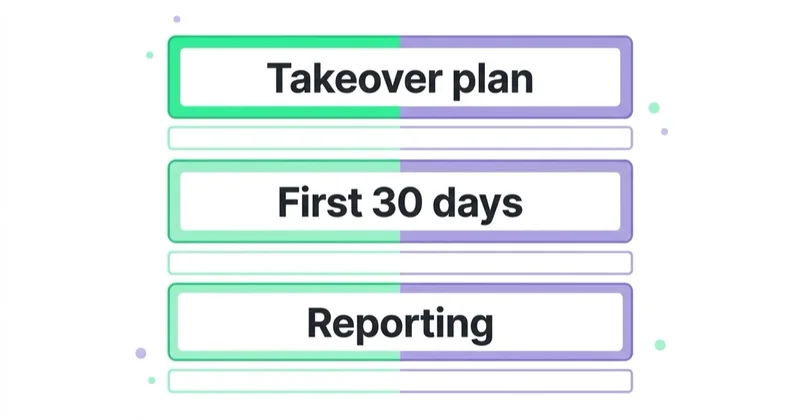
The first 90 days with the new agency
Days 0–14: continuity and truth
Validate access, billing, conversions, product feeds, landing pages, reporting and business constraints. Build a reconciled baseline. Fix urgent risks and keep nonessential structural change controlled.
Days 15–30: diagnosis and priorities
Analyze search terms, audiences, creative, profitability, lead quality, incrementality questions and past tests. Agree a prioritized roadmap with expected effort, impact and evidence.
Days 31–60: targeted improvements
Implement the highest-confidence changes in a sequence that can be evaluated. Establish creative and experiment cadence, budget rules, offline feedback and reporting decisions.
Days 61–90: structural work where justified
Scale successful changes, redesign components that truly constrain performance and document the operating model. Review the agency against delivery quality, decision-making and business outcomes—not whether every KPI improved immediately.
Ninety days is a governance framework, not a promise that all accounts need three months. A stable small account may transition quickly; an international stack with several channels and CRM bidding may need more preparation. A performance dip is possible but not inevitable, and it should never be accepted without a named cause and response threshold.
How to choose the incoming agency for a takeover
Ask prospective agencies to audit the transition, not only pitch future growth. Strong questions include:
- Which assets and manager-level dependencies do you need to verify?
- What access can start read-only?
- Which first-week changes would you make only for urgent risk?
- How will you validate conversion values against CRM or orders?
- How do you prevent two teams editing simultaneously?
- What would make you rebuild rather than preserve an account?
- Which deliverables must the outgoing agency provide?
- What is your plan if account ownership cannot be transferred?
- How will you handle personal data and delete it at termination?
- What does success look like at day 14, 30 and 90?
The answer should be specific to the business and platforms. "We always rebuild using our best-practice structure" is not a transition plan.
Common mistakes
| Mistake | Better approach |
|---|---|
| Giving notice before checking access and terms | Complete the contract and asset audit first |
| Assuming admin access means client ownership | Map ownership, permissions, billing and dependencies separately |
| Applying one transfer rule to every platform | Verify current official process for each asset |
| Running two agencies as simultaneous editors | Use overlap for knowledge but name one execution owner |
| Unlinking a Google manager before checking conversions and billing | Replace manager-owned dependencies and validate continuity first |
| Copying customer lists without governance | Follow controller instructions, contracts and data-protection requirements |
| Rebuilding to make the structure look familiar | Change only where diagnosis and expected value justify it |
| Removing users but leaving API access | Revoke partners, integrations, service accounts and tokens |
| Accepting an undefined transition dip | Set metric thresholds, owners and escalation rules |
| Treating file delivery as knowledge transfer | Capture decisions, tests, risks and operating context |
FAQ
How do you switch marketing agencies? Review the contract, audit asset ownership and dependencies, appoint the new partner, agree a responsibility and cutover plan, validate access/billing/measurement, transfer knowledge, switch execution ownership and then revoke the former agency's access and confirm data deletion.
Should the client own its advertising accounts? Usually, the client should retain long-term control of core accounts and grant role-based partner access. Platform, billing or organizational constraints can create exceptions, which should be explicit in the contract and asset register.
Can an agency-owned ad account be transferred? Sometimes. Google supports manager ownership and billing changes; LinkedIn can facilitate ownership transfer with agreement; TikTok has eligibility and support-dependent processes. Other platforms have different restrictions. Verify the exact asset and setup before promising transfer or assuming a rebuild.
Will unlinking a Google Ads manager delete campaign history? Google states that an individual account keeps its own campaign history when unlinked. But manager-owned cross-account conversion tracking, shared remarketing lists and monthly invoicing can be disrupted, so dependencies must be replaced before unlinking.
How long should agencies overlap? Long enough to validate access, measurement and knowledge transfer under the contract. Two to four weeks can be practical for many setups, but complexity and notice terms decide. Only one agency should have change authority at a time.
Should campaigns be paused during the transition? Not automatically. Continue monitored activity when ownership, billing, landing pages and measurement are sound. Pause a campaign when it creates a specific commercial, security, legal, policy or tracking risk.
Should the new agency restructure immediately? Only where urgent risk or a well-supported constraint justifies it. Otherwise, establish the baseline, preserve continuity and sequence changes so their impact can be evaluated.
How do you protect data when ending an agency relationship? Follow the contract and data-processing instructions, export authorized business records, revoke user and API access, rotate secrets, recover client devices or files where applicable, and obtain confirmation of return or deletion. Take legal or security advice for sensitive cases.
Is a performance drop inevitable after switching? No. Orientation and changes can create volatility, but a well-managed transfer may remain stable. Agree expected ranges and escalation thresholds instead of normalizing an unexplained decline.
Sources and further reading
- Google Ads Help — unlinking accounts from a manager
- Google Ads Help — cross-account conversion tracking
- Google Ads Help — account change history
- Google Analytics Help — moving a GA4 property
- Google Tag Manager Help — users and permissions
- LinkedIn Help — Business Manager ownership and partner access
- TikTok Business Help Center — transferring ad accounts
- Meta Help Center — ad account roles
Key takeaways
- A safe agency switch transfers control, context and responsibility—not only campaign files.
- Audit ownership, access, billing, conversion dependencies and personal-data obligations separately.
- Platform transfer rules differ; avoid absolute claims and confirm the live account structure.
- Preserve client-owned accounts and measurement where possible, but fix urgent risk immediately.
- Use overlap for observation and handover while one named agency remains the operator.
- Validate continuity before revoking access, then remove every user, partner, app and token promptly.
- Judge the new agency on a documented baseline, disciplined decisions and business outcomes.
Our approach to account takeover, measurement and controlled improvement is described on the performance marketing page. Related preparation is covered in how to choose a performance marketing agency, the marketing RFP guide and Google Ads change history.
Continue reading
ChatGPT Ad Formats and Character Limits: What Actually Fits
A ChatGPT ad appears below the response and carries six elements, with specific limits: title 3–50 characters, body up to 100. The "24 / 48 character" figures in trade coverage do not match the documentation, so this guide gives the full limits table, shows how to fit a useful message, and covers the image, product ads and end-to-end consistency with the landing page.
OpenAI Ads Manager: How to Set Up Your First ChatGPT Ads Campaign
OpenAI Ads Manager has three campaign levels, but launch also requires advertiser verification, billing, landing-page checks, measurement and deliberate choices for settings that cannot be changed later. This guide covers the setup sequence, budgets, context hints, oCPC, targeting, review and Ads API workflows.
Marketing RFP: How to Write a Brief That Gets Comparable Answers
A useful marketing RFP gives every shortlisted agency enough context to solve the same business problem. Use this practical structure to compare capability, team, approach and commercial fit fairly.