
TikTok, Instagram Reels and YouTube Shorts all offer full-screen short-form experiences, but an advertiser is not buying the same product three times. Reels is a placement inside Meta campaigns, Shorts can be reached through several Google Ads campaign types, and TikTok offers its own objectives, automation and Spark Ads permissions.
There is no responsible default such as "Reels for conversion, TikTok for culture, Shorts for reach." The right allocation depends on the audience evidence, objective, market, creative rights, available controls, conversion volume and what the business can measure. This guide turns those variables into a practical platform test.
TL;DR
- Choose the objective before the app. Reach, video views, leads, app activity and purchases require different campaign and measurement plans.
- A placement is not always a standalone channel. Reels and Shorts may receive spend as part of wider automated campaigns unless the chosen campaign type provides placement control.
- Verify controls and availability. Objectives, placements, image/video formats and automation features vary by account, market and date.
- Adapt the concept, claim and edit. Safe zones, pacing, captions, audio rights, calls to action and post permissions differ.
- Secure usage rights. Creator approval for one platform or organic post does not automatically permit paid use everywhere.
- Do not rank dashboards. Attribution windows and models differ; reconcile them with analytics, CRM, commerce and finance data.
- Fund a learnable test. One platform may be correct for a limited budget, but only when the choice follows audience evidence and a clear test—not a stereotype.
They are the same format, not the same ad platform
The vertical frame is the visible layer. Under it are different objectives, bidding systems, eligible placements, data connections, attribution settings, brand-safety options and reporting controls. Even the same platform changes with the campaign type.
On Meta, Reels can be selected manually or included within Advantage+ placements alongside Facebook, Instagram, Messenger and Audience Network. On Google Ads, Shorts inventory can be accessed through options including Demand Gen, Video View, Video Reach, Performance Max and app campaigns. Demand Gen can provide Shorts-specific channel selection in eligible setups; Performance Max is cross-channel by design. TikTok Smart+ and manual campaigns offer different degrees of control, and availability can vary.
Before calling a result "Reels performance" or "Shorts performance," confirm whether the report actually isolates that placement and whether the campaign was optimised across other inventory.
The comparison that matters
| Dimension | TikTok | Instagram Reels (Meta) | YouTube Shorts (Google) |
|---|---|---|---|
| Buying route | TikTok Ads Manager; manual and eligible Smart+ options | Meta Ads Manager; manual or Advantage+ placements | Google Ads; Demand Gen, video, Performance Max and app options |
| Native-post option | Spark Ads use owned or authorised TikTok posts | Existing Reels and eligible partnership content | Existing YouTube assets and creator partnership options where supported |
| Placement isolation | Depends on campaign and placement settings | Manual Reels selection is possible; automated campaigns may mix placements | Depends on campaign type; Demand Gen offers more channel control than Performance Max |
| Commerce connection | Pixel/Events API and catalog or Shop features where available | Pixel/CAPI, catalog and shop features where available | Google tag/GA4, Merchant Center and campaign-dependent product feeds |
| Creative review | TikTok preview, ad policy and placement specifications | Reels preview, vertical safe zone, audio and placement rules | Shorts previews and asset/campaign specifications |
| Measurement question | Did TikTok create qualified outcomes beyond other activity? | What did Reels add within or beyond the wider Meta campaign? | Can Shorts results be separated from other Google inventory? |
Feature labels do not establish commercial advantage. Catalog availability may matter to one retailer and be irrelevant to a B2B lead generator. Placement isolation may matter more than automation during a test, then less once a winner is established. Check the current account interface and official documentation before finalising the media plan.
How to decide where budget works hardest
Build a one-page decision brief:
- Business outcome: define the qualified sale, lead, app event or brand outcome and its economic value.
- Audience evidence: use customer research, analytics, platform planning tools and past experiments; do not infer buying behaviour from age stereotypes.
- Buying control: confirm whether the chosen campaign can isolate the placement, audience, geography and budget required by the test.
- Signal readiness: verify the optimisation event, consent, deduplication, CRM or order status and conversion delay.
- Creative feasibility: list the concepts, variants, creator permissions, music rights, captions and localisation the team can sustain.
- Operational constraints: account for inventory, landing-page quality, sales follow-up and the minimum spend needed to observe useful outcomes.
Score each platform against the same brief. Exclude options that cannot meet a hard requirement; test the remaining candidates. A portfolio is justified when each platform has a defined role or when the business is deliberately testing incrementality—not merely because three apps are available.
Glossary
- Short-form video — compact, usually vertical video designed for feed-based viewing; duration and specifications vary.
- Spark Ads — TikTok ads that use an owned or authorised organic TikTok post and retain its native post features.
- Advantage+ — Meta's automated campaign and targeting products.
- Performance Max — a Google campaign type that can serve across multiple Google channels, including eligible Shorts inventory.
- Placement — the surface where the ad appears; it is not always independently budgeted.
- Blended ROAS / MER — total revenue divided by total media spend; useful context but not proof of causality.
- Incrementality — the sales a platform genuinely adds, measured against a holdout.
Creative travels — but adapt, don't copy-paste
Start with a shared proposition and evidence library, then create platform-ready executions. Preserve the approved claim and product truth while adapting the opening, edit, overlays, call to action, safe zone and duration. Preview the real placement before launch.
Audio requires special care. A track available for an organic post may not be licensed for advertising or cross-platform reuse. Meta states that Reels ads should use original or royalty-free audio rather than Instagram's licensed music library. Creator agreements should state the platforms, paid-media usage, territories, duration, editing rights, likeness, whitelisting or post authorisation and renewal terms. A TikTok Spark Ads code authorises defined use on TikTok; it is not a blanket licence for Reels or Shorts.
Remove third-party watermarks and interface elements only when the underlying rights permit it. Add accurate captions and ensure essential meaning is not carried by sound alone. More creative guidance is available in the TikTok Ads playbook and social ads for brands.
Measure blended, not three dashboards
Platform reports use their own eligible events, attribution windows and models. The same order can appear in more than one system, and view-through treatment can materially affect a comparison. This does not mean every platform always overstates; it means attributed ROAS answers a platform-specific question and is not directly comparable without context.
Use a measurement ladder:
- Delivery: spend, reach, frequency and valid video-view definitions.
- Response: qualified site sessions or leads with consistent campaign naming and UTMs where applicable.
- Business outcome: confirmed orders, new customers, lead progression, returns, contribution and payback.
- Blended context: total revenue and contribution against total media spend, adjusted for promotions and seasonality.
- Incrementality: platform lift studies, conversion lift or geographic/holdout experiments where feasible.
Blended MER can reveal whether total efficiency improves as spend changes, but it cannot identify which platform caused the change on its own. See attribution for executives and MER vs ROAS.
A practical platform test
Run a test only when each candidate can receive enough budget and conversion volume to answer the question. Keep the offer, market, landing page and core proposition comparable. Use native variants rather than the exact same file, but document what changed. Set a decision metric, guardrails and observation window before launch.
If budget cannot support simultaneous tests, use sequential periods only with caution: seasonality, promotions and auction conditions make them weaker comparisons. Alternatively, concentrate on the platform with the strongest evidence and treat the first campaign as a validation of assumptions—not proof that the other two cannot work.
How Space Ads approaches short-form platform choice
We create a platform decision brief before a media split: commercial outcome, audience evidence, campaign type, placement control, event quality, creative capacity, rights and measurement method. Each platform must have a stated job and evidence threshold.
Campaign naming and source parameters are standardised, platform reports are reconciled with analytics, CRM and finance data, and placement reporting is checked before conclusions are drawn. Creative is adapted through one claim and evidence system so the brand remains consistent without forcing identical edits everywhere. The work lives in social media marketing, TikTok Ads and Meta Ads.
Common mistakes
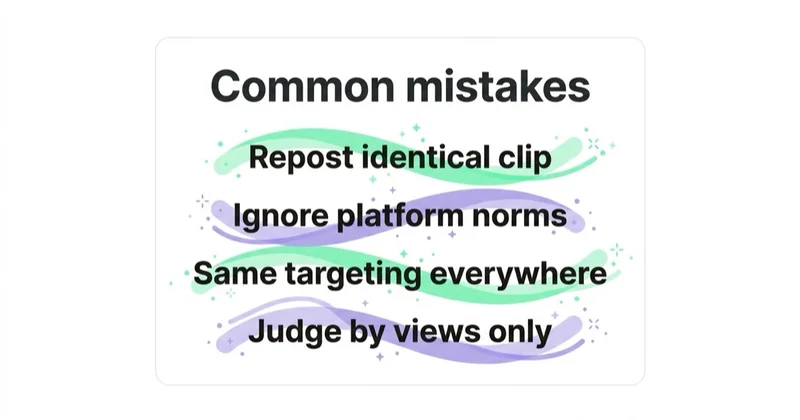
Common mistakes are calling an automated cross-placement result a Reels or Shorts test, reusing music or creator footage outside the licensed scope, and comparing platform ROAS without matching event definitions and windows. Other failures include choosing by demographic stereotype, spreading a small budget too thin to learn, or forcing one edit into every safe zone and interface.
FAQ
Which is best for ads: TikTok, Reels or YouTube Shorts?
There is no universal best platform. Define the outcome, verify audience evidence, compare available campaign controls and confirm measurement and creative readiness. Then run a funded test. The best option may also differ by market, product and campaign objective.
Can I use the same video on TikTok, Reels and Shorts?
You can reuse the underlying concept and approved claims, but check crop, safe zones, duration, captions, calls to action and audio rights. Creator and music permissions must cover each platform and paid use. Preview each execution before launch; do not assume a TikTok post is automatically cleared for Reels or Shorts.
Which platform has the youngest audience?
Audience composition varies by country, methodology and date, and broad platform statistics do not show whether your buyers are reachable at an efficient cost. Use current platform planning data, customer research and first-party results for the target market rather than a permanent age ranking.
How should I compare performance across the three?
First align outcome definitions, attribution windows and campaign scope. Reconcile platform data with analytics, CRM, order and finance records; inspect confirmed conversions, contribution and new customers. Use blended performance as context and incrementality tests where feasible. No single dashboard resolves cross-platform causality.
Should a small budget go to one platform or spread across all three?
Fund only as many platforms as can receive a meaningful test. If the budget cannot support three, choose the option with the strongest audience and operational evidence, define what would justify expansion and avoid claiming that an untested platform is ineffective. The required budget depends on auction costs, conversion rate and the decision threshold—not a fixed amount.
Key takeaways
- Similar-looking feeds sit inside different campaign systems, controls and measurement models.
- Verify whether Reels or Shorts is actually isolated before interpreting placement performance.
- Adapt one approved proposition to each platform and secure creator, music and paid-usage rights.
- Reconcile platform attribution with business data; blended MER is context, not causality.
- Add platforms only when each has a clear job and enough budget to produce useful evidence.
Sources and further reading
- TikTok Business Help Center — About Spark Ads and post authorisation
- Meta for Business — Facebook and Instagram Reels ads, placement and creative setup
- Google Ads Help — Campaign types that support YouTube Shorts ads
- Google Ads Help — Demand Gen campaigns and channel controls
Continue learning
Continue reading
Static vs Video Ads: Which Converts, and When to Use Each
Static and video ads can both sell. The useful question is which format communicates a specific idea in a specific placement at an acceptable total cost. This guide shows how to choose and test them fairly.

UGC Ads: How to Brief, Source and Run Creator Content That Performs
Creator-led ads can make a product easier to understand, but paid content must not masquerade as an independent customer opinion. Learn how to source, brief, contract, disclose and test creator content responsibly.
How Many Ad Creatives Do You Need Per Campaign?
The right creative count depends on the platform format, objective, audience, budget and question being tested. Use this framework to plan coverage, testing and refreshes without manufacturing a magic number.


































