Roofing company marketing is high-value local lead generation. A repair call, inspection request, storm-damage enquiry and full replacement estimate can look similar inside Google Ads, but they do not have the same business value. A raw lead count can therefore be misleading. The account has to show which campaigns create qualified inspections, estimates, sold jobs and revenue.
The channel mix is usually built around three jobs. Local Services Ads can create pay-per-lead visibility for eligible roofing businesses. Google Search can surface explicit repair, inspection and replacement queries with tighter keyword, location and landing-page control. Google Business Profile, reviews, local SEO, referrals and follow-up help homeowners verify the business before they call.
The hard part is not simply getting roofing leads. It is getting the right leads in the right service area, answering them quickly, separating repair from replacement demand, avoiding insurance-related overclaims, and feeding booked-job quality back into the account. This article applies the broader Google Ads for local businesses framework to roofing.
TL;DR
- Roofing leads must be qualified downstream. Calls, forms and Local Services Ads contacts should be connected to inspection booked, estimate issued, job sold and job value.
- Local Services Ads belong on the test plan where roofing is eligible. Google lists roofing as an eligible home service category and charges for valid customer leads rather than ad clicks.
- US roofing advertisers should prepare for the LSA migration. Google says the first phase begins in August 2026 for selected US home-service advertisers, including roofing, and moves campaigns into Google Ads as specialized Performance Max campaigns with pay-per-lead goals.
- Search still matters. Search campaigns give more control over keywords, storm terms, service pages, locations, exclusions and conversion signals.
- Storm demand needs prepared structure. Budgets, landing pages, call routing, negative keywords and compliance review should be ready before weather-driven demand spikes.
- Repair and replacement demand are different. Emergency repair, leak repair, roof inspection, roof replacement, commercial roofing and financing-related searches should not all share one blended target.
- Claims language needs discipline. Ads and landing pages should avoid implying insurer decisions, no-cost replacement or predetermined results.
Why Roofing Company Marketing Is Different
Roofing is a local service category, but it has a few traits that make generic lead generation advice weak.
| Roofing trait | Marketing implication |
|---|---|
| High job value | Expensive leads can still work if the close rate and job value are strong |
| Mixed intent | A small repair, emergency leak, inspection and replacement estimate need different economics |
| Weather sensitivity | Storms, hail, wind and seasonal shifts can change demand quickly |
| Trust-heavy decision | Reviews, licensing, insurance, warranties, photos and response speed affect conversion |
| Phone-heavy intake | Call tracking and call handling often decide the account's real quality |
| Service-area constraints | Distance, crew availability and roof type can make some leads unprofitable |
A roofing company should not optimize toward the cheapest lead if the cheap lead is a job seeker, DIY researcher, out-of-area homeowner, warranty complaint, materials-only query or low-value repair outside the service model. The useful metric is cost per qualified opportunity and cost per sold job.
Local Services Ads vs Search Ads
Local Services Ads and traditional Search campaigns solve different parts of roofing lead generation.
| Area | Local Services Ads | Google Search campaigns |
|---|---|---|
| Pricing model | Pay for customer contacts that Google treats as leads | Pay per click |
| Eligibility | Category, market and verification dependent | Broader availability |
| Control | Less keyword and landing page control | More control over keywords, ads, pages and negatives |
| Trust layer | Google Verified badge where applicable | Trust comes from supportable claims, the page, reviews and business profile |
| Best use | High-intent local demand where lead quality is acceptable | Service-specific intent, storm campaigns, brand, commercial terms and controlled testing |
Google's Local Services Ads page lists roofing among eligible home services and describes a pay-per-lead model. That makes LSA a relevant channel to evaluate for roofers in supported markets. Eligibility, screening and lead types vary by category and location. The campaign still needs management: service categories, service areas, profile quality, reviews, lead review and intake discipline can change the economics.
The 2026 Local Services Ads migration
As of July 2026, Local Services Ads still operates as a distinct product, but Google has announced a phased migration into Google Ads. The first phase starts in August 2026 for selected US home and storefront service advertisers, including roofing. Migrated campaigns become a specialized Performance Max campaign type with pay-per-lead goals. Despite the name, Google says these campaigns will continue to:
- charge for valid leads rather than ad clicks;
- serve only in the existing local placements on Google Search and Maps;
- use service categories, areas and other settings rather than keywords;
- carry an eligible advertiser's verification status and Google Verified badge into Google Ads.
The operational changes matter. Google will convert average weekly budgets to average daily budgets, retire manual maximum-cost-per-lead bidding and move lead management into Google Ads. Previous campaign reports will not carry over. An account administrator should therefore export historical performance and lead-quality data before the assigned migration date, then verify transferred services, locations, schedules, budget and bidding settings. Google says it will send advance notifications and migrate accounts in phases; do not assume that every roofing account changes on the same day.
Search campaigns remain important because they provide more control. A contractor may need separate campaigns for:
- emergency roof repair;
- roof leak repair;
- roof inspection;
- roof replacement;
- metal roofing;
- flat roof or commercial roofing;
- storm damage inspection;
- brand searches;
- competitor or comparison searches where legally and commercially appropriate.
The dedicated Local Services Ads guide covers the LSA mechanics in more detail.
Campaign Structure by Roofing Intent
Roofing campaigns should be structured around intent and job value, not only keywords.
| Intent | Example searches | Landing page and measurement |
|---|---|---|
| Emergency repair | roof leak repair, emergency roofer | Fast call path, response time, qualified call |
| Inspection | roof inspection near me, hail roof inspection | Inspection booking, service area, proof |
| Replacement | roof replacement cost, new roof estimate | Estimate request, financing info where accurate, sold job value |
| Storm damage | hail damage roof inspection, wind damage roof repair | Compliance-reviewed copy, call tracking, inspection booked |
| Commercial roofing | flat roof repair, commercial roof contractor | Commercial proof, property type, longer sales cycle |
| Brand | company name, reviews | Homepage/profile, call and form tracking |
One blended campaign makes these economics harder to manage. Replacement and commercial work may support a higher acquisition cost than small repairs, depending on margin and close rate. Storm-related enquiries can be urgent but noisy. Inspection campaigns may generate volume but need qualification to show which inspections become jobs.
Seasonality and Storm Demand
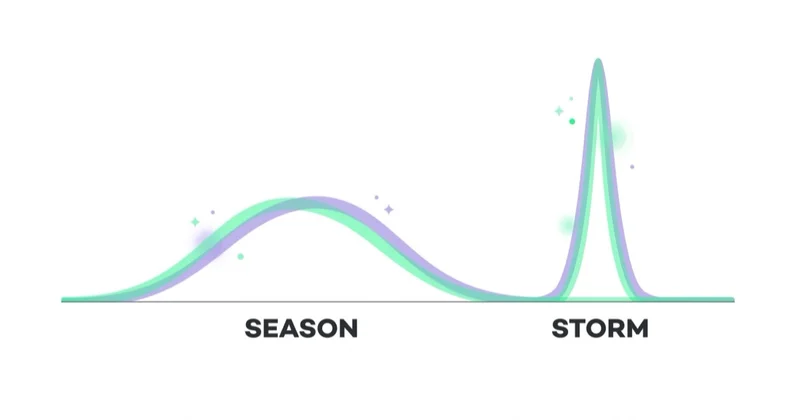
Roofing demand is often seasonal and weather-driven. Spring and summer can increase replacement, inspection and repair demand in many markets. Storms can create short periods of urgent search activity. Winter can be slower in some regions but still important for emergency leaks, commercial planning, maintenance, ice-related issues or future replacement research.
The account should be ready before demand moves. Waiting until search volume spikes creates several problems:
- campaigns launch without enough negative keywords;
- landing pages are generic;
- call routing is not staffed for urgent volume;
- budgets are changed under pressure;
- Smart Bidding receives shallow or noisy conversion data;
- ad copy may include claims that compliance or legal review would reject.
Prepared storm response does not mean exaggerated copy. It means controlled campaigns, reviewed landing pages, clear service areas, enough call capacity, and measurement that distinguishes real inspections from curiosity calls.
Trust Signals That Affect Conversion
Roofing buyers are cautious because the job is expensive and attached to the home. Media can bring demand, but the company still has to look credible when the homeowner checks the business.
Important trust assets:
- Google Business Profile with accurate service area, hours, categories and photos;
- review volume, review quality and owner responses;
- licensing and insurance information where relevant and accurate;
- manufacturer certifications where valid;
- workmanship warranty information written clearly;
- before-and-after project photos;
- service-area pages with real examples;
- clear process for inspection, estimate, installation and cleanup;
- financing information where accurate and compliant;
- phone answer rate and speed to appointment.
Google says local results are influenced by relevance, distance and prominence, and that reviews and accurate profile information can help a business stand out. For roofers, the profile is not only an SEO asset. It is a conversion asset that supports Search, LSA, referrals and branded research.
Measurement: Calls Are Not Enough
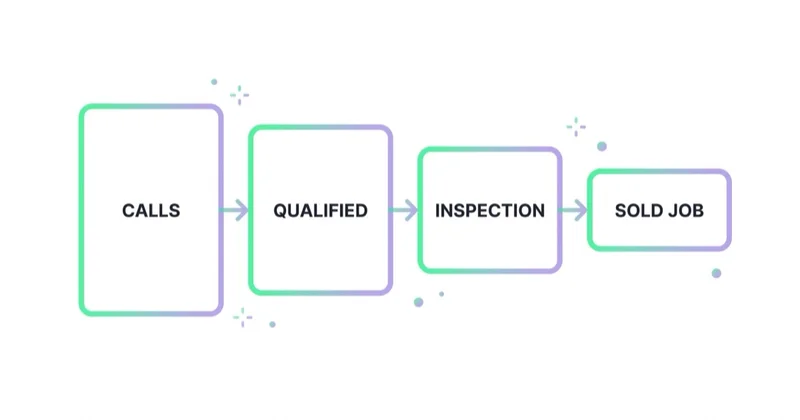
Roofing intake is often call-heavy, but counting every call as a conversion is too shallow. A 12-second wrong-number call, a materials question and a booked inspection should not teach Google Ads the same lesson.
The measurement ladder should usually look like this:
| Stage | Example | Usefulness |
|---|---|---|
| Click | Search ad click | Too shallow |
| Call click | Tap on phone number | Useful as a micro-conversion only |
| Qualified call | Reviewed disposition confirms service fit and genuine demand | Useful |
| Inspection booked | Appointment scheduled | Strong signal |
| Estimate issued | Sales team visited or assessed the project | Stronger signal |
| Job sold | Contract signed | Strong commercial outcome signal |
| Job value | A consistent revenue or value proxy is available | Useful value signal where reliable and permitted |
Google call reporting can use forwarding numbers and call duration to help measure call conversions. Duration is a screening rule, not proof of qualification: a long support call can still be irrelevant, while a short emergency call can book an inspection. A better setup connects permitted click and call identifiers to CRM dispositions, then imports consistently defined outcomes where consent, privacy rules and platform policy allow it. Send only the minimum data needed for matching and measurement; do not upload recordings, free-text notes, insurance documents or unnecessary customer details. For implementation principles, see call tracking for PPC and lead generation.
Negative Keywords for Roofing
Roofing search traffic contains many expensive false positives. A mature negative keyword system is often one of the fastest ways to improve cost per booked job.
Common negative themes:
| Waste pattern | Examples |
|---|---|
| Jobs and careers | roofing jobs, roofer salary, apprenticeship, hiring |
| DIY | how to repair a roof, roof patch tutorial, fix roof leak yourself |
| Materials-only | shingles price, roofing nails, roll roofing, roof tar, underlayment |
| Tools and equipment | roofing ladder, nail gun, safety harness |
| Free or template searches | free estimate template, invoice template, contract template |
| Information-only | roof lifespan, types of roofing, what is flashing |
| Wrong property type | commercial terms for residential-only contractors, or the reverse |
| Out-of-area locations | cities, counties or neighbourhoods outside the profitable service area |
Do not copy a negative list blindly. Some contractors sell materials, some do commercial work, some want inspection content, and some have separate recruitment campaigns. The list should reflect the actual business model.
Landing Pages for Roofing Leads
Roofing landing pages should match the query and reduce uncertainty.
A repair page should emphasize:
- fast contact options;
- service area;
- roof leak, wind or hail symptoms;
- emergency availability where accurate;
- photos and proof;
- inspection or estimate process;
- license and warranty information where relevant.
A replacement page should emphasize:
- roof types and materials;
- estimate process;
- financing information where accurate;
- project photos;
- warranty;
- installation timeline;
- cleanup and protection process;
- reasons to choose the contractor.
A storm page should be especially careful. It can explain inspections, visible damage, documentation, response times and service area. It should avoid implying that an insurer will fund the work, that the claim result is predetermined or that the homeowner receives a no-cost roof. Review ad copy and page copy before storm campaigns go live.
For conversion structure, landing page fundamentals apply directly to roofing: message match, proof, one primary action, mobile speed and reliable tracking.
Bidding and Budget Rules
Automated bidding follows the conversion goals and values available to the campaign. If every call is primary and no later quality feedback returns, the system has little basis for distinguishing a booked replacement inspection from an irrelevant call.
Better bidding inputs:
- qualified calls confirmed by a call disposition, with duration used only as an initial filter;
- booked inspections;
- issued estimates;
- signed jobs;
- job value or a stable value proxy where data is timely, reliable and permitted;
- separation between repair, replacement and commercial conversion goals.
Budget should also follow operational capacity. A contractor with limited crews should not blindly increase spend during every weather spike if the team cannot answer calls, inspect roofs quickly or install work within a reasonable window. Missed calls and delayed follow-up turn high-intent demand into wasted spend.
For automation mechanics, see Google Ads Smart Bidding.
How a Space Ads engagement can be structured
A roofing acquisition engagement can start with practical commercial questions rather than a blended lead target. Broad search terms, missed calls, shallow conversion tracking, weak service-area logic, generic landing pages and missing CRM outcomes can all make a campaign look healthier than the booked-job pipeline really is.
Useful audit questions include:
- Which services create the best margin: repair, replacement, commercial, inspection, maintenance or storm response?
- Which service areas create profitable jobs after travel and crew time?
- Which calls become inspections?
- Which inspections become estimates?
- Which estimates become sold jobs?
- Which keywords and locations create poor-fit enquiries?
- Which landing pages or reviews affect close rate?
From there, a media plan can combine Local Services Ads or the migrated pay-per-lead campaign where eligible, Search campaigns by intent, Google Business Profile recommendations, landing pages, call tracking, negative keywords and permitted CRM feedback. The exact implementation scope should define who owns the website, call system, CRM, lead response and legal review. A marketing audit can show whether a roofing account is generating qualified opportunities or only visible lead volume. Ongoing campaign execution fits under performance marketing.
A practical way to market a roofing company
- Define the profitable job mix. Separate repair, replacement, inspection, commercial and storm work before campaign structure is built.
- Set up Local Services Ads where eligible. Verify the profile, service categories, service area, lead handling and review process. If Google schedules migration, export historical reports first and audit the transferred campaign in Google Ads.
- Build Search by intent. Separate emergency repair, replacement, storm inspection, commercial and brand demand.
- Protect the account with negatives. Exclude jobs, DIY, materials, tools, information-only and out-of-area searches.
- Create matching landing pages. Do not send storm, replacement and emergency repair traffic to one generic page.
- Track calls and CRM stages. Move from raw calls to qualified calls, inspections, estimates and sold jobs.
- Prepare storm campaigns in advance. Keep copy, pages, budgets, call routing and compliance review ready before demand spikes.
- Review by booked-job economics. Shift spend toward services and areas that produce profitable work.
Stop doing / do instead
| Stop doing | Do instead |
|---|---|
| Counting every call as a lead | Review call quality and booked inspections |
| Mixing repair and replacement in one target | Separate by job value and intent |
| Launching storm campaigns after demand spikes | Prepare pages, budgets and call routing in advance |
| Making insurance outcome promises | Use factual inspection and documentation language |
| Running broad search without negatives | Exclude jobs, DIY, materials, tools and poor-fit terms |
| Sending every click to the homepage | Match landing pages to emergency, replacement, storm and commercial intent |
| Measuring CPL only | Measure cost per inspection, estimate, sold job and job value |
FAQ
What is roofing company marketing?
Roofing company marketing is the system used to generate and convert local demand for roof repair, replacement, inspection, commercial roofing and storm-related services. It usually includes Local Services Ads, Google Search, Google Business Profile, local SEO, reviews, landing pages, call tracking, CRM feedback and referral or retention activity.
Should roofers use LSA or Google Ads?
Both channels can matter. Local Services Ads are worth testing where roofing is eligible because they appear in local service contexts and use a pay-per-lead model. Search campaigns provide keyword, landing-page, negative-keyword and conversion control. Test their qualified-opportunity and sold-job economics separately. Selected US roofing advertisers will begin moving from the LSA dashboard to specialized Performance Max campaigns with pay-per-lead goals from August 2026, so account owners should also prepare for migration.
How much does a roofing lead cost?
There is no reliable universal CPL. Cost depends on market, service area, season, competition, job type, match type, landing page, call handling, LSA profile quality and whether the metric is raw lead, qualified inspection, estimate or sold job. A low CPL can still be bad if the lead does not become profitable work.
When is the best time to advertise roofing?
Roofing advertising should usually be planned before seasonal and weather-driven demand rises. The exact timing depends on region and service mix. Replacement, inspection, repair, commercial planning and storm response can peak at different moments, so budgets should follow demand, capacity and lead quality rather than a single fixed calendar rule.
How should storm demand be handled in roofing ads?
Storm campaigns should be prepared before urgent search demand appears. The setup should include reviewed copy, service-area control, storm-specific landing pages, call routing, budget rules, negative keywords and CRM tracking. Copy should focus on inspections, documentation and repair process, not insurer-decision promises.
What should roofing Google Ads optimize for?
Useful primary signals include qualified calls, booked inspections, issued estimates, sold jobs and a consistent job-value signal where the data is timely, reliable and permitted. Clicks, phone taps and raw calls remain diagnostic metrics because they do not show whether the inquiry became qualified or commercial work.
What are the most common roofing keyword exclusions?
Common exclusions include jobs, careers, salary, DIY, tutorial, materials, tools, templates, free resources, out-of-area locations and services the contractor does not offer. The final list should be adapted to the business model and reviewed from real search terms.
In short
- Roofing company marketing should be measured by booked and sold work, not raw leads.
- Local Services Ads are worth evaluating where roofing is eligible, but lead quality still needs review and selected US accounts should prepare for the phased migration beginning in August 2026.
- Search campaigns add control for service intent, storm demand, landing pages and exclusions.
- Repair, replacement, commercial and storm demand need separate economics.
- Call tracking and CRM feedback are essential because phone volume alone can be misleading.
- Strong negatives, local trust signals and prepared storm campaigns protect budget.
Need help connecting roofing media activity to inspections, estimates and sold jobs? Explore the Space Ads lead generation service. Local ads, Search, landing pages, tracking and CRM feedback can be scoped as one measurement system, while operational follow-up and legal review responsibilities are agreed with the client.
Sources
- Google Ads - Local Services Ads
- Google Ads Help - Local Services Ads transition to Performance Max campaigns with pay-per-lead goals
- Local Services Help - Getting started with Local Services Ads
- Local Services Help - About the Google Verified badge
- Local Services Help - Bidding documentation
- Google Ads Help - Call reporting documentation
- Google Business Profile Help - Local ranking documentation
Continue learning
Continue reading
Tree Service Marketing: Storm Leads and Booked Jobs
Tree service marketing has to capture emergency storm demand and steady planned work without wasting crew capacity. This guide covers Google Search, Local Services Ads, Google Verified, storm budgets, safety proof, call triage and cost per booked job.
Moving Company Marketing: Capture High-Intent Movers in Google
Moving company marketing is won through high-intent Search, fast quoting, local trust and booked-move measurement. This guide covers Google Ads, Local Services Ads, local vs long-distance intent, interstate trust signals, seasonality, capacity and CRM feedback.
Electrician Marketing: Google Ads and Local Services for Steady Jobs
Electrician marketing should produce profitable completed work, not just cheap calls. Learn how to connect Google Ads, Local Services Ads, dispatch capacity and job economics.