Affiliate marketing is a model in which a brand pays partners for an agreed, tracked outcome, usually an approved sale or qualified lead. Partners can be content publishers, comparison services, newsletters, creators, loyalty platforms or cashback portals. Because compensation follows an event, cost usually scales with attributed outcomes rather than impressions. This does not remove budget risk: weak validation, fraud, excessive rates or non-incremental orders can still consume margin quickly.

The central management question is therefore not simply how much affiliate revenue appears in a network dashboard. It is how much profitable demand the programme added after refunds, cancellations, partner fees, discounts, fulfilment costs and overlap with channels the brand already funded.
TL;DR
- Payment follows a tracked outcome, but a programme can still overspend against margin. The main controls are eligibility, commission design, validation and credit.
- Partner types can play different roles. Content may introduce demand, while coupon or cashback may influence choice or appear late in an existing journey. Role is a hypothesis to test, not a label that proves value.
- The decisive question is incrementality — would this sale have happened without the partner — and it is answered by testing, not by attribution reports.
- Commission should follow contribution margin and partner role, not a single flat percentage across the catalogue.
- Brand-term bidding, coupon interception and code leakage need explicit contractual rules and monitoring.
- Payout logic needs a unique order ID, validation period and deduplication rules so one order does not generate conflicting commissions.
- Disclosure requirements vary by market. The advertiser should train and monitor partners instead of treating compliance as a clause that can be delegated away.
Two sides of the same word
Search demand for "affiliate marketing" is dominated by people who want to earn commission as publishers. This article is about the other side: running a programme as the brand paying commission. The mechanics look symmetrical and the economics are not — for a publisher the question is which programmes pay best, while for a brand the question is which partners add revenue that would not otherwise arrive.
Partner types, and what each actually does
| Partner type | What they do | Typical incrementality | Commission logic |
|---|---|---|---|
| Content and review sites | Explain a category or product during research | Can introduce new demand; branded review traffic may arrive later | Reward verified content, assisted value and new customers |
| Comparison and aggregators | Present alternatives at high purchase intent | Depends on whether the brand was already shortlisted | Test overlap with Shopping and paid search |
| Newsletters and niche communities | Recommend within an established audience relationship | Can open access to a relevant audience | Higher rate or fee-plus-commission when original content is required |
| Creators on commission | Produce content and distribute a tracked link or code | Varies by audience, content and deal structure | Commission-only or hybrid, with content usage rights defined separately |
| Loyalty and rewards platforms | Add a reward to the purchase decision | May shift brand choice or reward an existing customer | Segment new and returning customers; test holdouts where possible |
| Coupon and cashback | Supply a discount or rebate, often near checkout | Can convert price-sensitive buyers or claim existing intent | Tight code, attribution-window and placement rules |
| B2B referral or reseller partners | Introduce or sell into named accounts | Potentially high, but sales cycles and lead ownership are complex | Deal registration, accepted-opportunity rules and negotiated payout |
The table is a starting hypothesis, not a verdict on individual partners. A programme that pays one rate regardless of customer status, margin and journey position gives partners an incentive to optimise for claimable conversions. Differentiated terms make the programme easier to align with the value the brand actually needs.
The incrementality problem
This is the core of running a programme well.
Attribution answers "who touched the path". Incrementality answers "did the outcome change". They diverge most at the end of the journey, which is exactly where coupon, cashback and brand-bidding partners operate. A customer who has already added an item to the cart, opens a new tab to search for a discount code, clicks a coupon site's link and returns to complete the purchase has generated a commissionable click — without the partner having created anything.
Three practical controls:
Test rather than infer. A randomised holdout is the strongest design when the platform and volume allow it. Geo holdouts, partner pauses or matched-period tests can be practical alternatives, but they need comparable groups and controls for promotions, seasonality and other media. The mechanics are covered in incrementality testing.
Adjust attribution rules. Shorten the window for checkout-adjacent partners, and apply rules that prevent a last-second click from overriding an earlier meaningful touchpoint.
Separate new from returning customers. A higher rate for a genuinely new customer can align the programme with acquisition, but only if the definition of "new" is consistent across stores, email addresses, markets and the lookback period.
Designing commission
A flat percentage across the whole catalogue is the default and usually the wrong answer, for two reasons: it overpays low-margin products and it pays the same for a new customer as for a repeat buyer who needed no persuasion.
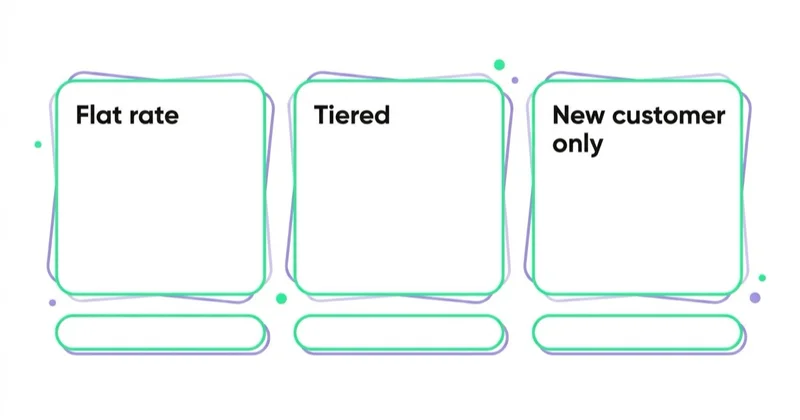
Better structures:
- Margin-tiered. Different rates by product category, following contribution margin rather than price. This requires reliable margin data at the level used for commission rules.
- New-customer weighted. A higher rate for first-time buyers, lower for returning ones.
- Performance-tiered. Rates that rise once a partner passes a volume or quality threshold, rewarding partners who invest in the relationship.
- Hybrid with content partners. A flat fee for production plus commission, which gets a partner to create something rather than only place a link.
Whatever the structure, the arithmetic that matters is commission against contribution margin, not against gross revenue. The approved commission should fit inside the margin left after product cost, payment fees, fulfilment, discounts, expected returns and other variable costs. Network or platform fees must be added separately.
A practical ceiling can be modelled as:
maximum commissionable cost = net order revenue − variable costs − required contribution
The payout base also needs a definition. Programmes commonly exclude VAT or sales tax, shipping, cancelled items, refunds, chargebacks, fraudulent orders and portions paid with non-commissionable credit. Without that definition, two teams can apply the same percentage and calculate different payouts.
Networks versus a self-hosted programme
| Affiliate network | Own platform | |
|---|---|---|
| Partner supply | Established, immediate reach | Recruitment becomes your job |
| Variable cost | Network fee on top of commission | Platform licence, lower per-sale cost |
| Control over terms | Network terms plus advertiser-specific conditions | Greater control, with more operational responsibility |
| Tracking | Consolidated interface and established partner workflows | The brand must implement, document and support it |
| Best for | Launching, reaching partners who already exist there | Mature programmes with direct relationships |
The right route depends on partner supply, internal capability, geographies, order volume and the value of control. A network can accelerate recruitment, while a direct platform can suit a brand that already has partner relationships and the team to operate them. Moving a partner outside a network may be restricted by the existing agreement or introduce migration and support costs, so fee savings should never be assumed without reviewing the contract and full operating cost.
Glossary
- Incrementality: whether an outcome would have occurred without the partner's involvement.
- Attribution window: the period after a click during which a conversion is credited to that partner.
- Deduplication: applying a defined rule so one order does not create duplicate affiliate payouts or conflicting channel records.
- Brand bidding: a partner buying ads on the brand's own name, then claiming commission on traffic the brand already owned.
- Contribution margin: revenue minus variable costs — the number commission should be judged against.
- Server-to-server (S2S) tracking: conversion tracking passed between servers rather than relying on browser cookies.
- Voucher/coupon partner: a site listing discount codes, typically reached late in the purchase journey.
Tracking that survives contact with reality
Two technical decisions determine whether a programme can be trusted.
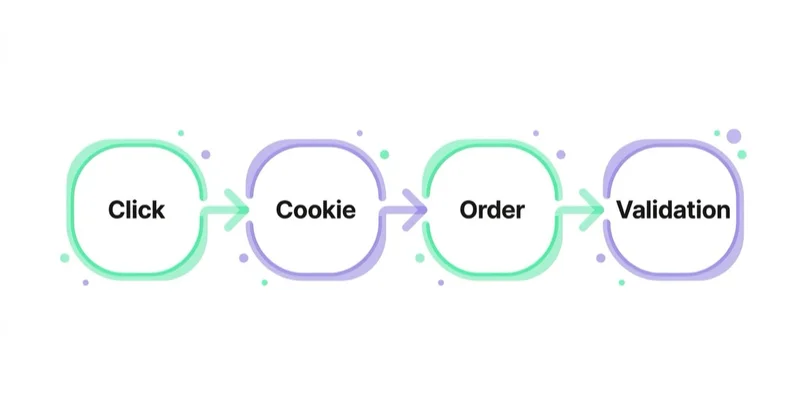
Browser-based versus server-to-server. Browser controls, consent and cross-domain journeys can reduce the completeness of client-side tracking. Server-to-server tracking can improve reliability, but it still needs an identifier captured lawfully, consent where required, secure data handling and a way to prevent duplicates. It is not automatically economical for every small programme.
Order identity and deduplication. Every conversion should carry a stable order or lead ID. The programme must define whether another channel interaction affects only analytical attribution or also affiliate eligibility. Two dashboards may legitimately claim influence over the same order; paying two affiliate partners for it is a separate rule. Payout priority, code ownership, cross-device cases and reversals should be agreed before launch, not reconstructed during a dispute.
Validation and reversals. Commission should remain pending until the return, cancellation or fraud window is sufficiently understood. The process needs reason codes and a predictable timetable: opaque mass reversals damage partner trust, while instant approval pays out on orders the brand may never retain.
Both problems are easier to solve at launch than to retrofit, which is an argument for treating the technical setup as part of the programme design rather than as an implementation detail delegated to whoever installs the tag.
Brand bidding and terms enforcement
Brand bidding is a common source of channel overlap: a partner buys the advertiser's name or a close variant in paid search and then seeks commission on the resulting order. It may be prohibited, selectively permitted or intentionally used for coverage, but the decision must be explicit.
The fix has three parts:
- A written policy. State whether trademark bidding, misspellings, direct linking and brand-plus-coupon terms are prohibited or permitted, and define the consequences.
- Monitoring. Check brand-term results across relevant markets, devices and times because auction visibility changes and violations may be intermittent.
- Enforcement. Removal from the programme, and reversal of affected commissions where the terms allow.
The same principle applies to coupon behaviour. Terms should address unauthorised code creation, expired-code pages, code leakage from private campaigns, browser extensions, forced clicks and promotion of discounts that are not genuinely available. Orders should be investigated on evidence rather than reversed solely because a coupon partner appeared late in the path.
Other controls worth defining include paid social, direct linking, domain misspellings, toolbars or adware, email marketing, sub-affiliate disclosure, use of brand assets, AI-generated claims, geographic restrictions and prohibited traffic sources.
Compliance and disclosure
Affiliate content is advertising, and disclosure obligations do not stop at the partner.
- In the US, the FTC says a commission relationship should be disclosed clearly and conspicuously near the recommendation or link. Advertisers need a reasonable programme to train, monitor and act on issues in their network.
- In the UK, CAP Code rules require marketing communications to be obviously identifiable. The appropriate label depends on whether the commercial nature is already clear from the context.
- In the EU, commercial communications, including affiliate marketing, must be disclosed under consumer-protection rules. Enforcement and the exact presentation requirements involve national law and authorities.
Practical implications: disclosure and permitted-claims rules belong in the partner agreement, onboarding should show acceptable examples, and risk-based monitoring belongs in the operating routine. Regulated categories require more oversight. Legal advice is appropriate when a programme spans jurisdictions or promotes health, finance, children's products or other sensitive categories.
How Space Ads approaches programme design
The professional starting point is a partner and economics map. Partners are grouped by role, traffic source, customer mix and journey position; the commission is then compared with net contribution after discounts, returns and platform fees. This shows where a programme rewards useful distribution and where it may merely reward the easiest claim on an order.
The next layer is governance. Before proposing growth, we review conversion eligibility, validation windows, code ownership, paid-search permissions, sub-affiliates, disclosures, data handling and reversal rules. We also establish which system is authoritative for the order ID, new-customer status and approved revenue.
Incrementality work comes after measurement is stable. A holdout, pause or geo test is designed around the partner type and available volume, with known promotions and media changes documented. Growth recommendations then use approved profit and incremental lift rather than network-attributed revenue alone.
Launching a programme: the first 90 days
Days 1–30 — design and instrument. Decide the commission structure against margin, define partner tiers and write terms covering traffic sources, trademark bidding, coupon behaviour, sub-affiliates, disclosure and reversals. Choose the network or platform, implement proportionate tracking, define order IDs and validation, and document the lawful data flow.
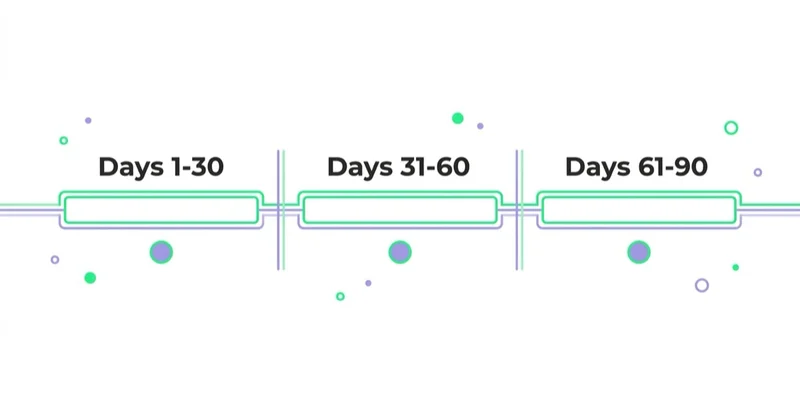
Days 31–60 — recruit against gaps. Recruit against a distribution gap rather than a target partner count: category education, comparison, a niche audience, loyalty or a qualified B2B introduction. Onboard each partner with approved claims, brand assets, disclosure guidance, tracking instructions and named support.
Days 61–90 — measure and correct. Review approved orders, new-customer mix, margin and reversals by partner, not only in aggregate. Run the first feasible holdout or partner-pause test. Adjust rates where evidence shows a partner is over- or under-rewarded, and enforce terms where monitoring has found breaches.
Common mistakes
| Stop doing | Do instead |
|---|---|
| Paying one flat rate across all partner types | Set rates by partner role and contribution margin |
| Judging the programme on network-reported revenue | Compare approved contribution and test incrementality with the strongest feasible design |
| Treating brand bidding as a technical issue | Write it into terms, monitor it, enforce it |
| Leaving order conflicts undefined | Set order identity, payout priority, validation and reversal rules before launch |
| Recruiting by partner count | Recruit against the gap in the funnel |
| Choosing tracking only by implementation ease | Match the design to journey, consent, identifier quality, volume and operating cost |
| Assuming disclosure is solely the partner's problem | Put training, permitted claims, disclosure and monitoring into programme governance |
FAQ
What is affiliate marketing? A model in which a brand pays partners for an agreed, tracked outcome, usually an approved sale or qualified lead. Partners range from content publishers and comparison services to newsletters, creators, loyalty platforms and cashback portals. Outcome-based payment limits exposure-only cost, but weak rates, validation or attribution can still make the programme unprofitable.
How is affiliate marketing different from influencer marketing? Affiliate pays on a tracked outcome and the partner is often a publisher or platform. Influencer marketing usually pays for content and reach, with the creator relationship as the asset. The two increasingly overlap as creators move to commission-based deals, and both should be judged on incremental revenue rather than on attributed clicks.
How do you know whether affiliate sales are incremental? By testing. A randomised holdout is strongest where it is possible; matched geographies, controlled partner pauses or time-based tests are alternatives with more assumptions. Total business outcomes — not only network-reported orders — should be compared while promotions, seasonality and other media are controlled as far as possible.
What commission rate should we pay? There is no single correct rate. Rates should follow contribution margin and the value the partner is expected to add. A programme focused on acquisition may pay more for a verified new customer; a retention or loyalty programme may intentionally reward repeat purchases. A rate that consumes the required contribution is unsustainable regardless of how attractive the attributed revenue looks.
Should we use an affiliate network or our own platform? There is no universal sequence. A network can provide partner supply, consolidated workflows and familiar tracking, while a direct platform offers greater control to a brand prepared to recruit and support partners. Compare total fees, internal workload, data access, contract restrictions and partner coverage before deciding.
Who is responsible for disclosure in affiliate content? The publisher or creator must make the commercial relationship clear, and the advertiser should not assume a contract clause ends its responsibility. The FTC explicitly expects reasonable training and monitoring by advertisers; UK and EU rules also require commercial communications to be identifiable. Exact obligations and enforcement routes depend on jurisdiction.
Key takeaways
- Outcome-based payment changes the risk profile but does not eliminate overspend, fraud or margin loss.
- Partner type suggests a role; customer-level value and incrementality still require evidence.
- Incrementality needs a credible holdout, pause or quasi-experimental design, not an attribution report alone.
- Commission should follow contribution margin, partner role and the programme's acquisition or retention objective.
- Brand bidding, coupon rules, sub-affiliates and code leakage belong in enforceable programme terms.
- Define a unique order ID, payout priority, validation window and reversal process before launch.
- Train and monitor partners on disclosures and permitted claims in every target market.
How we design and run partner programmes, including the incrementality testing, is on our affiliate marketing page.
Sources and further reading
- FTC Endorsement Guides — Federal Trade Commission
- Unfair Commercial Practices Directive — European Commission
- Influencer Legal Hub: affiliate disclosure — European Commission
- Advertising guidance on affiliate marketing — ASA/CAP
- Incrementality testing: geo experiments
- Marketing attribution models: last click vs data-driven
Continue reading
ChatGPT Ad Formats and Character Limits: What Actually Fits
A ChatGPT ad appears below the response and carries six elements, with specific limits: title 3–50 characters, body up to 100. The "24 / 48 character" figures in trade coverage do not match the documentation, so this guide gives the full limits table, shows how to fit a useful message, and covers the image, product ads and end-to-end consistency with the landing page.
OpenAI Ads Manager: How to Set Up Your First ChatGPT Ads Campaign
OpenAI Ads Manager has three campaign levels, but launch also requires advertiser verification, billing, landing-page checks, measurement and deliberate choices for settings that cannot be changed later. This guide covers the setup sequence, budgets, context hints, oCPC, targeting, review and Ads API workflows.
Switching Marketing Agencies Without Losing the Account
A safe agency switch protects client-owned accounts, billing, conversion signals, creative rights and operating knowledge. Use this transition plan to assign responsibility, validate access and change partners without avoidable disruption.