Financial advisor marketing is high-value lead generation inside a regulated category. A strong campaign has to attract qualified prospects, explain the advisory firm's value, respect financial-promotion rules, pass platform review and avoid misleading claims. That is a much narrower lane than ordinary B2B or local-service marketing.
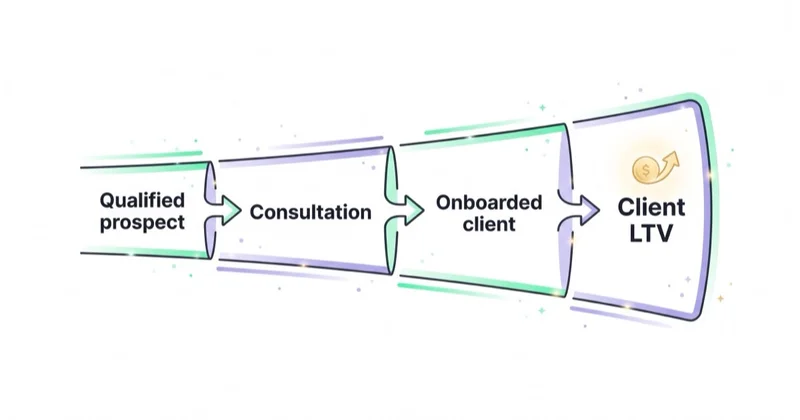
The useful metric is not cost per lead. It is cost per suitable qualified prospect, held consultation, accepted client and realized client contribution under a documented definition. Assets under management are not revenue, and forecast lifetime value is not cash received. Use the firm's actual fee model, onboarding rate, servicing cost, retention evidence and compliance-approved value bands rather than rewarding media with the largest self-reported asset figure.
This article is marketing guidance, not legal, compliance or financial advice. Financial advisory firms should review campaigns with qualified compliance counsel or internal compliance teams before launch, especially when ads include investment performance, testimonials, endorsements, retirement claims, tax planning, insurance, lending or jurisdiction-specific promotions.
TL;DR
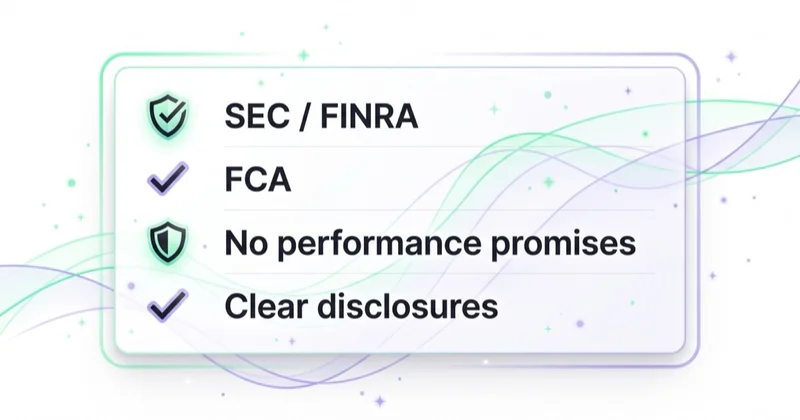
- Financial advisor marketing should start with compliance. SEC/FINRA, state rules, FCA rules or other local regulations can shape claims, testimonials, endorsements, disclosures and recordkeeping.
- Platform rules add another layer. Google requires financial-services verification in specified markets and is expanding it to 24 EEA markets from July 23, 2026. Meta may require a Financial Products and Services Special Ad Category and local authorization checks.
- No campaign should imply a specific investment result. Strong advisory marketing sells process, clarity, specialization, fiduciary care where applicable, and education - not outcome certainty.
- Google and Meta represent different demand contexts. Search can capture an expressed need. Meta can distribute education or event content, but suitability, targeting, consent and incremental value still need to be established.
- Lead magnets are not the final conversion. Downloads, webinar registrations and quiz completions should be treated as early-stage events until qualification and consultation data are available.
- CRM feedback must protect privacy. Ad platforms should receive safe conversion statuses and values, not detailed financial records or sensitive client notes.
Why Financial Advisor Marketing Is Different
Financial advisory marketing is difficult because it combines regulation, platform scrutiny, trust and long sales cycles.
| Trait | Marketing implication |
|---|---|
| Regulated communication | Claims, testimonials, endorsements, performance data and disclosures need review |
| Trust-heavy decision | Prospects compare credentials, process, reputation, specialization and fit |
| High potential lifetime value | Acquisition cost should be judged against qualified clients, not raw leads |
| Slow conversion path | Content, webinars, consultations and nurture often come before onboarding |
| Sensitive personal data | Tracking must avoid sending detailed financial information to ad platforms |
| Platform verification | Financial-services advertisers may need approval before ads serve in some locations |
The word choice also matters in US content: federal law commonly uses investment adviser for a regulated firm or person, while “financial advisor” is a broader market term. Do not let keyword language imply a registration, designation, fiduciary status or scope that is not accurate for the advertiser and service being promoted.
The funnel is closer to regulated professional-services marketing than ordinary lead generation. The firm is asking someone to trust an adviser with consequential decisions. That requires clear scope, verifiable credentials, privacy protection and a handoff from education to individualized advice at the appropriate point.
Compliance First: The Practical Marketing Boundary
Compliance requirements depend on jurisdiction, registration status and the exact services promoted. A US SEC-registered investment adviser, a state-registered adviser, a broker-dealer, a UK adviser under the FCA perimeter, an insurance-led practice and a financial-planning firm can all face different rules.
Still, the practical marketing boundary is consistent:
| Area | Safer marketing posture |
|---|---|
| Investment returns | Avoid promises, cherry-picked outcomes and unbalanced performance claims |
| Testimonials and endorsements | Use only with required disclosures, oversight and recordkeeping |
| Third-party ratings | Explain basis, conflicts and selection criteria where required |
| Risk and limitations | Present benefits with fair treatment of material risks or limitations |
| Fiduciary language | Use only when accurate for the firm, account type and service |
| Specialization claims | Substantiate credentials, designations and niche expertise |
| Tax or legal language | Avoid individualized advice unless the firm is authorized and the context is appropriate |
| Financial urgency | Avoid fear-based, vulnerability-based or misleading pressure tactics |
The SEC Marketing Rule applies to investment advisers registered or required to register with the Commission; state-registered advisers need a separate state-law analysis. The rule contains general prohibitions against materially misleading advertising and conditions for testimonials, endorsements, third-party ratings and performance. SEC staff updated its Marketing Rule FAQ on January 15, 2026, including guidance on model fees and compensated promoters subject to certain self-regulatory-organization orders. Staff FAQs state staff views and do not create new law.
FINRA Rule 2210 governs communications with the public for member firms and includes approval, review, content and recordkeeping requirements. In the UK, FCA social-media guidance says promotions must be fair, clear and not misleading, support consumer understanding and provide a balanced view of benefits and relevant risks. It also warns that a character-limited or otherwise constrained social surface may be unsuitable for a complex promotion.
That means campaign QA should cover ads, assets, landing pages, webinar slides, lead magnets, emails, videos, paid creator content and sales follow-up. Compliance is not a footer. Maintain an approval record containing the final rendered version, audience, dates, reviewer, substantiation, required disclosures, linked destination and withdrawal instructions. Dynamic or automatically generated ad variations need an approved operating boundary as well.
Google Ads For Financial Advisors
Google Search is valuable because it captures intent. A person searching for "financial advisor near me," "retirement planning advisor," "wealth manager for business owner" or "inheritance financial advisor" is closer to an advisory conversation than someone passively scrolling social media.
Useful campaign themes:
| Search intent | Example searches | Landing page need |
|---|---|---|
| Local advisor | financial advisor near me, wealth manager [city] | credentials, location, process, consultation CTA |
| Retirement planning | retirement planner, retirement advisor | education, planning process, suitability disclaimers |
| Business owner planning | financial advisor for business owners, exit planning advisor | niche expertise, business-owner proof, consultation path |
| Life events | inheritance planning advisor, divorce financial planner, widow financial planning | sensitive language, process, professional fit |
| Wealth management | investment management firm, private wealth advisor | service model, minimums where relevant, disclosures |
| Brand | firm name, adviser name, reviews | direct consultation path and reputation proof |
Google's financial products and services policy requires compliance with applicable law and sufficient disclosures, which can include a physical business address, associated fees and evidence for claimed affiliations. Verification is separate from legal authorization and does not approve the advertisement's content.
In June 2026, Google announced verification expansion to 24 additional EEA markets, including Poland. Rolling enforcement begins July 23, 2026. Advertisers notified by Google must first complete review through Google's external compliance partner and then apply to Google in the correct role; agencies managing in-scope accounts may also need verification. The exact in-scope categories can change, so use the account notice and current policy page as the source of truth.
Search campaigns should not launch before these basics are handled:
- correct advertiser identity and verification status;
- jurisdiction-specific landing pages where needed;
- clear business address and contact details;
- service descriptions that match registrations and permissions;
- visible disclosures and fee context where required;
- no misleading return, performance or risk claims;
- no unsupported credential or superiority claims;
- conversion tracking that does not pass sensitive financial details.
Meta Ads: Education With Additional Category Controls
Meta can distribute guides, webinars, video explainers, adviser introductions and event content. It should not be assumed to work only at the top of the funnel, nor should an inexpensive form fill be treated as proof of client value. Test the offer against held consultations and accepted clients after applying the correct policy, authorization and audience controls.
Effective Meta use cases:
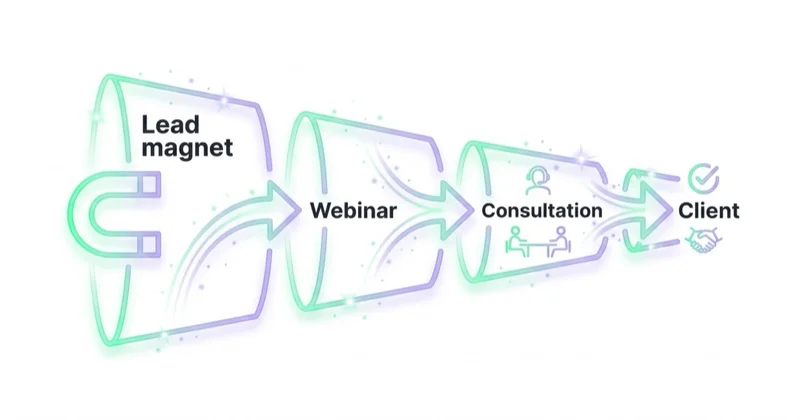
- promoting a retirement-planning webinar;
- distributing a planning checklist or guide;
- following up with consented audiences where the page topic, jurisdiction and platform rules make that use appropriate;
- nurturing content readers toward a consultation;
- building familiarity with adviser bios, process and client fit;
- supporting local seminars or events where compliant.
The creative should avoid language that implies knowledge of a person's financial condition, vulnerability or fear. Instead of "Worried you will run out of money?" a safer direction is "A planning session for retirement-income decisions." Instead of "Get higher returns," use process-oriented language such as "Review portfolio alignment, tax considerations and retirement income planning with an adviser."
Meta's current campaign setup requires advertisers to select the Financial Products and Services Special Ad Category when applicable. Meta also prohibits financial products commonly associated with misleading practices, including binary options, payday loans and contracts for difference. UK financial-services advertisers may be asked to confirm FCA authorization. These platform controls do not replace the firm's regulatory analysis.
Avoid copy or audiences that assert or imply private financial facts about an individual. A retirement-page visit, inheritance article or business-exit guide can reveal or invite sensitive inferences. Retargeting should therefore be reviewed for legal basis, reasonable user expectation, segment naming, membership duration, minimum size, exclusions and the possibility that an ad is seen by someone sharing the device.
Lead Magnets, Webinars And Consultation Funnels
Financial advisor marketing often works best when the first conversion is educational. The prospect needs confidence before an introductory call.
Common funnel assets:
| Asset | Best use | Main risk |
|---|---|---|
| Retirement checklist | early-stage planning audience | generic download with weak qualification |
| Webinar | education and authority | low show rate without reminders |
| Tax-year planning guide | timely demand and email nurture | crossing into tax advice if not reviewed |
| Business-owner guide | high-value niche positioning | broad entrepreneurs with no planning fit |
| Portfolio review offer | closer to consultation | performance or suitability claims need care |
| Seminar / event | local trust and relationship building | compliance review of slides and follow-up |
The offer should match the firm's authorization and service model. A firm that works with business owners should not optimize toward generic retirement downloads. A fee-only retirement specialist should not buy broad “investment tips” traffic. If minimum fees, account sizes or eligibility conditions materially determine fit, explain them clearly where appropriate rather than collecting excessive personal information merely to improve an ad-platform score.
Landing Pages And Disclosures
Landing pages should be clear enough for users, compliance reviewers and platform reviewers.
Important elements:
- who the firm serves;
- what services are offered;
- where the firm is authorized or registered to operate;
- adviser or team credentials;
- fiduciary status where accurate;
- fee model or consultation expectations where appropriate;
- investment-risk and limitation disclosures where required;
- testimonial, endorsement or rating disclosures where used;
- privacy and data-handling information;
- a clear consultation or webinar CTA;
- material qualifications presented clearly and prominently, not hidden in a tiny footer or behind a link that the promotion needs in order to be balanced.
The page should avoid broad performance, wealth, safety or superiority claims. Even when a phrase is technically defensible in one context, it can still create platform review friction or regulatory risk if not framed carefully.
For conversion structure, the general landing page fundamentals still apply: message match, proof, clarity, mobile usability and a single next step. In financial advice, the additional layer is fair, balanced and reviewable communication.
Qualification: What Makes A Prospect Worth Pursuing
Not every lead is a fit. Qualification should happen in a way that respects privacy and avoids sending sensitive details to platforms.
Useful internal qualification signals:
| Signal | Why it matters |
|---|---|
| Service need | retirement, investment management, tax-aware planning, business exit, inheritance, estate coordination |
| Jurisdiction / location | confirms whether the firm can serve the prospect |
| Client type | individual, household, business owner, executive, retiree |
| Fit with service model | AUM, planning fee, subscription or project engagement |
| Timeline | active need, future planning, event-driven urgency |
| Consultation status | booked, held, no-show, unqualified, referred out |
| Onboarding status | client accepted, declined, pending, lost reason |
Some firms use investable-asset ranges or minimum fee thresholds as internal qualification criteria. Collect only what is necessary at the appropriate stage, explain its use and protect it in the approved intake system. Do not put financial ranges, life-event labels or advice-meeting details into URLs, pixels, custom parameters or audience names. A platform event such as qualified_consultation should be defined by the firm without encoding why the person qualified.
Measurement: Clients And Client Value
The most dangerous dashboard in financial advisor marketing stops at cost per lead. A cheap download can look efficient while producing no qualified consultations. A more expensive Search lead can be profitable if it becomes a client.
A practical measurement ladder:
- Ad click or paid social engagement.
- Content view, guide download, webinar registration or phone call.
- Qualified prospect.
- Consultation booked.
- Consultation held.
- Proposal, plan or next-step agreement.
- Client onboarded.
- First-year fee or approved contribution band.
- Realized retention, servicing cost and expansion for mature cohorts.
Google recommends enhanced conversions for leads for new offline measurement setups. As of June 15, 2026, current and future offline conversion and enhanced-conversion-for-leads uploads should use the Data Manager API; non-allowlisted developer tokens are blocked from the legacy Google Ads API route. A technical ability to upload an event does not establish permission to do so.
For advisory marketing, a downstream event might be a held qualified consultation or accepted client. The event must not contain account balances, holdings, debt, tax details, advice notes or a life-event description. Hashing contact data can protect it in transit, but does not make sensitive collection lawful, anonymous or appropriate. Confirm data minimization, notice, consent or other legal basis, retention, access and vendor terms with privacy and compliance teams.
Value-based reporting can use approved coarse bands based on expected first-year fee or contribution, provided the values are stable enough to guide bidding and cannot expose a person's financial profile. Do not use assets under management as if they were revenue. Reconcile predicted bands with realized, retained revenue and servicing cost before raising acquisition ceilings.
Keep platform-attributed clients separate from incremental clients. An imported accepted-client event improves campaign feedback, but attribution still depends on the platform's interaction and window rules. A controlled holdout, geographic test or other credible design is needed to estimate how many clients would not have arrived without the media.
Channel Roles In The Advisory Funnel
Each channel should have a job.
| Channel | Best role | Better KPI |
|---|---|---|
| Google Search | active demand for advisor, retirement or wealth-management help | qualified consultation rate |
| Meta | education, event demand and familiarity under applicable controls | held-consultation rate and incremental evidence |
| business owners, executives and professional niches | target-account engagement and qualified calls | |
| SEO | durable authority and service-page trust | organic consultations and assisted conversions |
| Email / CRM | nurture, show-up improvement, event follow-up | booked and held consultations |
| Referrals / partnerships | trust transfer from professional networks | referred consultations and client acceptance rate |
Comparing channels by first-touch lead cost is misleading. Search may record an expressed need, Meta may precede later research, and email may support event attendance. These are observed roles, not guaranteed causal effects. Preserve source and touchpoint context in the CRM, then reconcile accepted clients and contribution without adding each platform's claimed conversions together.
Privacy And Tracking Guardrails
Financial data is sensitive. Tracking should be designed with the same seriousness as creative compliance.
Practical guardrails:
- do not send account balances, portfolio details, debt details, tax details or meeting notes to ad platforms;
- avoid passing sensitive form fields into URLs;
- avoid remarketing segments that reveal sensitive financial status;
- use consent and privacy notices appropriate for the markets served;
- do not treat hashing first-party identifiers as consent, anonymization or a legal basis;
- use conversion statuses rather than detailed financial facts;
- review server-side tracking and CRM integrations with compliance and legal teams;
- document which events are shared with each platform.
For technical implementation, enhanced conversions, server-side tagging and Meta Conversions API can improve measurement only if the data layer is designed properly. Better tracking is not a reason to send more sensitive information than necessary.
Space Ads Operating Approach
Our standard operating approach starts with constraints before channels. For financial advisers, that means documenting the firm's registration context, permitted services and markets, compliance owner, approval archive, target-client fit, fee logic, privacy rules and CRM stages before campaigns are rebuilt.
The practical sequence is:
- Map compliance constraints and platform verification requirements.
- Define the qualified prospect: service need, jurisdiction, client type and economic fit.
- Separate Search intent by local advisor, retirement, wealth management, business-owner planning and brand.
- Test Meta education or events only after selecting the applicable category, authorization and data controls.
- Build landing pages with clear disclosures, service fit and trust signals.
- Track consultations and onboarded clients instead of only downloads.
- Feed the minimum approved CRM statuses and coarse value bands back into reporting, then reconcile predictions with realized results.
When an account already spends but cannot prove which campaigns produce qualified consultations or onboarded clients, a marketing audit is the right starting point. Broader growth planning can sit under a fractional CMO engagement, while channel execution connects Google Ads, Meta Ads, content and CRM feedback.
30-Day Action Plan
- Days 1-3: run compliance discovery. Identify jurisdiction, registration status, review owner, disclosure requirements and platform verification needs.
- Days 4-6: define qualified prospect criteria. Service need, location, client type, timeline, economic fit and disqualifying factors.
- Days 7-10: audit landing pages and offers. Remove misleading claims, clarify disclosures, review testimonials and confirm privacy language.
- Days 11-14: design conversion governance. Separate downloads, held consultations and accepted clients; approve every shared field, destination and retention rule.
- Days 15-18: structure Google Search. Split advisor, retirement, wealth, business-owner, life-event and brand intent.
- Days 19-23: build compliant education funnels. Lead magnets and webinars should feed nurture, not stop at registration.
- Days 24-27: review Meta and retargeting policies. Check creative, targeting, category restrictions and personal-attribute risk.
- Days 28-30: validate the first signal. Check approvals, search terms, lead quality, import diagnostics and handoff speed. Do not call an immature advisory cohort profitable after 30 days.
Common Mistakes
| Mistake | Better approach |
|---|---|
| Promising returns or outcomes | Market process, fit, planning clarity and expertise |
| Treating disclaimers as a footer afterthought | Design pages to be fair, balanced and reviewable |
| Optimizing to lead-magnet downloads | Optimize toward qualified prospects and consultations |
| Uploading overly detailed financial data | Send safe status events and value proxies only |
| Ignoring financial-services verification | Confirm Google requirements before launch |
| Treating verification as regulatory approval | Verify separately and retain the firm's own compliance review |
| Using fear-based retirement copy | Use neutral, educational language |
| Running testimonials without review | Apply required disclosures, oversight and recordkeeping |
| Using AUM as advertising revenue | Use an approved fee or contribution definition and reconcile it with realized results |
FAQ
What is financial advisor marketing?
Financial advisor marketing is the process of attracting qualified prospects for advisory, planning or wealth-management services while staying inside regulatory, platform and privacy requirements. It usually combines Search, education, webinars, retargeting, SEO, email nurture and consultation tracking.
Can financial advisors advertise on Google?
Yes, but financial-services advertisers must comply with Google Ads policies, local laws and disclosure requirements. In some locations, Google requires financial-services verification before ads can run or target users seeking financial services.
Can financial advisors use Meta Ads?
Meta can distribute education, webinars, adviser introductions and events. Select the Financial Products and Services Special Ad Category where applicable, complete any local authorization checks and review personal-attribute, audience and data-sharing risks. Measure held consultations and accepted clients rather than assuming an educational form is commercially valuable.
Can financial advisors use testimonials in ads?
In the US, the SEC Marketing Rule permits testimonials and endorsements only when the adviser satisfies specific conditions, including disclosures, oversight and recordkeeping. FINRA, state rules, FCA rules or other local requirements may also apply depending on the firm. Testimonial creative should be reviewed before launch.
How should financial advisor marketing be measured?
Measure suitable qualified prospects, held consultations, accepted clients, realized first-year fees or contribution, servicing cost and mature retention. Cost per lead is too shallow. Platform-safe downstream feedback can support bidding, but it does not prove incrementality and must not expose financial facts.
What should financial advisor ads avoid?
They should avoid outcome certainty, misleading performance claims, fear-based copy, unsupported superiority claims, unclear testimonial disclosures, hidden risks and language that implies knowledge of a person's private financial condition.
In Short
Financial advisor marketing works when compliance, education, trust and measurement are designed together. Google Search can capture active demand, Meta can educate and retarget, and CRM feedback can show which prospects become real clients.
The strongest accounts do not optimize to cheap downloads. They define suitable client fit, maintain an approval and substantiation record, complete required verification, minimize shared data and reconcile media with held consultations, accepted clients and realized contribution.
Sources and further reading
- SEC - Investment Adviser Marketing
- SEC - Marketing Compliance FAQs updated January 2026
- SEC - Additional observations on Marketing Rule compliance
- FINRA - Rule 2210: Communications with the Public
- FCA - Financial promotions on social media
- Google Ads Help - Financial products and services policy
- Google Ads Help - 2026 EEA financial-services verification expansion
- Google Ads Help - About offline conversion imports
- Meta - Prohibited financial products and services
Continue learning
Continue reading

Wealth Management and Investment Firm Marketing
Investment firm marketing requires clear communication of risk, costs and past performance. Success is a client who fits the service and retains assets — not simply a lead or account opening.
Marketing for Financial Services: Compliant Campaigns in a Restricted Category
Financial-services campaigns must satisfy the law in each target market and a separate set of platform rules. This guide explains Google's July 2026 EEA verification expansion, approval workflows, disclosures, measurement and the controls needed to scale without treating compliance as a final check.

Weight Loss Clinic Marketing: GLP-1 Demand Without Risky Claims
Weight loss clinic marketing in the GLP-1 era has to generate qualified consultations without risky body claims, prescription-drug shortcuts or privacy leakage. This guide covers Meta, Google Search, telehealth funnels, HIPAA-conscious tracking and program LTV.