Mortgage lead generation sits at the intersection of high-value sales, long consideration cycles, regulated financial advertising and fast follow-up. A mortgage lead is not valuable simply because a form was submitted. Its commercial value depends on whether the person is reachable, eligible for an appropriate product, within the lender's licensed market and ready to move through the application process.
Google and Meta can play different roles in that system. Search queries often provide a direct signal of what a person is looking for, while Meta can introduce an offer during research, education or later consideration. These are useful planning assumptions, not guarantees of intent: a Google click can still be exploratory, and a Meta lead can already be comparing lenders. Both channels should therefore be judged by downstream outcomes rather than presumed lead quality.
This guide explains how to build mortgage lead generation around intent, compliance, speed, CRM feedback and funded-loan economics rather than raw lead volume.
TL;DR
- Google and Meta surface different intent signals. Search can capture explicit loan-related queries; Meta can support education, discovery, retargeting and lead capture. Neither channel guarantees readiness or eligibility.
- Loan type matters. FHA, VA, jumbo, DSCR, non-QM, first-time buyer, refinance and self-employed borrower searches should not be treated as one generic mortgage campaign.
- Compliance is part of performance. Google requires financial-service advertisers to follow applicable local regulations and provide required disclosures; Meta requires special handling for financial, housing and credit-related ads.
- Rate claims need strict review. Mortgage ads and pages should avoid unclear teaser language, missing terms, misleading payment claims or unsupported affiliation cues.
- Follow-up should reflect the actual lead journey. Educational offers may need structured nurturing, while specific loan or local-lender enquiries may need fast human intake and scenario routing.
- The real KPI is funded-loan cost. Cost per lead is useful only when connected to application rate, qualification rate, funded loans and loan value.
Why mortgage lead generation is harder than ordinary lead gen
Mortgage lead generation has four structural challenges.
First, intent varies widely. Someone searching "VA lender near me" is in a different stage than someone clicking an educational Meta ad about first-time buyer steps. The same form field can hide very different readiness levels.
Second, the product is regulated. Mortgage advertising can involve rate, APR, fee, term, licensing, fair-lending and platform-policy requirements. Marketing teams need review workflows before campaigns go live, especially when rates, payments, affordability or government programs are mentioned.
Third, the sales cycle is long. A lead may move through first contact, qualification, document collection, application, pre-qualification or pre-approval workflow, property search, underwriting and funding. A campaign cannot be judged fairly if reporting ends at the first form fill.
Fourth, follow-up quality determines whether leads convert. A strong ad account can still fail when leads sit in an inbox, calls are missed, loan scenarios are not recorded and CRM stages do not flow back to the marketing team.
Google vs Meta: different demand, different handling
The channel strategy should start with intent.
| Channel | Demand type | Strong use case | Main risk | Better KPI |
|---|---|---|---|---|
| Google Search | explicit query intent | loan-type and local intent capture | broad generic terms and expensive weak clicks | qualified application or funded-loan cost |
| Google Performance Max / Demand Gen | mixed intent | audience expansion, creative testing and eligible remarketing use cases | weak conversion signals | qualified lead value and CRM feedback |
| Meta lead forms | discovery through active consideration | first-time buyer education, refinance interest and lead capture | low-fit volume without qualification and follow-up | contacted and qualified lead rate |
| Meta landing-page campaigns | consideration and education | content, calculators, guides, webinars | slow pages and weak disclosure review | scheduled call or completed application |
| SEO and local visibility | durable trust and research demand | loan-type pages, local pages, education | thin content and generic advice | organic qualified inquiries |
The most common error is comparing Google and Meta only by cost per lead. Meta may produce cheaper form fills, but the result depends on the offer, audience, form and follow-up. Search may produce fewer leads at a higher cost, yet a query alone does not prove that a borrower is qualified or ready to apply. The useful comparison is downstream: contact rate, qualification rate, application rate, funded-loan rate and loan value.

Google Ads for mortgage leads
Google Search should be built around loan scenarios and local intent rather than generic "mortgage" traffic. Broad terms can attract research, calculators, definitions, rate shoppers, competitors, job seekers and people outside the eligible market. The account needs segmentation before bidding becomes meaningful.
Useful campaign themes include:
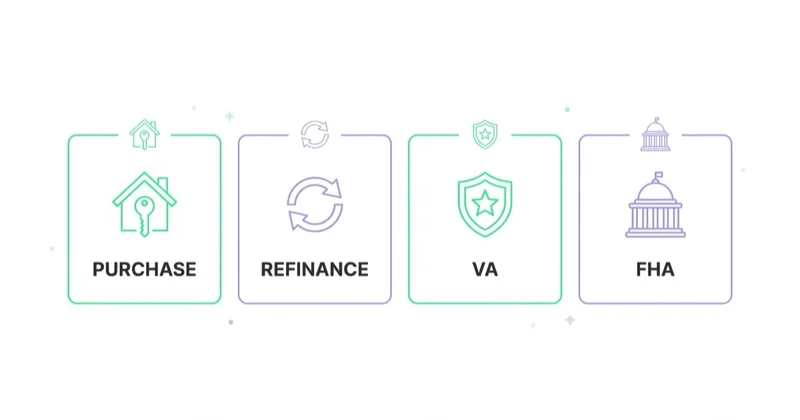
- loan type: FHA, VA, USDA, jumbo, DSCR, non-QM, conventional, reverse mortgage where allowed and reviewed;
- borrower scenario: self-employed borrower, first-time buyer, investor, second home, high-balance loan, credit-event recovery where policy and compliance allow the language;
- transaction type: purchase, refinance, cash-out refinance, rate-and-term refinance;
- local intent: loan officer, mortgage broker, lender or mortgage advisor by city or service area;
- program education: down payment assistance, first-time buyer programs, VA eligibility, investor financing;
- brand and referral protection: brand terms, partner names and competitor strategy separated for budget clarity.
Google recommends grouping Search keywords into related themes. In mortgage campaigns, that means every ad group should align with a specific borrower scenario, loan type or local intent and send traffic to a matching landing page.
Negative keywords should protect the budget from jobs, salary, training, calculators without lead intent, definitions, rate history, servicing support, complaints, payment login, free templates, unrelated credit products and states or markets outside licensing coverage. The negative keyword process should be reviewed weekly while new themes are being tested.
Meta for loan officers and mortgage brokers
Meta is not a like-for-like substitute for Search because the person does not need to enter a query before seeing an ad. It can support education, retargeting, lead magnets, buyer journeys, refinance awareness and list-based nurturing where consent and platform rules allow it. The creative should not imply that the advertiser knows a person's financial situation, credit status, income, debt level, family status or homeownership status.
Useful Meta angles include:
- first-time buyer planning guides;
- refinance decision frameworks;
- VA or FHA education without outcome promises;
- local market webinars with real estate partners;
- checklist downloads;
- retargeting after mortgage calculator, loan-type or guide page visits;
- testimonial or review creative after compliance approval;
- loan-officer introduction videos focused on process and trust.
Meta's current campaign-creation guidance says advertisers must choose the applicable Special Ad Category when an ad relates to housing, employment or financial products and services. The options and targeting restrictions shown in the account can vary by campaign, product and market, so the setup should be checked at launch rather than copied from an old regional checklist. Meta's standards also impose additional rules on financial advertising, including restrictions on deceptive products, targeting and requests for sensitive information.
That changes campaign design. Mortgage Meta campaigns should rely less on narrow demographic assumptions and more on strong creative, broad but compliant audiences, landing-page education, CRM follow-up and conversion feedback.
Compliance and disclosure review
Mortgage advertising cannot be treated like ordinary service advertising. The review process should cover platform policy, lending regulations, licensing requirements and brand-specific compliance standards.
Google's financial products and services policy says advertisers promoting financial products and services must comply with state and local regulations for targeted locations and include required disclosures. Google also requires financial-product disclosures to be clearly and immediately visible rather than hidden behind hover states or separate tabs.
For mortgage campaigns, common review areas include:
- business name, physical address and licensing information where required;
- NMLS or equivalent licensing details where required by jurisdiction;
- rate, APR, payment and fee language;
- whether a rate is fixed, variable, introductory or conditional;
- whether taxes, insurance, points or fees are included in examples;
- government program references and affiliation language;
- refinancing, loan modification or foreclosure-prevention claims;
- fair-lending and non-discrimination requirements;
- privacy and consent language on forms;
- retention of materially different ads, pages and scripts where required.
For campaigns aimed at the United States, Regulation N lists prohibited material misrepresentations about mortgage terms, rates, APR, fees, taxes and insurance, prepayment penalties, government affiliation, approval likelihood and refinancing or modification claims. Regulation Z contains additional advertising rules for credit secured by a dwelling, including requirements triggered by particular rate or payment claims. In practice, every US rate or payment example should pass qualified compliance review before launch. Other markets have their own rules and licensing requirements.
This article is marketing guidance, not legal or compliance advice. A lender, broker or loan officer should use internal compliance review and jurisdiction-specific counsel where needed.
Landing pages for mortgage lead generation
Mortgage landing pages have two jobs: convert interest and reduce unqualified intake. A generic form is not enough when eligibility, licensing, product fit and consumer understanding matter.
A strong mortgage page should include:
- exact match to the ad theme or loan scenario;
- licensed entity and contact details where required;
- clear scope of the product or service;
- plain-language explanation of the process;
- compliant disclosure placement;
- what information is needed for the next step;
- what happens after the form is submitted;
- privacy and consent language;
- phone and calendar options;
- loan-officer bio or team credibility signals;
- content reviewed for rate, APR, payment and government-affiliation language.
Forms should be useful without requesting unnecessary sensitive information in the ad environment. Early-stage forms can ask for transaction type, timeline, property state, loan purpose and preferred contact method. Deeper financial details usually belong in a secure application process, not in a casual social lead form.
For conversion quality, landing page strategy should connect directly to CRM stages. A page that creates many low-fit leads can look good in Google Ads and bad in the loan officer's calendar.
Follow-up and lead handling
Speed matters, but the bigger point is process. Mortgage follow-up should not rely on manual inbox checks. Where the agreed technology and operating scope support it, leads should route into a CRM or loan-origination workflow with clear ownership, source tagging and next-step logic.
A practical follow-up system includes:
- immediate notification to the assigned loan officer or intake team;
- phone, text and email sequence cleared through compliance review;
- different sequences for Search, Meta, referral and organic leads;
- stage labels for contacted, unreachable, qualified, not eligible, application started, application submitted, funded and lost;
- source and campaign fields preserved from the ad platform;
- opt-out handling and consent records;
- appointment scheduling and reminder flows;
- manual notes for loan scenario, market, timing and objection.
A Meta campaign built around education may require a longer nurture path. A Search lead using a specific loan or local-lender query may need immediate scenario routing because the person could be comparing providers in real time. These are hypotheses to validate in CRM data, not fixed rules for every lead. The same CRM can handle both, but messaging and service levels should follow observed behaviour.
Call tracking is especially important when phone calls are a major conversion path. It should be implemented in a privacy-conscious way and evaluated by qualification and application outcome, not by call count alone.
Measurement: from lead to funded loan
Cost per lead is an incomplete metric for mortgage campaigns. It can be useful for diagnosing front-end efficiency, but it can also hide major channel differences.
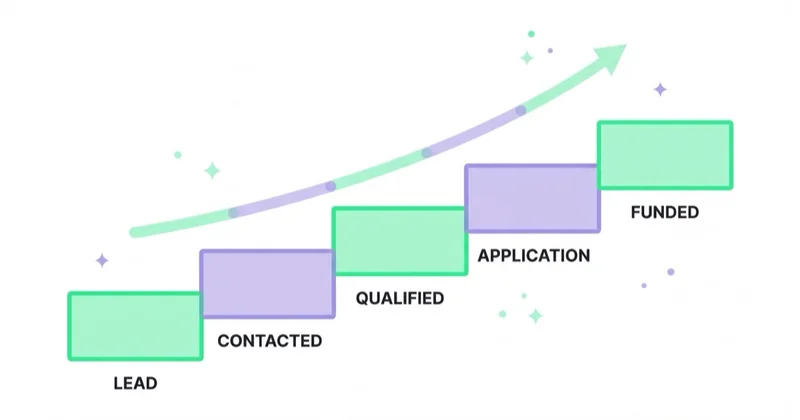
A better measurement ladder is:
- Click or ad engagement.
- Form, call, chat or lead form.
- Contacted lead.
- Qualified borrower scenario.
- Application started.
- Application submitted.
- Pre-qualification or pre-approval workflow milestone, where applicable.
- Locked loan or active file.
- Funded loan.
- Loan value, margin or commission proxy.
The reporting should compare channels by stage conversion, not just top-of-funnel lead cost. A channel with a higher cost per lead can win if it creates better funded-loan economics. A cheaper channel can still be valuable if it is handled as a nurture asset and not judged like immediate Search demand.
At sufficient volume and with the right consent, platform configuration and privacy controls, offline conversion imports can help bidding systems optimize toward qualified applications or funded loans instead of raw lead submissions. Send only the minimum permitted data needed for matching and measurement. Application details, credit information, income, property data and free-text CRM notes should not be uploaded to advertising platforms. A funded-loan event is useful only when its definition is consistent, the reporting delay is understood and the platform permits the data use. The same measurement principle is explained in the guide to Smart Bidding strategies.
SEO and local trust for mortgage lead generation
Paid media works better when the brand is easy to verify. Mortgage prospects often research the loan officer, licensing, reviews, location and educational content before committing to a call.
Useful organic assets include:
- local loan-officer or branch pages;
- loan-type pages for FHA, VA, jumbo, DSCR, non-QM and refinance scenarios;
- first-time buyer education;
- pages explaining documents, timelines and common milestones;
- compliant FAQ sections;
- comparison pages written without misleading claims;
- Google Business Profile quality where allowed and relevant;
- partner content with real estate agents, builders or financial professionals.
SEO should not publish generic rate commentary without compliance review. The strongest organic content answers borrower questions, explains process and routes prospects to the right next step without implying individualized eligibility or a specific outcome.
How a Space Ads engagement can be structured
A mortgage acquisition engagement can start with an audit of channel intent, campaign structure, tracking, CRM stages and lead handling. Platform-policy checks can form part of campaign work, but they do not replace the advertiser's legal, regulatory, licensing or fair-lending review. The lender or broker should retain an internal compliance owner and involve qualified counsel where needed.
The work can then start with the loan scenarios the business actually wants: purchase, refinance, VA, FHA, investor, jumbo, self-employed, local loan officer demand or partner-driven demand. Campaigns can be separated by intent, while landing pages are checked for message match and the disclosures supplied or approved by the advertiser. CRM stages can show which traffic becomes qualified and funded business. The exact scope for landing pages, call tracking, CRM or loan-origination integrations, offline conversion imports and follow-up automation should be agreed before implementation.
When a mortgage account reports lead volume but cannot explain funded-loan source quality, a marketing audit is the right starting point. Ongoing acquisition and measurement sit under performance marketing, with channel work across Google, Meta, landing pages and CRM feedback.
30-day action plan
- Define the loan scenarios and markets the business wants to grow.
- Review platform policy, licensing, disclosures and compliance approval workflow.
- Split Google campaigns by loan type, borrower scenario, geography and transaction type.
- Build negative keyword lists for jobs, calculators, servicing, unrelated credit products and out-of-market traffic.
- Create or update landing pages with compliant disclosures, process clarity and source tracking.
- Select the applicable Meta Special Ad Category and review the targeting options available for the campaign and market.
- Separate Meta lead-form campaigns from landing-page and retargeting campaigns.
- Route every lead into CRM with source, campaign, loan scenario and assigned owner.
- Measure contacted, qualified, application, funded and lost-reason stages.
- Hold weekly lead-quality reviews between marketing, compliance and loan officers.
Common mistakes
| Mistake | Better approach |
|---|---|
| Comparing Google and Meta only by lead cost | Compare contacted, qualified, application and funded-loan rates |
| Bidding on broad mortgage terms without structure | Segment by loan type, scenario, geography and intent |
| Making unclear rate or payment claims | Send every rate, APR, fee and payment statement through compliance review |
| Assuming channel alone determines lead readiness | Use the query, offer and CRM outcomes to shape qualification and follow-up |
| Asking too much in social forms | Keep early forms lighter and move sensitive details to secure workflows |
| Tracking only form fills | Connect campaigns to CRM stages and funded-loan outcomes |
| Hiding disclosures | Keep required disclosures clear and immediately visible |
| Ignoring local trust | Strengthen loan-officer pages, reviews, local content and partner proof |
FAQ
What is mortgage lead generation?
Mortgage lead generation is the process of attracting and qualifying prospective borrowers for purchase loans, refinancing or specific loan scenarios. It includes Google Ads, Meta Ads, SEO, local visibility, landing pages, call tracking, CRM follow-up, compliance review and reporting from lead to funded loan.
Is Google Ads or Meta better for mortgage leads?
Google Ads can capture explicit searches for a loan type, refinance option or local loan officer. Meta can support education, discovery, retargeting and lead nurturing without waiting for a search query. Either channel can produce early-stage or high-intent enquiries, so the better choice depends on qualified applications and funded-loan outcomes rather than lead cost alone.
Can mortgage advertisers use Meta lead forms?
Meta lead forms can be used when the campaign follows Meta's Advertising Standards, Special Ad Category requirements where applicable, age restrictions, disclosure obligations and privacy rules. Mortgage campaigns should avoid requesting unnecessary sensitive financial information in the ad environment and should route leads into a compliance-reviewed follow-up workflow.
What compliance issues matter in mortgage ads?
Common risk areas include rate and APR claims, payment examples, fees, fixed versus variable terms, government-affiliation language, licensing disclosures, refinancing or modification claims, fair-lending requirements and privacy/consent language. Campaigns should be reviewed by qualified compliance owners before launch.
What should a mortgage landing page include?
A mortgage landing page should match the loan scenario, identify the licensed entity where required, explain the next step, show compliant disclosures clearly, provide phone and form options, set expectations for follow-up and avoid misleading rate, payment or approval language.
How should mortgage lead generation be measured?
The most useful metrics are contacted lead rate, qualified borrower rate, application starts, applications submitted, funded loans and funded-loan value. Cost per lead is secondary because it does not show whether the lead became real business.
In short
Mortgage lead generation performs best when Google, Meta, SEO, landing pages and CRM follow-up are treated as one regulated acquisition system. Search queries reveal explicit needs. Meta can support discovery, education and retargeting. Compliance review determines what can be said. CRM data shows what should be scaled.
The strongest accounts optimize toward qualified applications and funded loans, not cheap forms. That requires clean segmentation, visible disclosures, careful rate language, fast follow-up and a feedback loop between marketing, compliance and loan officers.
Need help connecting campaigns to qualified applications and funded-loan reporting? Explore the Space Ads lead generation service. The campaign, landing-page, tracking and CRM scope is defined for each engagement, while legal and regulatory approval remains with the advertiser and its compliance advisers.
Sources
- Google Ads Policy Help - Financial products and services
- Google Ads Policy Help - Restricted targeting in personalized advertising
- Meta Transparency Center - Advertising Standards
- Meta Help Center - Create ad campaigns in Meta Ads Manager
- eCFR - 12 CFR Part 1014: Mortgage Acts and Practices - Advertising (Regulation N)
- Consumer Financial Protection Bureau - Regulation Z: advertising for credit secured by a dwelling
- Google Ads Help - Keywords in Search Network campaigns
- Google Ads Help - Call reporting
Continue learning
- Facebook lead ads: what they are and how to launch instant forms
- Insurance agency marketing and lead generation
- Real estate agent marketing: PPC and lead generation for realtors
- Call tracking for PPC and lead generation
- Negative keywords in Google Ads: cut wasted spend
- What is a landing page and how to build one
Continue reading

Language School Marketing: Two Businesses, One Building
Language schools often combine consumer enrolment and corporate training. Market them as separate buying journeys, then connect campaigns to attendance, enrolment, group contribution and continuation.

Driving School Marketing: Selling Instructor Hours, Not Courses
A practical system for growing a driving school around real instructor capacity: local demand, transparent lesson offers, compliant proof, responsive booking and completed-pupil value.
Bike Shop Marketing: The Workshop Pays the Rent
A practical marketing system for bike retailers and workshops: model capacity and contribution, capture local service demand, promote in-stock bikes, and turn first visits into lasting customer relationships.