Choosing a TikTok Ads agency requires more than checking whether its portfolio “looks native.” The partner needs a repeatable system for customer research, platform-appropriate creative, creator permissions, campaign execution, privacy-aware event data and commercial measurement. It should also know when TikTok is not the next best investment.
No visual style guarantees performance. Creator-led, polished, product-demonstration and brand content can all have a role depending on the audience and objective. Evaluate the agency's reasoning, evidence and operating model—not its confidence in one creative formula.
TL;DR
- Inspect the creative operating system. Ask how insights become concepts, how formats are adapted and how each result changes the next brief.
- Do not confuse “native” with deliberately rough. Clarity, relevance, safe-zone compliance and credible delivery matter more than an artificial lo-fi look.
- Check creator governance. Spark Ads require authorised posts or account access; contracts must cover duration, territories, edits, likeness, music and paid usage.
- Match output to test capacity. A weekly quota is not a strategy if the budget cannot evaluate the concepts or the variants add no new learning.
- Verify event infrastructure. Pixel and Events API need consistent events, values, deduplication and consent; terminology alone is insufficient.
- Keep business-controlled access. The advertiser's Business Center should own or control core accounts and assets, with the agency added as a partner.
- Consider in-house and hybrid models. Choose the model that closes the actual gap in insight, production, media, analytics or operations.
Creative is central, but not the whole campaign
TikTok is a recommendation-led environment, so creative determines whether the offer earns attention and communicates quickly. Performance still depends on product-market fit, objective, audience controls, bid and budget, landing page, measurement and fulfilment. An agency that blames every weak result on a missing hook is diagnosing too narrowly.
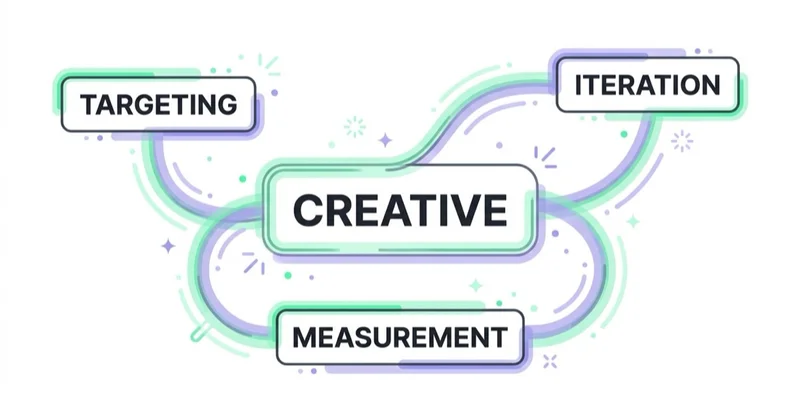
Ask to see work relevant to the objective and category, then request the reasoning behind it: audience insight, hypothesis, format, production constraints, result and next decision. A portfolio proves craft, not causation. Repurposing can be efficient when the underlying concept fits and the execution is adapted for TikTok; a new shoot is not automatically superior. The campaign mechanics sit in how to start and run TikTok Ads.
Platform-appropriate is more useful than “native versus polished”
TikTok creative should respect placement specifications, safe zones, pacing and how people use the app. Vertical framing, readable text and effective audio often help, but the ad should also work for viewers who cannot or choose not to hear it. Captions and visual storytelling improve comprehension and accessibility.
Ask how the team selects hooks, validates claims, adapts to placements and protects brand recognition without making every execution identical. Trend participation should fit the audience, rights and timing. Production quality and brand consistency are not red flags; the question is whether they support the message or slow learning without adding value.
Creators and Spark Ads
Spark Ads use authorised organic TikTok posts and their associated identity. They can support creator, employee or brand-account content, but they are an option rather than a requirement. Existing engagement is context, not proof that the paid campaign will be incremental or profitable.
Ask who sources and verifies creators, who approves claims, and how posts are authorised for paid use. Contracts should define channels, territories, duration, spend or usage limits, edits, exclusivity, music, likeness and cancellation. Confirm what happens when an authorisation expires or a creator deletes a post. The format is covered in Spark Ads on TikTok.
Production velocity must serve a learning plan
TikTok campaigns benefit from a pipeline of new ideas, but there is no universal weekly cadence or rule that fatigue is faster than on every other platform. Diagnose sustained changes in delivery, frequency, response and downstream outcomes while checking offer, audience, auction and seasonality.
Ask how many distinct concepts the scope funds, how adaptations differ from concepts, what test capacity exists and how inconclusive results are handled. High output can be valuable when it expands format or message coverage; it becomes waste when near-identical variants exceed the budget's ability to learn.
Signal, measurement and ownership still apply
For web conversions, TikTok recommends using Pixel and Events API together with event deduplication. Ask the agency to verify shared event IDs, event and parameter consistency, values, currency and match keys, then reconcile recorded orders or leads. The implementation must also follow applicable consent and data-use requirements.
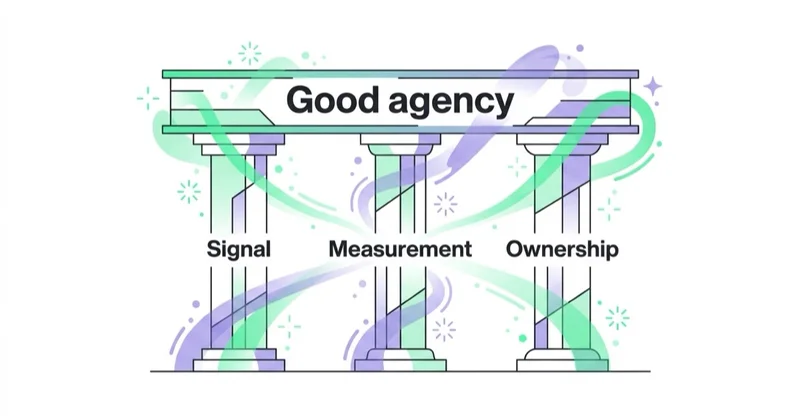
Platform attribution can overlap with other channels or miss journeys; it does not always overstate causal impact. Blended efficiency shows the whole business but cannot isolate TikTok. Use platform reporting for delivery, analytics and CRM or order data for quality and margin, and an appropriate experiment when the decision requires incrementality. The advertiser should control Business Center and grant documented partner permissions, as covered in marketing attribution read honestly and account ownership.
Glossary
- Platform-appropriate creative — an execution adapted to TikTok placements, audience behaviour and technical requirements.
- Hook — the opening device used to establish relevance and earn continued attention; it has no universal one-second formula.
- Spark Ads — ads using authorised organic TikTok posts and their identity.
- Smart+ / automated campaigns — TikTok's automated campaign products that handle targeting and delivery.
- Creative fatigue — a diagnosis for declining response associated with repeated exposure, after alternative causes are checked.
- Blended efficiency / MER — a broad revenue-to-marketing-spend ratio that cannot isolate TikTok's causal contribution.
When you might not need a TikTok agency
An agency is not always the answer. Map the missing capabilities across strategy, customer insight, creator sourcing, production, paid media, analytics and approvals. An established in-house content team may only need specialist media and measurement support. A regulated or technically complex business may need internal subject-matter approval even when production is outsourced.
Compare three models against that map: in-house, full-service agency and hybrid. Include management time, creator and production costs, tool subscriptions, usage rights and speed of approvals. The best model is the one with clear ownership at every hand-off, not the one with the broadest service label.
How Space Ads approaches TikTok
Our TikTok work connects a creative research and production plan with campaign execution, event quality and business measurement. We use creator content and Spark Ads where the audience, rights and hypothesis support them rather than treating either as mandatory.
The advertiser controls its Business Center and core assets, while partner permissions and creative usage rights are documented. We reconcile TikTok reporting with analytics, CRM or order data and margin, and select tests according to the available traffic and decision value. The work lives in TikTok Ads and performance marketing.
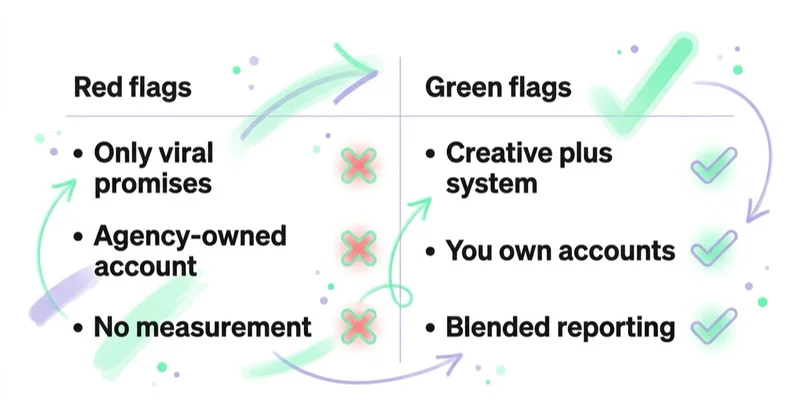
Red flags and green flags
| Red flag | Green flag |
|---|---|
| Calls every rough vertical video “native” | Explains audience insight, format and hypothesis |
| Treats trends or sound-on as universal rules | Designs for context, rights and accessibility |
| Uses creators without clear paid-media rights | Documents authorisation, duration, edits and territories |
| Promises a weekly quota without test capacity | Separates concepts, adaptations and a prioritised roadmap |
| Treats platform or blended ROAS as causal truth | Reconciles platform, business and incremental evidence |
| Keeps the advertiser outside its own assets | Uses Business Center partner permissions and an offboarding plan |
FAQ
What makes a good TikTok ads agency?
A good agency connects customer insight, platform-appropriate creative, creator governance, campaign execution, event implementation and commercial measurement. It should explain when Spark Ads or Smart+ features fit, show how Pixel and Events API are verified, and keep access and creative rights clear. It should also identify cases in which TikTok or an agency engagement is not justified.
Can I just reuse my Meta ads on TikTok?
You can reuse a strong concept, but adapt the execution to TikTok's placements, safe zones, pacing, captions, audio rights and audience context. Do not assume that a direct export will work—or that a new TikTok-only shoot will automatically perform better. Test the adapted concept against a meaningful alternative when volume permits.
How much does a TikTok ads agency cost?
Fees depend on market, media complexity and production scope. Compare a written breakdown of concepts, adaptations, creator fees, usage rights, editing, media management, event implementation, reporting, tools and travel or studio costs. Model total cost at several spend levels and review minimum term, notice period and ownership of source files.
Do I need an agency or can I run TikTok ads in-house?
Choose from a capability map. Keep work in-house when the team already has platform insight, production, media and analytics capacity. Use a hybrid when internal subject expertise or creators pair well with external media or measurement. Outsource more when the agency can provide missing capabilities with clear approvals, rights and accountability.
What is Spark Ads and should my agency use it?
Spark Ads use authorised organic TikTok posts and the associated account identity. Fluency is useful, especially for creator or brand-post amplification, but the format is not mandatory. The agency should understand account access or post-code authorisation, expiration, edits, music and paid-usage rights, and should evaluate Spark Ads against the campaign objective rather than assume superiority.
How should TikTok results be measured?
Use several views. TikTok reporting helps manage delivery under its attribution settings. Analytics, CRM and order data validate journey, quality, margin and refunds. Blended efficiency tracks the whole business but cannot isolate TikTok. When feasible and material, an appropriately designed experiment can estimate incremental impact. Reconcile the views instead of declaring one universally correct.
Key takeaways
- Judge the agency on the full system: insight, creative, rights, media, event quality and commercial measurement.
- Treat “native,” sound-on and weekly output as hypotheses, not universal performance rules.
- Require explicit creator and Spark Ads authorisation, usage and offboarding terms.
- Keep advertiser control of Business Center and grant the agency documented partner access.
- Choose in-house, agency or hybrid delivery according to the capabilities actually missing.
Sources and further reading
- TikTok for Business — Creative inspiration and guidance
- TikTok for Business — About Spark Ads
- TikTok for Business — About Events API
- TikTok for Business — Event deduplication
- TikTok for Business — Business Center partner access
Continue learning
Continue reading
How to Choose a Meta (Facebook) Ads Agency in 2026
Choose a Meta Ads agency by examining its measurement, creative process, data governance, experimentation and commercial judgment. Use these questions and contract checks before granting account access.
UGC Ads: How to Brief, Source and Run Creator Content That Performs
Creator-led ads can make a product easier to understand, but paid content must not masquerade as an independent customer opinion. Learn how to source, brief, contract, disclose and test creator content responsibly.
An Ad Creative Testing Framework That Actually Finds Winners
Creative testing should separate finding an ad that can scale from proving why it works. This framework covers hypotheses, controls, randomised experiments, primary metrics, sample size, conversion delay, decision rules, and iteration.