Plumbing Company Marketing is local lead generation under urgency. A blocked drain, leaking pipe, failed water heater or sewer backup creates a search pattern that is very different from a slow research purchase. The customer wants availability, proximity, proof of trust and a phone call that gets answered.
That does not mean every plumbing campaign should optimize for the cheapest call. Plumbing job value varies widely. A simple drain clear, emergency leak repair, water heater replacement, sewer line job and whole-home repipe have different margins, urgency and follow-up needs. A strong Google Ads account should therefore measure booked jobs and job value, not raw clicks or call volume.
This guide explains how to build plumbing marketing around Local Services Ads, Google Search, Google Business Profile, call handling, seasonality, negative keywords and dispatch feedback.
TL;DR
- Plumbing marketing is phone-heavy and urgent. Emergency searches need visible trust signals, accurate service areas and fast call handling.
- Local Services Ads are a core channel where available. Google lists plumber as an eligible home service category and describes LSA as pay-for-leads rather than standard pay-per-click.
- Search still matters. Google Search captures emergency, repair, installation, water heater, sewer and brand demand that needs more keyword and landing-page control.
- Job value varies. Drain cleaning, leak repair, water heater installation, sewer work and repipes should not share one conversion value.
- Google Business Profile supports conversion. Local ranking factors include relevance, distance and prominence, while hours, reviews, photos and service details affect trust.
- Call tracking and CRM feedback decide scaling. The account should know which calls became booked jobs, completed jobs and high-value work.
Why plumbing marketing is different
Plumbing has four characteristics that shape the strategy.
First, many searches are urgent. Queries like "emergency plumber near me," "burst pipe plumber," "blocked drain service" or "no hot water plumber" often happen when the customer needs a response immediately. A slow intake process can waste strong media traffic.
Second, the category is local. Service area, distance, reviews, operating hours and dispatch capacity matter as much as ad copy. Paid search cannot compensate for a weak local profile or unanswered phone.
Third, job value is uneven. A small repair can be useful volume, but a water heater replacement, sewer repair or repipe may justify a higher acquisition cost. If the account treats every call as equal, bidding can learn the wrong signal.
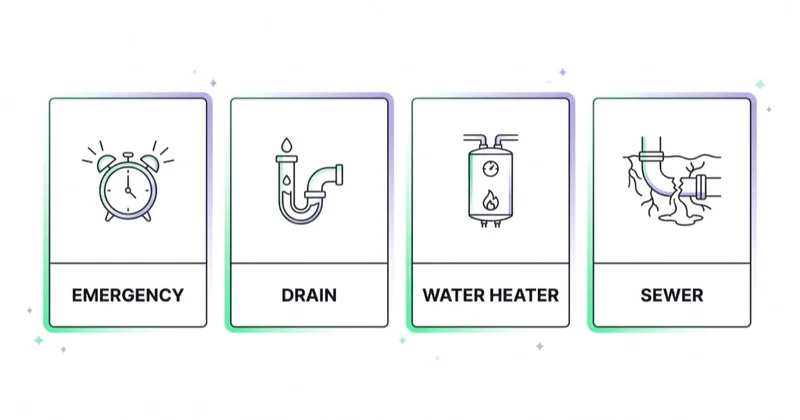
Fourth, seasonality and weather matter. Freezing temperatures, heavy rain, holiday periods, water heater demand and local infrastructure issues can create demand spikes. Budget and operations should be ready before the spike.
Channel mix for plumbers
Plumbing companies usually need several local surfaces working together.
| Channel | Best role | Main risk | Better KPI |
|---|---|---|---|
| Local Services Ads | Local high-intent calls and messages | weak service categories, slow response, poor lead review | qualified leads and booked jobs |
| Google Search | Emergency, repair, installation, sewer and water heater intent | broad queries and expensive weak clicks | cost per booked job by service type |
| Google Business Profile | Maps visibility, reviews and local trust | outdated hours, weak reviews, vague services | calls, direction actions and profile-assisted jobs |
| SEO | Durable service-area and procedure content | thin city pages and generic plumbing advice | organic booked jobs and assisted calls |
| Performance Max | Incremental reach after tracking is stable | poor lead quality from weak conversion signals | qualified job value |
| Meta | Awareness, maintenance, recruiting, seasonal reminders | weak for urgent demand | assisted demand and repeat customers |
The broader framework is covered in Google Ads for local businesses. Plumbing needs extra attention to urgency, call routing and job-value feedback.
Local Services Ads for plumbers
Local Services Ads are often one of the first channels to evaluate for plumbing companies in eligible markets. Google says Local Services Ads help businesses receive leads directly through calls and messages, appear prominently in Search, and pay when potential customers get in touch through the ad. Google's eligible home services list includes plumber.
The advantages:
- strong fit for local service searches;
- phone and message lead flow;
- Google Verified badge where available and onboarding is complete;
- pay-for-lead model instead of ordinary click charging;
- service-area and service-category controls;
- lead management inside the LSA interface.
The limitations:
- eligibility and verification requirements vary by market;
- lead quality depends on categories, service area and response speed;
- profiles need current reviews, hours and business information;
- lead review and dispute process need regular attention;
- LSA reporting should be compared with dispatch outcomes, not lead count alone.
LSA should not replace operational discipline. If emergency leads are missed, routed poorly or not tagged by job type, the channel can look weaker than it is.
Google Search for plumbing jobs
Search campaigns provide more control over keywords, landing pages and service intent. They are useful for urgent demand and for higher-value jobs that need more explanation.
Useful campaign themes include:
- emergency plumbing: emergency plumber, burst pipe, leak repair, same-day plumber;
- drain and sewer: blocked drain, drain cleaning, sewer line repair, sewer backup;
- water heater: water heater repair, water heater installation, tankless water heater service;
- fixtures and repairs: toilet repair, faucet repair, garbage disposal repair, pipe repair;
- installation and renovation: bathroom plumbing, kitchen plumbing, repipe, new line installation;
- commercial plumbing: separated from residential if the company serves both;
- brand and local reputation: company name, plumber reviews, phone number and branded variants.
Each intent should point to a matching page. Emergency searches need a phone-first page with service area, hours, trust signals and dispatch expectations. Water heater and sewer searches need more detail about diagnosis, quote process, repair versus replacement and financing where relevant.
Negative keywords protect spend. Plumbing campaigns commonly need exclusions for jobs, salary, training, school, DIY instructions, diagrams, parts-only searches, wholesale supply, manuals, YouTube, PDFs and areas outside the service zone.
Google Business Profile and local trust
Google Business Profile is part of the plumbing funnel because many customers decide from local results before opening a website. Google describes local ranking as mainly based on relevance, distance and prominence. The profile should therefore help Google understand the business and help customers trust it.
For plumbers, the profile should include:
- accurate service categories;
- service area or address setup that matches reality;
- current business hours and emergency availability where accurate;
- phone number that routes to a staffed line;
- services listed clearly;
- reviews and responses;
- photos of team, vehicles, equipment and completed work;
- booking link if used;
- consistent name, address and phone details across the website and local citations.
Reviews matter because plumbing decisions are made under pressure. A customer with water on the floor may not read a long landing page, but they will scan rating, recent reviews and whether the business looks active.
Landing pages and call handling
Plumbing landing pages should match urgency.
Emergency pages need:
- click-to-call visible immediately on mobile;
- service area and response expectations;
- proof of licensing, insurance or certification where applicable;
- review and trust signals;
- emergency hours if offered;
- simple explanation of what happens after the call;
- no slow form-first process for urgent jobs.
Considered service pages need:
- repair versus replacement explanation;
- common symptoms and diagnosis process;
- photos or diagrams where helpful;
- brands or systems served;
- quote or inspection process;
- financing or warranty information where relevant;
- form and phone options.
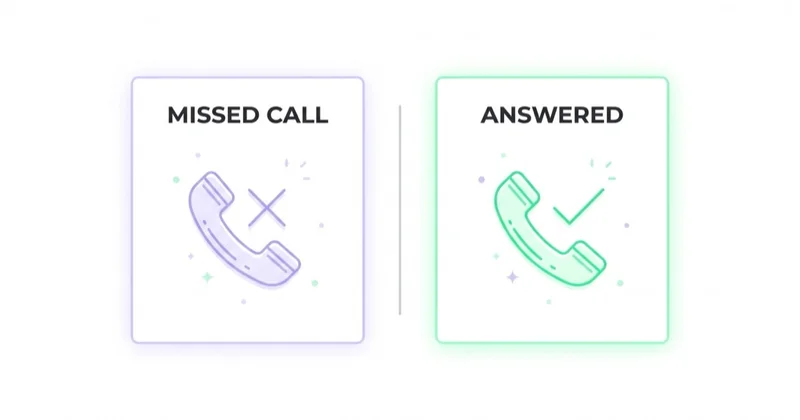
Call handling is often the real conversion lever. A campaign can generate strong calls, but booked-job rate drops if calls ring out, dispatch cannot cover the area, after-hours calls are not routed, or call handlers cannot classify emergency versus non-urgent work.
The landing page guide covers page fundamentals. For plumbing, those fundamentals must be paired with phone operations and dispatch capacity.
Job value and service segmentation
Plumbing campaigns should not treat every conversion equally.
| Job type | Decision pattern | Marketing implication |
|---|---|---|
| Emergency leak or burst pipe | urgent, phone-first | LSA/Search, fast response, service-area control |
| Drain cleaning | recurring volume | strong negatives to avoid DIY and parts-only searches |
| Water heater repair/install | higher value, semi-urgent | dedicated page, quote process, brand/service proof |
| Sewer line repair | high value, stressful | trust, diagnostics, financing and local proof |
| Repipe | high value, considered | education, estimate process, remarketing, CRM follow-up |
| Commercial plumbing | different buyer and cycle | separate campaigns, pages and qualification |
The measurement should reflect those differences. A completed water heater installation or sewer job should carry a different value than a short irrelevant call. At minimum, dispatch or CRM should mark calls as relevant, booked, completed, lost, out-of-area, warranty/support, job seeker or parts-only.
Seasonality and demand spikes
Plumbing demand can change quickly:
- freezing weather can create burst-pipe and no-water emergencies;
- heavy rain can increase sump pump, sewer and drainage demand;
- holidays can increase kitchen, disposal and toilet issues;
- water heater demand can rise when older systems fail under load;
- renovation seasons can create installation and repipe inquiries.
The campaign plan should include budget headroom and staffing alignment for predictable periods. If dispatch is full, buying more urgent calls can create missed calls and poor customer experience. If budget is too constrained during a cold snap, the company may miss high-intent demand exactly when search volume rises.
Smart Bidding can help only if the conversion signal is clean. A raw call event is not enough. The account needs booked-job and job-value feedback so bids do not chase low-quality calls.
Call tracking and offline conversion feedback
Google call reporting can track calls from call assets, location assets and call ads when enabled, including details such as call duration and whether a call connected. That is useful, but plumbing accounts need to connect calls to real dispatch outcomes.
A practical event ladder:
- Ad click or LSA lead.
- Call, message, form or chat.
- Relevant service-area inquiry.
- Emergency or non-emergency classification.
- Appointment booked.
- Technician dispatched.
- Job completed.
- Service type and revenue or value proxy.
- Repeat customer, maintenance or additional work.
Google's offline conversion imports and enhanced conversions for leads can help connect offline outcomes back to earlier ad interactions when implemented correctly. This matters because the revenue event usually happens in dispatch software or CRM, not in Google Ads.
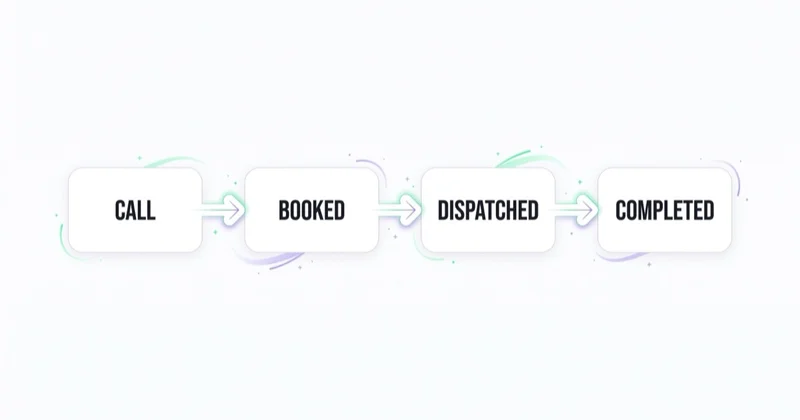
Call tracking for PPC should be configured to separate branded and non-branded demand, LSA and Search, emergency and non-emergency, and booked versus unbooked calls.
Space Ads operating approach
At Space Ads, plumbing accounts are treated as local service systems: demand capture, call handling, dispatch capacity and job-value feedback. Across daily reviews of 25+ client accounts and roughly 14M monthly data points analyzed through Space Ads OS, the recurring issue is rarely only keyword setup. It is usually a broken feedback loop between marketing and operations.
The operating model starts with service segmentation: emergency, drain, water heater, sewer, repipe, residential, commercial and brand demand. LSA is reviewed for eligibility, profile quality and lead handling. Search is rebuilt around service intent and service area. Calls are tracked, qualified and connected to booked jobs. Negative keywords remove jobs, DIY, training and parts-only waste. Google Business Profile is kept aligned with service area, reviews and hours.
When campaigns produce calls but the company cannot see which ones became profitable jobs, a marketing audit is the right starting point. Ongoing acquisition and reporting sit under performance marketing, with channel execution across Google Ads, LSA, local SEO and call tracking.
30-day action plan
- Split plumbing services into emergency, drain, water heater, sewer, repipe and commercial categories.
- Review Local Services Ads eligibility, verification, service categories, lead handling and profile quality.
- Audit Google Business Profile for hours, services, reviews, photos and phone routing.
- Rebuild Search campaigns by service type, location and urgency.
- Add negative keywords for jobs, training, DIY, manuals, parts-only and unsupported locations.
- Create emergency and high-value service landing pages with phone-first paths.
- Set call tracking rules and define a qualified-call threshold.
- Connect dispatch or CRM outcomes to campaign, source and service type.
- Separate branded and non-branded reporting.
- Review capacity, weather patterns and budget headroom before seasonal spikes.
Common mistakes
| Mistake | Better approach |
|---|---|
| Optimizing for call volume only | Measure booked jobs and completed job value |
| Relying only on non-branded Search | Evaluate LSA, Search, Business Profile and local SEO together |
| Slow or inconsistent phone handling | Route urgent calls to staffed lines with clear dispatch rules |
| One landing page for every service | Match emergency, drain, water heater, sewer and repipe intent |
| Treating all jobs as equal | Assign different values by service type and outcome |
| Weak negative keywords | Exclude jobs, training, DIY, manuals and parts-only searches |
| Ignoring Business Profile | Keep categories, hours, reviews and photos current |
| Scaling during full capacity | Align budget with dispatch availability and service area |
FAQ
What is plumbing company marketing?
Plumbing company marketing is the system used to attract, qualify and book local plumbing jobs. It includes Local Services Ads, Google Search, Google Business Profile, SEO, call tracking, landing pages, reviews, dispatch feedback and reporting by service type and job value.
Should plumbers use Local Services Ads or Google Search?
Many plumbers should evaluate both. Local Services Ads can capture local calls and messages in eligible markets through a pay-for-lead model. Search gives more control over emergency, water heater, sewer, repipe, brand and commercial intent. The better mix depends on lead quality, booked-job rate, service area and job value.
What should plumbing Google Ads measure?
The most useful metrics are relevant calls, booked appointments, dispatched jobs, completed jobs and job value by service type. Cost per click and cost per raw call are incomplete because they do not show whether the call became real work.
Which negative keywords matter for plumbers?
Common themes include jobs, salary, training, school, DIY, how-to searches, manuals, diagrams, PDFs, YouTube, parts-only terms, wholesale supply and unsupported locations. The list should be adapted to the company's services rather than pasted from a generic template.
Why is Google Business Profile important for plumbers?
Local customers often choose from Maps and local results before visiting a website. Business Profile quality affects trust through categories, hours, service information, reviews, photos and phone details. Google's local ranking framework also considers relevance, distance and prominence.
How should emergency plumbing campaigns be handled?
Emergency campaigns need accurate service areas, phone-first landing pages, staffed call routing, after-hours rules where offered and budget aligned with technician capacity. Buying urgent calls while dispatch is unavailable wastes spend and creates poor customer experience.
In short
Plumbing Company Marketing should turn urgent local demand into booked jobs. Local Services Ads can be a strong front door where available, Google Search captures service-specific intent, Google Business Profile supports trust, and call tracking connects paid traffic to real dispatch outcomes.
The best accounts do not optimize for the cheapest call. They separate emergency, repair, water heater, sewer, repipe and commercial demand, protect budget with negatives, answer quickly and feed booked-job value back into reporting.
Sources
- Google Ads - Local Services Ads
- Google Local Services Help - Getting started with Local Services Ads
- Google Business Profile Help - Improve local ranking on Google
- Google Ads Help - Call reporting
- Google Ads Help - Offline conversion imports
Continue learning
- Google Ads for local businesses, home services and contractors
- Google Local Services Ads and Google Verified: the guide
- HVAC marketing: Google Ads and lead generation for contractors
- Call tracking for PPC and lead generation
- Negative keywords in Google Ads: cut wasted spend
- What is a landing page and how to build one
Continue reading
Tree Service Marketing: Storm Leads and Booked Jobs
Tree service marketing has to capture emergency storm demand and steady planned work without wasting crew capacity. This guide covers Google Search, Local Services Ads, Google Verified, storm budgets, safety proof, call triage and cost per booked job.
Moving Company Marketing: Capture High-Intent Movers in Google
Moving company marketing is won through high-intent Search, fast quoting, local trust and booked-move measurement. This guide covers Google Ads, Local Services Ads, local vs long-distance intent, interstate trust signals, seasonality, capacity and CRM feedback.
Electrician Marketing: Google Ads and Local Services for Steady Jobs
Electrician marketing should produce profitable completed work, not just cheap calls. Learn how to connect Google Ads, Local Services Ads, dispatch capacity and job economics.