A PPC audit can refer to a review of one advertising account or a wider paid-media programme. In this guide, it means the second: Google, Microsoft, Meta, LinkedIn, TikTok and any other paid platforms are reviewed as one commercial system.
The cross-platform view answers questions that no individual dashboard can resolve. Does total platform spend reconcile with finance? Are all systems optimising toward the same underlying business outcome? Are reported values gross revenue, qualified pipeline or an unverified form submission? Does branded demand make one channel look more incremental than it is? Who owns the accounts, tags, catalogues and customer data?
The aim is not to force platforms to report identical numbers. Their attribution windows, identity systems, conversion rules and inventory differ. The aim is to create a common decision layer while preserving platform-specific data for bidding and diagnosis.
TL;DR
- Start with risk triage: runaway spend, unsafe landing pages, broken tracking, policy exposure, lost admin access and compromised accounts cannot wait for the full audit sequence.
- Reconcile media cost from invoices or finance with platform and agency reports before calculating blended performance.
- Create one measurement dictionary for business events, values, attribution views and data owners. Platform implementations may differ, but the underlying outcome must be clear.
- Never add platform-attributed conversions and call the result unique sales. One conversion can receive credit in multiple systems.
- Blended revenue-to-spend is useful for reconciliation, but it is not causal proof. Add incrementality tests, media-mix analysis or controlled experiments where the decision justifies them.
- Audit brand traffic, remarketing and customer acquisition by role. Overlap is not automatically waste; it becomes a problem when it has no incremental purpose or controlled frequency.
- Review account ownership, permissions, billing, pixels, APIs, catalogues, domains and consent as one access-and-data map.
- Evaluate individual campaign execution after the common foundations are understood, while fixing urgent platform errors immediately.
Platform audit vs cross-platform PPC audit
| Question | Individual platform audit | Cross-platform audit |
|---|---|---|
| Are conversion actions used correctly for bidding? | ✓ | ✓ |
| Do final URLs, budgets and targeting work? | ✓ | ✓ |
| Does total spend reconcile with invoices? | Limited | ✓ |
| Are channel-reported outcomes comparable? | ✓ | |
| How much revenue is claimed by more than one platform? | ✓ | |
| Are brand, prospecting and remarketing roles coordinated? | Limited | ✓ |
| Is frequency deduplicated across media? | Sometimes, with suitable measurement | |
| Which channel adds incremental sales at the margin? | Requires experiments or modelling | |
| Does the company control every account and data asset? | Partial | ✓ |
A mature programme needs both levels. Cross-platform analysis without account inspection can miss a broken event, broad geographic target or destructive automated rule. Account inspection without the common view can optimise each silo while the portfolio remains inefficient.
Why platform audits miss these
Each advertising system is designed to deliver and report its own media. It sees only part of the customer journey and applies its own rules.
Different attribution scopes
Platforms can use different click-through and view-through windows, attribution models, time zones, identity matches and rules for counting repeated conversions. Google’s conversion attribution setting affects only eligible Google Ads interactions for that action; it does not deduplicate credit assigned independently by Meta, LinkedIn or Microsoft.
Different optimisation configurations
Even inside one platform, a reported action may not be a bidding signal. In Google Ads, a primary action included in the campaign’s selected goal can influence bidding, while a secondary action is generally observation-only. Meta, Microsoft and LinkedIn use their own event and goal structures. An audit must record both what is measured and what each campaign actually optimises toward.
Identity and privacy boundaries
No platform has a universal view of the same person across every browser, device, logged-in environment and offline transaction. Consent choices and regional law further affect available data. Cross-platform audience overlap and reach cannot be calculated exactly by simply exporting list sizes.
Self-attribution is not budget allocation
Platform reporting is valuable for optimisation and diagnostics. It is not a neutral portfolio allocator. The audit needs finance data, analytics, CRM or commerce outcomes and causal evidence outside the media dashboards.
Individual channel method is covered separately: Google Ads audit, Facebook Ads audit, TikTok Ads audit. This article covers what none of them can see.
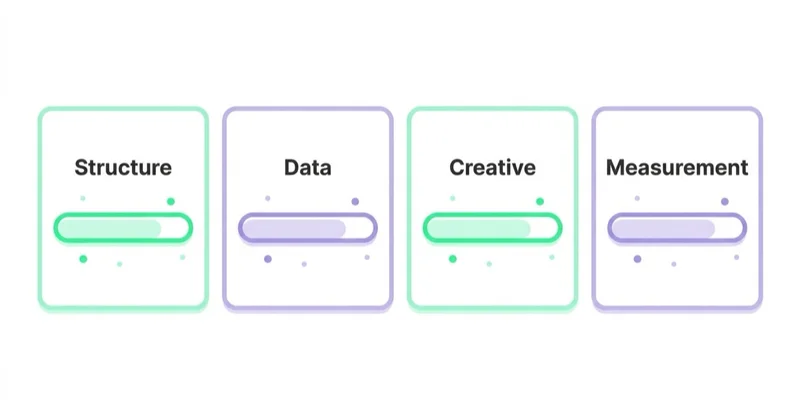
The eight cross-platform audit workstreams
1. Emergency risk and spend triage
Before analysis, check for issues that require immediate containment:
- unexpected daily spend or recent budget changes;
- ads leading to broken, unsafe or unapproved pages;
- compromised users, unknown administrators or payment methods;
- campaigns serving in prohibited markets or to restricted audiences;
- accidental use of sensitive customer data;
- primary conversion feeds that stopped or began duplicating;
- active promotions with expired prices, inventory or legal terms.
Document and fix urgent risk without waiting for the final report. Preserve the before-state and reason for the intervention so later performance analysis remains interpretable.
2. Account, spend and ownership map
List every relevant entity:
- advertising and manager accounts;
- business portfolios and organisation IDs;
- billing profiles, insertion orders, cards, taxes and credits;
- pixels, tags, datasets, UET tags and Insight Tags;
- Conversions API and offline-import integrations;
- product catalogues, Merchant Center accounts and feeds;
- app IDs, MMP connections and store accounts;
- domains, social profiles and lead-form assets;
- customer-list sources and audience owners;
- users, partners, roles, two-factor authentication and recovery methods.
Then reconcile spend. Compare platform cost, agency billing, third-party fees and finance records for the same currency, tax treatment and date range. Explain differences such as credit notes, invalid-traffic adjustments, FX, platform invoicing cut-offs or management fees.
Ownership should sit with the advertiser’s organisation wherever the platform model allows it, with agencies granted partner access rather than relying on an individual employee’s login. Remove former users after confirming that access and integrations will not break.
3. Measurement dictionary and event governance
Create a common table for every material event:
| Field | Example: ecommerce purchase |
|---|---|
| Business definition | Paid order accepted by the commerce backend |
| Event trigger | Server confirms a unique order |
| Deduplication key | Order ID |
| Gross value | Merchandise plus or minus tax/shipping under documented policy |
| Commercial value | Contribution margin after discounts, expected returns and variable cost |
| Currency | Transaction currency and reporting conversion rule |
| Source of truth | Order management or finance system |
| Bidding use | Primary purchase/value goal where implementation quality passes threshold |
| Reporting use | Platform attribution, analytics attribution, blended finance, incrementality |
| Owner and SLA | Named team, latency and failure alert threshold |
For lead generation, add qualification stages: submitted, valid, marketing-qualified, sales-qualified, opportunity, won and revenue. A “lead” cannot be comparable if one platform optimises to form opens and another to accepted opportunities.
Do not force identical technical settings when platform capabilities differ. Align the commercial definition, then document platform-specific attribution window, count rule, primary/bidding status, source, value and limitations.
4. Implementation and data-quality audit
For each event and platform, test:
- base tag or SDK coverage;
- browser and server event triggers;
- deduplication between Pixel/Tag and API events;
- order or lead IDs;
- dynamic value and currency;
- product IDs and catalogue matching;
- consent-mode or consent-management behaviour;
- enhanced matching or customer information handling;
- attribution and conversion windows;
- count settings, primary/secondary treatment and campaign goal selection;
- offline upload latency, rejection rate and corrections;
- discrepancy against backend event counts.
Meta’s Conversions API, for example, is not a privacy bypass and must follow Meta’s terms and applicable law. Google primary versus secondary settings affect reporting and bidding. Microsoft UET is the foundation for its web conversion goals and remarketing. The audit should translate these differences into one control register rather than treating every pixel as equivalent.
5. Attribution reconciliation
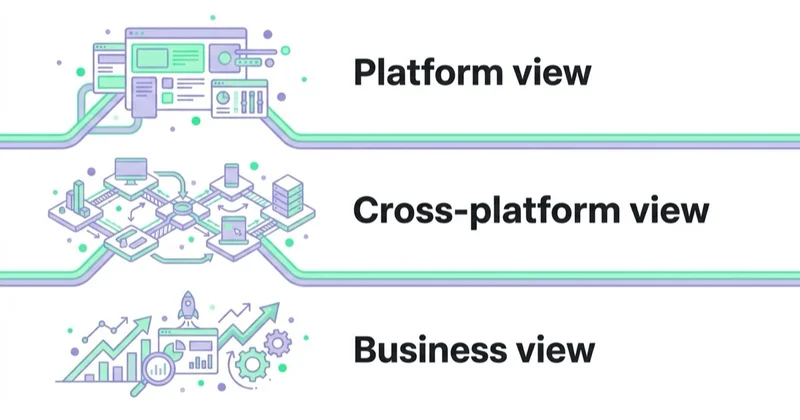
Build at least three views:
- Platform-attributed view: what each network claims under its selected rules. Useful for platform optimisation and diagnostics.
- Business or analytics attribution view: one deduplicated reporting model using commerce, CRM or analytics data. Useful for consistent comparison, with acknowledged identity and attribution limitations.
- Blended finance view: total recognised revenue, margin or qualified pipeline divided by total paid-media and related cost.
These views should not be expected to match. The audit explains why they differ and prevents them from being added together.
Blended metrics are also incomplete. If revenue rises because of seasonality, pricing, distribution or organic demand, blended ROAS may improve without paid media causing the change. Use experiments, holdouts, geo tests or media-mix modelling for causal allocation decisions where feasible.
6. Brand, audience and campaign-role overlap
Brand search
Separate branded from non-branded demand across search accounts and campaign types. In Google Ads, Performance Max can serve on branded queries under some conditions; current brand exclusions can control brand traffic in Search and Shopping inventory. Review Microsoft Search, affiliate agreements, shopping activity and partners as part of the same policy.
Brand advertising is not automatically waste. It may defend against competitors, communicate a promotion, route users to the right landing page or add incremental conversions. The audit should test the counterfactual and marginal value rather than delete brand because it looks “too easy”.
Remarketing and customer lists
Map audience definitions, windows, exclusions and purpose across platforms. A person receiving coordinated messages on two platforms may be a valid sequence, while unmanaged high frequency may damage efficiency and experience.
Because identity is fragmented, platform audience totals do not yield exact cross-platform unique reach. Use available cross-media measurement, clean-room or experiment solutions where justified. Otherwise state the limitation and monitor platform frequency, site cohorts and brand indicators as imperfect diagnostics.
Prospecting and retention
Check whether campaigns labelled “new customer” actually exclude or downweight known customers, whether platforms use the same new-customer definition, and whether returning-customer revenue receives an appropriate value. A platform can optimise toward easy repeat purchases while the business believes it is funding acquisition.
7. Budget allocation and marginal returns
Historical average ROAS does not answer where the next £10,000 should go. The audit needs marginal evidence:
- spend and outcome curves by market, channel and objective;
- budget constraints and impression-share indicators where meaningful;
- change history around material budget moves;
- creative, audience and inventory saturation;
- contribution margin and customer mix;
- cash-flow and payback requirements;
- experiment results and uncertainty intervals;
- operational capacity, stock and lead-handling limits.
Recommend ranges and conditions rather than one false-precision allocation. For example: “Move £15,000–£25,000 from retargeting to non-brand search if qualified pipeline CPA stays below £320 after four weeks and sales acceptance remains above 60%.”
8. Platform execution
Now inspect the accounts in detail:
- campaign architecture and objective;
- query, placement and audience quality;
- bids, budgets and automated strategy constraints;
- geographic, language and schedule settings;
- brand suitability and exclusions;
- creative coverage, fatigue and policy status;
- feed, catalogue and landing-page quality;
- tracking templates and UTMs;
- recommendations and automated changes;
- experiments, change history and learning disruptions.
Execution is not “always last”. Urgent faults were handled during triage. The full diagnostic comes after measurement and role mapping so an efficient campaign is not praised merely for harvesting conversions another channel created.
Glossary
- Blended performance: total business outcome against total marketing cost for a defined scope, without assigning channel credit.
- Brand exclusion: a setting preventing a campaign from serving on specified brand queries.
- Audience overlap: potential or measured duplication of people across campaigns or media owners.
- Attribution window: the period after an interaction during which a platform claims a conversion.
- Saturation: the point at which additional spend in a channel produces disproportionately weaker returns.
- Primary conversion: in Google Ads terminology, an action eligible for the Conversions column and bidding when its goal is selected; other platforms use different controls.
- Incrementality: outcomes caused by advertising that would not otherwise have happened.
- Marginal return: the result generated by the next unit of spend rather than the historical average.
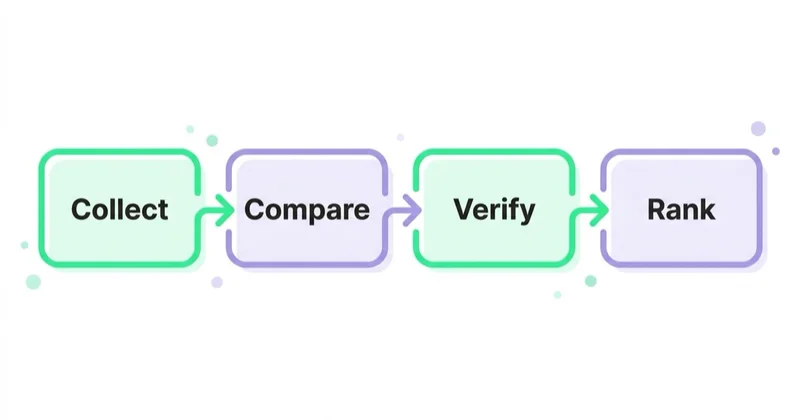
The audit sequence
- Scope and triage: define markets, brands, platforms and dates; contain urgent risk.
- Inventory: map accounts, integrations, ownership, billing and users.
- Reconciliation: align invoices, platform cost and finance outcomes.
- Measurement dictionary: define events, values, attribution views and owners.
- Implementation QA: test tags, APIs, goals, deduplication and consent.
- Role and overlap map: brand, prospecting, remarketing, retention and partners.
- Commercial analysis: contribution, marginal return, saturation and incrementality.
- Platform execution: inspect campaigns, assets, feeds, targeting and automation.
- Prioritisation: score impact, confidence, effort, risk and dependencies.
- Validation plan: assign owners, deadlines, acceptance tests and measurement windows.
This order keeps the audit defensible while allowing emergency fixes immediately.
What the deliverable should contain
- executive summary with the commercial conclusion and material uncertainty;
- account, access and ownership register;
- spend reconciliation by platform, market and cost type;
- conversion and value dictionary;
- tag, API and offline-data quality table;
- attribution reconciliation showing why reporting views differ;
- brand, audience and campaign-role map;
- channel and market contribution analysis;
- platform-specific findings with evidence or screenshots;
- prioritised action register with owner, dependency and acceptance test;
- experiment and reallocation plan;
- explicit exclusions: what the audit did not test or could not verify.
A recommendation to maintain or increase all channels can be valid if the evidence supports it. Credibility comes from transparent evidence and trade-offs, not from forcing one channel to be cut for dramatic effect.
How to prioritise findings
Use a scoring model that distinguishes observed facts from hypotheses:
| Dimension | Question |
|---|---|
| Impact | What revenue, cost, risk or learning could change? |
| Confidence | Is the issue verified, inferred or merely possible? |
| Urgency | Does delay create spend, compliance or security exposure? |
| Effort | How much engineering, creative or stakeholder work is required? |
| Dependency | What must happen before this fix can work? |
| Reversibility | Can the change be piloted or rolled back safely? |
For each recommendation, write an acceptance test. “Fix tracking” is not complete. “Backend purchase count and deduplicated ad event count differ by less than the agreed tolerance for seven consecutive days, with correct currency and unique order IDs” is testable.
How Space Ads runs a cross-platform PPC audit
We separate evidence into four layers:
- What the platform is configured to do. Goals, targeting, bids, assets and automation.
- What the platform reports. Attributed conversions, values, reach and cost under its own rules.
- What the business records. Revenue, contribution, qualified pipeline, cancellations and customer status.
- What can be shown as incremental. Experiment, holdout or modelling evidence with stated limitations.
The audit does not declare one dashboard “the truth” for every purpose. Instead, it assigns each view a job and documents the reconciliation.
Where Space Ads lacks access to a sales, finance or consent system, we state the dependency and use industry-standard validation rather than inventing certainty. The final plan is sequenced so measurement and ownership fixes support later bidding, creative and budget decisions.
Common mistakes
| Mistake | Better practice |
|---|---|
| Comparing platform CPA without reading the event definition | Build the measurement dictionary first |
| Summing attributed conversions from different platforms | Reconcile each to a deduplicated business outcome separately |
| Calling blended ROAS incremental ROAS | Add experiments or modelling before making causal claims |
| Treating all cross-platform reach as known | State identity limits and use deduplicated measurement only where supported |
| Deleting brand or remarketing because it overlaps | Test its marginal role and define the intended customer journey |
| Waiting for the final report to fix runaway spend | Use immediate risk triage and document the intervention |
| Reviewing ad accounts but not ownership and integrations | Audit users, billing, tags, APIs, catalogues and domains together |
| Producing a long checklist without acceptance tests | Rank actions and define how completion will be verified |
FAQ
What is a PPC audit? A PPC audit reviews paid campaign configuration, measurement, cost and commercial performance. It may cover one platform; this framework covers the full cross-platform programme plus the execution inside each account.
How is it different from a Google Ads audit? A Google Ads audit can inspect goals, campaigns, queries, assets and bidding in depth. A cross-platform audit additionally reconciles Google with other media, finance, analytics and CRM data to assess roles, overlap and allocation.
How often should a PPC audit be run? Use both regular governance and event-driven reviews. Triggers include a major budget or market change, new tracking architecture, site migration, unexplained performance shift, agency transition, acquisition, policy issue or disagreement between platform and backend outcomes.
Why do platform-reported conversions add up to more than actual orders? They can exceed unique orders because several platforms may assign credit to the same purchase under different windows and identity rules. Duplicate event implementations can increase the gap further. Reconcile each platform to unique backend IDs and never sum attributed totals without a deduplication method.
What is the most common finding? There is no universal finding. Common issues include inconsistent event definitions, duplicate or missing events, values that do not match finance, unowned accounts, brand traffic mixed with prospecting and allocation based on platform-attributed averages rather than marginal return.
Who should run it? The reviewer needs cross-platform access and enough independence to challenge channel assumptions. Specialists should contribute platform depth, while finance, analytics, CRM, legal or privacy and commercial owners provide the evidence no media account contains.
Can a cross-platform audit measure audience overlap exactly? Usually not from standard platform exports. Identity and privacy boundaries prevent a universal person-level join. Use approved cross-media measurement or clean-room solutions where justified, and otherwise report the limitation rather than presenting list-size comparisons as deduplicated reach.
Should branded search always be excluded? No. Brand controls should follow the campaign’s role and evidence of incremental value. Exclusions can improve separation between prospecting and brand capture, but may also reduce valuable coverage. Test the counterfactual where feasible.
Key takeaways
- Combine individual account inspection with a cross-platform commercial view.
- Triage urgent spend, security, policy and tracking risks before the full analysis.
- Reconcile cost and create a common measurement dictionary before comparing channel efficiency.
- Keep platform attribution, business attribution, blended performance and incrementality as distinct views.
- Treat brand and audience overlap as hypotheses to test, not automatic waste.
- Audit ownership, billing, integrations and consent alongside campaigns.
- Prioritise recommendations by impact, confidence, urgency and dependency, with a measurable acceptance test.
What our paid audit covers and how it is delivered is on the marketing audit page.
Sources and further reading
- Primary and secondary conversion actions — Google Ads Help
- About attribution models — Google Ads Help
- Brand exclusions for Search and Performance Max — Google Ads Help
- About Conversions API — Meta Business Help
- Universal Event Tracking — Microsoft Advertising Help
- Cross-media measurement for reach and frequency — World Federation of Advertisers
- What is a marketing audit
- Website audit: what to check before you spend more
Continue reading
ChatGPT Ad Formats and Character Limits: What Actually Fits
A ChatGPT ad appears below the response and carries six elements, with specific limits: title 3–50 characters, body up to 100. The "24 / 48 character" figures in trade coverage do not match the documentation, so this guide gives the full limits table, shows how to fit a useful message, and covers the image, product ads and end-to-end consistency with the landing page.
OpenAI Ads Manager: How to Set Up Your First ChatGPT Ads Campaign
OpenAI Ads Manager has three campaign levels, but launch also requires advertiser verification, billing, landing-page checks, measurement and deliberate choices for settings that cannot be changed later. This guide covers the setup sequence, budgets, context hints, oCPC, targeting, review and Ads API workflows.

Switching Marketing Agencies Without Losing the Account
A safe agency switch protects client-owned accounts, billing, conversion signals, creative rights and operating knowledge. Use this transition plan to assign responsibility, validate access and change partners without avoidable disruption.