A marketing audit is an evidence-led review of how a business creates, captures and converts demand—and whether its marketing investment supports profitable growth. It connects customer and market reality with positioning, channels, content, data, technology, sales handoffs and commercial economics.

The purpose is not to produce a catalogue of activity. It is to answer decisions:
- Which reported outcomes can be trusted?
- Where is the current growth constraint—or set of interacting constraints?
- Which audiences, offers and channels create valuable customers?
- What should receive more investment, less investment or no investment yet?
- Which capabilities and dependencies must be fixed before the plan can work?
A channel audit may show that a Google Ads account is structurally sound. A marketing audit can still conclude that the next pound belongs in retention, a landing page, sales capacity, organic demand creation or nowhere until measurement is repaired.
TL;DR
- A marketing audit reviews the connected commercial system, not only campaigns or channel allocation.
- Begin with business questions, scope and an evidence inventory. “Audit everything” produces breadth without decision quality.
- Reconcile platform events with CRM, ecommerce and finance outcomes. Platform attribution is useful but not a complete cross-channel truth.
- Evaluate customer economics, market and offer, demand creation and capture, conversion journeys, retention, data, technology and operating ownership.
- Separate confirmed defects, strong evidence, modelled estimates and hypotheses. They require different actions.
- Prioritise recommendations by evidence, reach, commercial impact, confidence, effort, dependency, risk and time to learn.
- A good deliverable includes a baseline, finding cards, decision scenarios, a sequenced roadmap, owners, measurement and an explicit “not now” list.
- Independence helps, but transparent incentives, reproducible evidence and decision rights matter more than pretending any auditor has no perspective.
What a marketing audit is—and is not
A marketing audit is:
- structured: scope, questions, evidence standards and outputs are defined;
- cross-functional: marketing is assessed with sales, product, finance, data and operations dependencies;
- evidence-led: findings show the data, observation or research behind them;
- commercial: recommendations connect to contribution, cash, capacity or strategic value;
- prioritised: the report makes trade-offs rather than recommending every possible improvement;
- actionable: owners, dependencies, tests and success measures are specified.
It is not:
- a platform health score presented as strategy;
- a services proposal with problems added to justify every service;
- a list of benchmark gaps without context;
- an attribution report treated as causal proof;
- a brand workshop without commercial and behavioural evidence;
- a guarantee that every recommendation will create the estimated uplift.
An audit diagnoses and reduces uncertainty. Some findings are confirmed defects to repair. Others are hypotheses that need an experiment before a major investment.
Marketing audit vs channel, analytics, brand and website audits
| Audit | Primary question | Typical depth | Typical output |
|---|---|---|---|
| Marketing audit | Is the whole demand and growth system aligned with commercial objectives? | Broad, cross-functional | Decisions, constraints and sequenced roadmap |
| Channel audit | Is one channel configured and operated well? | Deep in one platform or discipline | Channel fixes and tests |
| Analytics audit | Are data collection, definitions and reporting reliable? | Deep in tracking, governance and interpretation | Measurement repair plan |
| Brand audit | Is identity and positioning coherent and distinctive? | Deep in market meaning and expression | Positioning and brand-system recommendations |
| Website or CRO audit | Can priority journeys convert traffic effectively? | Deep in experience, evidence and experimentation | Site fixes, research and test backlog |
The scopes can overlap. A marketing audit may find that an analytics audit is a prerequisite or that a channel deserves specialist review. It should not pretend to replace all technical depth.
Related methods include our Google Ads audit, Facebook Ads audit, analytics audit and website audit.
Start with decisions, not a checklist
Before requesting access, write down the decisions the audit must inform. Examples:
- Can the business scale media from £100,000 to £150,000 per month profitably?
- Why has new-customer contribution stopped growing?
- Should budget move from paid social to search, creators, lifecycle or product?
- Which market should launch next?
- Is falling lead quality caused by targeting, offer, form or sales handling?
- What must be stabilised before appointing a new agency?
Then define:
- business units, products and markets in scope;
- channels and customer lifecycle stages;
- analysis period and seasonality;
- access and data limitations;
- stakeholders and decision owner;
- prohibited or constrained actions;
- expected artefacts and deadline.
An audit cannot be simultaneously deep across every market, product, channel and customer journey without corresponding time and access. State exclusions explicitly.
Area 1: commercial objectives and unit economics
Marketing efficiency needs a business definition. Audit:
- revenue, gross margin and contribution definitions;
- variable fulfilment, payment, returns and servicing costs;
- customer acquisition cost by relevant cohort;
- repeat purchase, retention, churn and expansion;
- payback period and cash timing;
- capacity, inventory and operational constraints;
- new versus existing customer value;
- product, service and market-level economics;
- budget limits and risk tolerance.
Do not assume revenue is the correct optimisation value. A high-revenue category can produce low contribution after discounts and returns. A subscription can have attractive lifetime revenue and unacceptable payback. A lead can look cheap while consuming sales capacity without becoming an opportunity.
Finance should approve the economic definitions. Marketing can then build operational values suitable for bidding and planning without presenting them as statutory accounting measures.
The output is a metric tree connecting spend to intermediate behaviour and commercial outcomes—for example:
media spend → qualified visits → checkout starts → first orders → contribution → repeat contribution
or:
media spend → enquiries → sales-accepted leads → opportunities → wins → expected contribution
Area 2: measurement, definitions and data governance
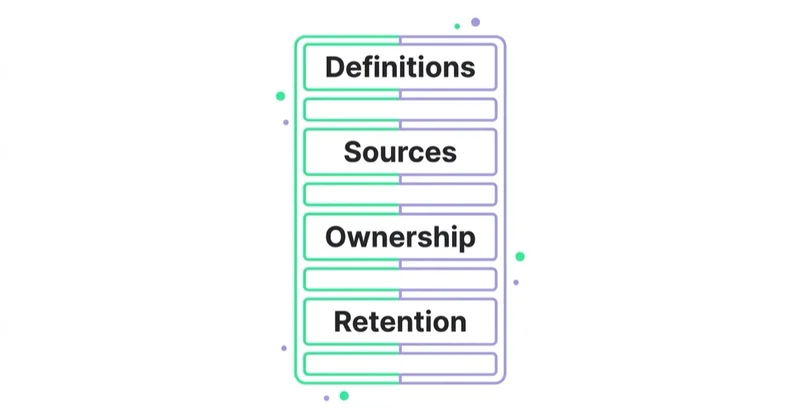
Inventory the events and values used in dashboards and automated bidding.
Check:
- event definitions, deduplication and value accuracy;
- primary versus secondary conversion actions;
- online and offline outcome imports;
- identity and campaign identifiers across systems;
- consent states and platform terms;
- attribution windows, models and time zones;
- CRM stage consistency and sales outcomes;
- ecommerce refunds, cancellations and new-customer flags;
- data ownership, documentation and monitoring;
- release or schema changes that altered trends.
Google Ads, for example, uses primary conversion actions for bidding when the campaign selects the associated goal; secondary actions are generally observational, except for specific custom-goal behaviour. Misconfiguration can make a dashboard and bidder pursue different outcomes.
Reconcile samples and totals across platforms, analytics, CRM, order systems and finance. They will not be identical because their purposes and rules differ. The audit should explain expected differences and isolate unexplained ones.
Do not suspend every other line of inquiry until tracking is perfect. Technical tests, customer interviews and operational evidence can still reveal problems. Instead, label which quantitative conclusions are limited and make measurement repair a prerequisite for decisions that depend on them.
Area 3: customer, market and demand
Review whether the organisation understands the people and situations it serves.
Evidence can include:
- customer interviews and win/loss analysis;
- sales calls, support tickets and review themes;
- search and site-search behaviour;
- market size, growth and category structure;
- competitor propositions, prices and distribution;
- audience penetration and brand consideration;
- buying committee, decision criteria and sales cycle;
- barriers, switching costs and triggers;
- market-specific regulation and cultural context.
Segmentation should explain different needs, economics or routes to market. A persona that changes no decision is decoration.
Separate existing demand from created demand. Search can capture people already expressing a need; video, creators, PR, partnerships, content and brand activity may help more people enter the category or consider the brand. An audit focused only on last-click conversions tends to overfund demand capture until its marginal return declines.
Area 4: positioning, offer and proof
Evaluate whether the proposition is clear, relevant, distinctive and supportable across the journey.
Review:
- intended audience and use case;
- category and alternative the customer compares;
- problem, promised outcome and mechanism;
- price, packaging and commercial terms;
- proof: product demonstration, cases, reviews, data or credentials;
- objections and risk reversal;
- claim substantiation and compliance;
- consistency between brand, ads, pages and sales conversation;
- product availability and delivery reality.
A campaign cannot sustainably compensate for a weak or misleading offer. But do not diagnose “positioning” merely because an ad has a low click-through rate. Use customer, market, creative and conversion evidence together.
Map where claims originate and who approves them. Premium communication depends on specificity and proof, not inflated language.
Area 5: channel role, execution and portfolio allocation
For every meaningful channel, document:
- its job in the customer journey;
- target audience and market coverage;
- spend, reach, frequency and creative inputs;
- reported outcomes and attribution basis;
- downstream customer quality;
- fixed and variable operating cost;
- response to prior budget changes;
- evidence of incrementality;
- saturation, auction or inventory constraints;
- dependencies on site, feed, CRM or sales.
Then review the portfolio:
- Are several channels claiming the same conversion?
- Is demand capture saturated while demand creation is underdeveloped?
- Is retargeting credited for outcomes created elsewhere?
- Are lifecycle and retention excluded from the budget conversation?
- Does creative production constrain spend more than audience size?
- Are offline or partner channels measured differently and therefore undervalued?
- What happens to marginal—not average—return when budget changes?
Platform attribution reports are diagnostic within their observable environment. Google Ads explicitly notes that its attribution paths only reflect keywords and ads in the Google Ads account. They cannot independently prove the optimal allocation across the whole marketing portfolio.
Use the strongest feasible evidence:
- randomised conversion or brand-lift experiments;
- geo or audience holdouts;
- calibrated marketing mix models at suitable scale;
- matched-market or interrupted time-series analysis;
- first-party cohort and path data;
- platform attribution and directional indicators.
Marketing mix modelling is not an automatic source of truth. Google's Meridian documentation, for example, emphasises causal estimation and the value of calibration with experiments; it also notes that causal inference is difficult to validate directly. Model assumptions, controls and uncertainty belong in the audit.
Area 6: content, creative and organic visibility
Audit the system that turns customer insight into communication:
- content coverage by audience question and decision stage;
- organic search and answer-engine visibility;
- topical expertise, originality and source quality;
- creative concepts, formats and message diversity;
- production volume, cycle time and approval bottlenecks;
- asset performance by hypothesis rather than filename;
- localisation and market adaptation;
- distribution and reuse;
- brand consistency without creative sameness.
Do not measure content solely by page views or video solely by platform views. Link assets to qualified discovery, assisted journeys, lead quality, brand outcomes or sales where the evidence permits.
For LLM and AEO readiness, check whether content answers real questions clearly, identifies the organisation and expert perspective, supports important claims, uses accessible structure and provides original evidence. Publishing generic volume is not a strategy.
Area 7: website, conversion and sales handoff
Map priority journeys from source to commercial outcome:
- ad and landing-page message match;
- information, proof and decision support;
- speed, reliability and accessibility;
- forms, checkout, booking or trial flow;
- errors, payment failure and recovery;
- lead routing and response time;
- qualification criteria and CRM hygiene;
- nurture, remarketing and sales follow-up;
- onboarding, activation and early retention.
Segment by device, market, audience and source. A healthy average can conceal a broken mobile form in the market receiving the next budget increase.
Do not define every friction as harmful. Qualification, price disclosure or an additional step may reduce raw conversion while improving customer fit and operational efficiency. Measure downstream value.
Area 8: retention, lifecycle and customer value
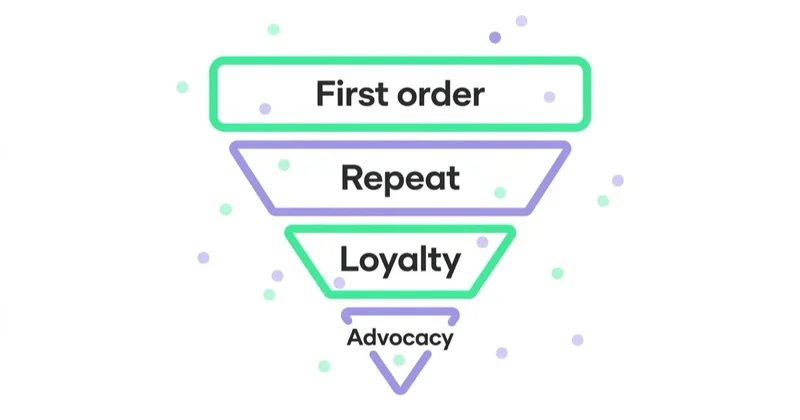
Acquisition audits often stop at the first transaction. Include:
- onboarding and activation;
- second purchase or core habit formation;
- email, SMS, push and in-product communication;
- subscription renewal, churn and win-back;
- cross-sell and expansion;
- loyalty, referral and advocacy;
- service issues driving refunds or negative reviews;
- communication consent and preference management.
A business with strong acquisition and weak retention may not need more top-of-funnel spend. It may need product, fulfilment or lifecycle work. Conversely, excellent retention can justify a higher acquisition cost than a first-order ROAS dashboard suggests.
Area 9: technology, process and ownership
Many growth constraints are organisational rather than tactical.
Map:
- who owns budget and channel decisions;
- data, tags, feeds and integrations;
- creative briefing, production and approval;
- website and landing-page releases;
- CRM stages and sales service levels;
- experimentation and statistical review;
- privacy, legal and claim approval;
- incident monitoring and escalation;
- agency and vendor account ownership;
- documentation, access and continuity.
Look for orphaned dependencies: a product feed nobody monitors, a landing page nobody can change, a lead queue without a response owner, or a dashboard whose metric definition lives only in one employee's head.
Capacity changes strategy. Recommending weekly creative testing is not actionable if the organisation can produce one approved asset per month.
Evidence hierarchy: do not present every finding equally
Use clear labels:
Confirmed defect
Reproduced failure or reconciliation error: leads do not reach CRM, purchase value is doubled, a priority page fails on mobile. Repair and verify.
Strong converging evidence
Several sources point to the same cause: funnel data, usability tests and support tickets all show address validation blocking checkout. Prioritise with high confidence.
Modelled estimate
An econometric or financial model indicates likely incremental return. Report assumptions, intervals and sensitivity—not one certain figure.
Observational pattern
A segment or period correlates with an outcome. Useful for hypothesis generation, not proof that changing it will cause the result.
Hypothesis
A plausible change supported by strategic reasoning but not yet tested. Define the experiment or research required.
This prevents a stakeholder opinion and a broken payment integration from appearing as two equivalent bullets in a 100-row spreadsheet.
How to identify and prioritise constraints
A business may have one dominant constraint or several that interact. For example, a strong offer cannot scale because creative supply is low, while the CRM also fails to return lead quality. Naming only one can hide the necessary sequence.
For each finding, score or describe:
- evidence strength;
- affected audience and commercial exposure;
- expected outcome and value range;
- confidence and uncertainty;
- time to impact and time to learn;
- implementation effort and cost;
- dependencies and owner;
- operational, brand, privacy and measurement risk;
- reversibility;
- strategic fit.
Avoid invented precision. A range with assumptions is more credible than “this fix will add £243,700”. If impact cannot be estimated responsibly, state what the next test will establish.
What a decision-ready deliverable should contain
1. Executive decision brief
The decisions, top constraints, material risks and recommended sequence in language senior stakeholders can use.
2. Scope and limitations
Accounts, markets, dates, products, access, exclusions and data-quality constraints.
3. Baseline and metric dictionary
Current commercial and marketing performance with explicit definitions.
4. Evidence map
Sources reviewed, reconciliations performed and confidence level of each conclusion.
5. Finding cards
Each finding should show condition, evidence, affected journey, business implication, recommendation, dependency, owner and verification.
6. Allocation scenarios
Not one false-precision budget. Provide conservative, base and growth scenarios with prerequisites, marginal-return assumptions and stop conditions.
7. Sequenced roadmap
Incidents and prerequisites first, then high-confidence fixes, experiments, capability projects and longer strategic programmes.
8. “Not now” list
Activities considered and deliberately deferred, with reasons and revisit triggers.
9. Measurement and experiment plan
What success means, data source, baseline, evaluation window and owner.
10. Handover
Working files, queries, calculation logic, dashboards, access notes and a decision session—not only a PDF.
When to commission a marketing audit
Useful triggers include:
- before a material budget increase or reduction;
- growth plateau or rising acquisition cost;
- conflict between platform performance and finance results;
- rebrand, replatform, new CRM or measurement change;
- agency or leadership transition;
- new market, product or business model;
- merger of teams, brands or channel portfolios;
- falling lead quality, retention or contribution;
- inability to explain which growth activity is incremental;
- lack of an agreed plan despite extensive reporting.
A periodic audit can also be valuable in a fast-changing business. Trigger-based and scheduled audits are not opposites: define a sensible governance cadence and run an additional review when a material event demands it.
How long does a marketing audit take?
There is no responsible universal duration. A focused single-market review with clean access may take a few weeks. A multi-brand, multi-market organisation with offline sales, several agencies and inconsistent data can require a phased programme.
The proposal should state:
- discovery and access period;
- interviews and research;
- data extraction and reconciliation;
- analysis and specialist reviews;
- synthesis and challenge session;
- draft feedback;
- final decision workshop and handover.
Urgent critical issues should be communicated when found rather than held for the final presentation.
Independence and conflicts of interest
An agency that may implement the recommendations has an incentive to find work. An external strategy consultant has incentives too: larger transformation programmes, preferred frameworks or limited accountability for execution.
Use safeguards:
- disclose commercial interests and implementation options;
- price the audit as a defined engagement;
- require evidence and reproducible calculations;
- include “change nothing” and “do less” as valid outcomes;
- let responsible channel and product owners challenge findings;
- separate factual defects from judgement and hypotheses;
- ensure the client owns accounts, data and deliverables;
- keep implementation optional.
Independence is strengthened by method and governance, not only by company type.
The Space Ads marketing audit approach
We structure the work around decisions and commercial evidence:
- agree scope, stakeholders and the decisions at stake;
- define unit economics and reconcile critical outcomes;
- examine customer, offer, demand and journey evidence;
- assess channel roles, creative, content and marginal opportunity;
- map technology, ownership and execution capacity;
- classify findings by evidence strength;
- build scenarios and a sequenced roadmap;
- define how every material action will be verified.
Where data is incomplete, we say what can be concluded, what remains uncertain and which measurement or experiment resolves it. That is more useful than turning missing evidence into a confident recommendation.
Common mistakes
| Mistake | Better practice |
|---|---|
| Start with platform screenshots | Start with decisions, economics and evidence inventory |
| Treat attributed ROAS as causal return | Reconcile first-party outcomes and use experiments or modelling appropriately |
| Audit only acquisition | Include retention, lifecycle and sales capacity |
| Recommend every channel | Define channel roles, marginal opportunity and prerequisites |
| Present correlations as causes | Label evidence and specify tests |
| Produce one precise upside figure | Use ranges, scenarios and sensitivities |
| Ignore implementation capacity | Assign owners, dependencies and realistic sequence |
| Deliver only a presentation | Hand over working evidence, logic and measurement plan |
| Hide commercial incentives | Disclose them and keep implementation optional |
FAQ
What is a marketing audit?
It is a structured, evidence-led review of how a business creates, captures and converts demand. It assesses commercial economics, customers, positioning, channels, content, conversion, retention, data, technology and operating ownership to support specific decisions.
What does a marketing audit include?
Scope varies, but a comprehensive audit covers objectives and unit economics, measurement, customer and market evidence, offer and proof, channel roles and execution, creative and content, website and sales journeys, retention, technology, process and governance.
How is a marketing audit different from a channel audit?
A channel audit examines execution within one discipline. A marketing audit compares the role and evidence of multiple activities against business economics and customer behaviour, then identifies cross-functional constraints and allocation decisions.
What should a marketing audit deliver?
A decision brief, scope and limitations, baseline, metric definitions, evidence map, prioritised finding cards, investment scenarios, sequenced roadmap, “not now” list, measurement plan and working-file handover.
When should a business run one?
Before material budget or market changes, after a growth plateau, when reports conflict, around agency or technology transitions, and when acquisition, retention or contribution changes without an agreed explanation. Periodic governance reviews can complement these triggers.
Can the current agency conduct the audit?
Yes, if conflicts are disclosed and evidence is reproducible. Safeguards include a defined paid scope, implementation remaining optional, a valid “change nothing” outcome and review by client stakeholders or an independent specialist where stakes justify it.
How should audit recommendations be prioritised?
Use evidence strength, commercial exposure, expected impact, confidence, time, effort, dependencies, risk, reversibility and strategic fit. Repair confirmed blockers first; test uncertain high-impact ideas before committing large resources.
Key takeaways
- A marketing audit diagnoses the connected growth system, not a collection of channel settings.
- Commercial definitions and measurement quality determine what “good performance” means.
- Customer, offer, conversion, retention and execution capacity can constrain growth as much as media.
- Attribution is one evidence source; allocation decisions need cross-channel and causal thinking.
- Findings should be labelled by evidence strength and prioritised with uncertainty visible.
- The deliverable must support decisions, ownership, implementation and verification.
- Transparent incentives and reproducible work protect audit independence.
See how Space Ads scopes the engagement on our marketing audit page, or review marketing KPIs that matter before defining the baseline.
Sources and further reading
- About conversion goals — Google Ads Help
- About attribution reports — Google Ads Help
- Meridian marketing mix modelling — Google for Developers
- Assessing model fit and results in Meridian — Google for Developers
- Website audit: what to check before spending more
- Marketing KPIs that matter
- Why marketing growth plateaus
Continue reading

ChatGPT Ad Formats and Character Limits: What Actually Fits
A ChatGPT ad appears below the response and carries six elements, with specific limits: title 3–50 characters, body up to 100. The "24 / 48 character" figures in trade coverage do not match the documentation, so this guide gives the full limits table, shows how to fit a useful message, and covers the image, product ads and end-to-end consistency with the landing page.
OpenAI Ads Manager: How to Set Up Your First ChatGPT Ads Campaign
OpenAI Ads Manager has three campaign levels, but launch also requires advertiser verification, billing, landing-page checks, measurement and deliberate choices for settings that cannot be changed later. This guide covers the setup sequence, budgets, context hints, oCPC, targeting, review and Ads API workflows.
Switching Marketing Agencies Without Losing the Account
A safe agency switch protects client-owned accounts, billing, conversion signals, creative rights and operating knowledge. Use this transition plan to assign responsibility, validate access and change partners without avoidable disruption.