Subscription ecommerce turns a one-off purchase into a recurring agreement: a product ships on a schedule, a curated box arrives periodically or membership unlocks an ongoing benefit. The model can create more predictable demand and a longer customer relationship. It does not automatically create good economics.

The key question is whether the contribution earned from a subscriber—after product, fulfillment, shipping, payment, service, refunds and retention costs—repays acquisition within an acceptable period and continues to produce value afterward. Churn shapes that answer, but it is not the only variable. Gross margin, delivery frequency, failed payments, discounts, inventory, cash timing and customer mix can change the result just as much.
Subscription ecommerce economics: the short version
- Calculate contribution per successful order, not gross revenue or gross margin alone.
- Measure retention with signup cohorts and survival curves. A single blended monthly churn rate can hide a deteriorating new-customer mix.
- Define CAC payback as the billing cycle when cumulative observed contribution covers customer acquisition cost.
- Split voluntary cancellations from payment-related churn because their causes and remedies differ.
- Model skipped, paused, refunded and failed orders. An active contract does not guarantee a successful, profitable shipment.
- Replenishment, curation and access memberships need different retention levers.
- Make frequency, skip, pause, payment update and cancellation easy to use. Friction can inflate short-term retention while increasing complaints and chargebacks.
- Scale acquisition in stages as cohorts mature; do not treat projected lifetime value as cash already earned.
The three common subscription models
Replenishment
The customer receives a consumable such as coffee, pet food, personal care or supplements at an agreed interval. The model works when delivery cadence matches consumption and subscribing is more convenient than reordering.
Risks include stockpiling, unsuitable frequency, seasonal consumption, product fatigue and shipping cost on low-value orders. Flexible intervals, skip and quantity changes can solve the actual need better than a cancellation discount.
Curation
The merchant selects a changing assortment, such as a discovery or sample box. Value comes from surprise, expertise and access, so merchandising quality is a recurring cost—not a launch task.
Risks include novelty decay, repeated or irrelevant products, inconsistent perceived value and expensive sourcing. Preference data, feedback, rotation and clear expectations matter more than a generic loyalty email.
Access or membership
A recurring fee provides benefits such as member pricing, exclusive products, content, service or delivery advantages. Economics depend on whether member behavior generates enough incremental margin to cover benefits and service cost.
Low usage can predict cancellation, but high usage is not always profitable if benefits are expensive to provide. Track both engagement and member-level contribution.
Hybrid models combine these structures—for example replenishment with member pricing. Model each benefit and cost rather than assigning all recurring revenue the same margin.
Start with contribution per order
Revenue is the wrong base for acquisition decisions. A physical subscription order can carry costs that a software-style LTV formula misses.
contribution per order = net revenue - product cost - pick/pack - shipping subsidy - payment fees - variable service cost - expected refunds/returns - other variable fulfillment cost
Net revenue should reflect discounts, credits and taxes that are not retained by the business. If a free gift or first-box discount is part of acquisition, include its cost in the acquisition cohort rather than smoothing it away.
Example:
| Item per shipment | Amount |
|---|---|
| Net product revenue | $48 |
| Product and packaging | -$17 |
| Pick, pack and fulfillment | -$4 |
| Shipping subsidy | -$7 |
| Payment fee | -$2 |
| Expected support/refund cost | -$2 |
| Contribution per successful shipment | $16 |
If CAC is $48, the simple payback point is three successful $16 shipments. But a customer who cancels, skips, receives a refund or fails payment before shipment three has not paid back. The real calculation uses the cohort's cumulative contribution, not CAC ÷ average contribution alone.
Model cohort contribution, not a headline LTV
A useful subscription LTV is the expected contribution from a cohort, not revenue multiplied by an optimistic lifespan.
For each billing cycle, calculate:
expected cohort contribution in cycle t = starting customers × probability active and billable in t × payment success × expected contribution per order in t
Then sum the cycles and subtract acquisition or other customer-level variable costs. A mature model may also discount distant cash flows and segment by channel, offer, product, geography and first-order discount.
The retention curve is more informative than a single average. It shows the share of the original cohort still active or billable at each cycle. If 1,000 people start in January and 650 complete the third successful order, the third-cycle retention is 65% for that definition. Be explicit about whether paused accounts, failed payments and skipped shipments count as active.
A simplified constant-churn formula such as monthly contribution ÷ monthly churn can be useful for rough comparison only when churn and contribution are stable. New subscription businesses rarely meet that assumption: churn is often highest early, product mix changes and acquisition channels bring customers with different intent.
Churn definitions that do not mislead
"Churn" can refer to customers, contracts, revenue or failed renewals. Define the numerator and denominator before putting it in a dashboard.
| Metric | Example definition | Use |
|---|---|---|
| Customer churn | Customers cancelling in period ÷ customers active at period start | High-level loss rate |
| Cohort retention | Original cohort completing a defined renewal ÷ original cohort | Acquisition-quality and lifecycle analysis |
| Gross revenue churn | Recurring revenue lost from cancellations/downgrades ÷ starting recurring revenue | Revenue exposure |
| Payment-failure churn | Contracts ending after unrecovered billing failure ÷ renewal attempts | Dunning performance |
| Pause/skip rate | Pauses or skipped orders ÷ eligible active contracts | Cadence and inventory mismatch |
| Reactivation rate | Former subscribers returning ÷ eligible contacted former subscribers | Win-back efficiency |
For physical goods, successful paid shipment retention is often more commercially useful than contract status. A paused account may retain future potential but contributes no current order; a failed renewal may remain technically active while cash and inventory planning diverge.
Read churn by acquisition cohort and segment. Blended churn can improve simply because a large older base dominates the denominator, even while recent paid-social cohorts deteriorate.
CAC payback is the scaling constraint
CAC should include the variable cost of acquiring new subscribers:
CAC = acquisition media + attributable agency/creative cost + sales incentives + acquisition discounts or gifts + other variable acquisition cost ÷ new paying subscribers
Finance teams may allocate shared salaries and overhead differently. The definition can vary, but it must be consistent and documented.
Payback occurs when cumulative cohort contribution equals CAC. If a January cohort cost $60,000 to acquire and generates $60,000 of cumulative contribution after the fourth renewal, its observed payback is four billing cycles under that model.
Shorter payback releases cash sooner and reduces exposure to forecast error. A business can tolerate a longer period when retention is well evidenced, capital is available and contribution after payback is attractive. There is no universal rule that every subscription must repay in three, six or twelve months.
Separate payback by channel and offer. A deeply discounted acquisition campaign may show a cheap platform CPA while extending contribution payback. A referral program may cost more upfront but attract subscribers who retain better. Optimize for cohort economics, not first-order cost alone.
For related definitions, see customer acquisition cost benchmarks and customer retention marketing.
Cash flow is not the same as profit
Subscriptions change cash timing. Monthly plans collect gradually; prepaid annual or multi-shipment plans collect cash earlier but create an obligation to deliver future value. Refunds, chargebacks, inventory purchases, deferred revenue and tax treatment affect how that cash can be used.
A prepaid plan can improve working capital while making cancellation and fulfillment liabilities larger. A discounted annual plan can also reduce total contribution if the discount exceeds financing and retention benefits. Model:
- cash collected and payment fees at signup;
- expected delivery schedule and cost inflation;
- inventory and shipping commitments;
- cancellation/refund rights by market;
- revenue-recognition treatment with finance advisers;
- breakage assumptions that are legal, ethical and evidence-based.
Do not fund aggressive acquisition with prepaid cash without reserving for the deliveries and refunds already promised.
Voluntary and involuntary churn need different fixes
Voluntary churn occurs when a customer chooses to leave. The reason may be excess stock, price, product dissatisfaction, a lifestyle change, weak use, poor service or a competitor. Timing can suggest a hypothesis, but it does not prove the cause. Use cancellation reasons, support conversations, product usage, return data and customer interviews together.
Involuntary churn occurs when a recurring charge cannot be completed and the subscription eventually ends. Causes include an expired or replaced card, insufficient funds, authentication requirements or issuer declines. A failed payment is not always recoverable, and retrying blindly can increase fees or customer frustration.
Revenue recovery can include:
- payment credentials updated through the processor's supported account-updater service;
- customer reminders before expiry or after failure;
- a secure self-service payment-update link;
- retry timing based on decline type and provider guidance;
- required authentication flows;
- a grace period appropriate to the product or access model;
- clear status changes after retry attempts end;
- reporting on attempted, recovered and permanently failed payments.
Stripe, for example, documents automated retries, customer emails, card updates and recovery analytics. Shopify lets merchants filter failed-payment subscription customers and send payment-update reminders. Capabilities vary by gateway and subscription system, so the implementation should follow the provider's current rules.
Measure recovery on incremental contribution, not recovered revenue alone. A low-margin shipment recovered after several paid attempts may be less valuable than the headline suggests.
Diagnose churn by lifecycle stage
Before the first renewal
Investigate offer clarity, product-market fit, acquisition source, first-box discount behavior, delivery experience, quality and onboarding. Customers may have wanted the trial or discount rather than an ongoing relationship.
Early renewals
Investigate consumption cadence, quantity, product expectations, support contacts and first successful outcome. Replenishment customers may simply have too much stock; access members may not understand or use the benefit.
Mature subscribers
Investigate novelty, product changes, price increases, service quality, life-stage shifts and accumulated friction. Long-tenure churn can be natural, but a sudden cohort or calendar-time increase may signal an operational change.
At payment failure
Investigate decline codes, gateway changes, card updater coverage, authentication and reminder delivery. Do not send a generic "we miss you" campaign when the immediate problem is a payment method.
Plot cancellation and failure hazard by order number—the probability that a subscriber exits at each renewal among those who reached it. This exposes a weak second box or price-change month that a single average hides.
Retention without relying on blanket discounts
Retention should remove the reason to leave, not merely lower price for everyone.
Pause and skip. Useful when the customer wants a temporary break. Shopify's first-party subscription experience supports customer pause, skip and cancellation actions when configured.
Frequency and quantity changes. Let replenishment customers match delivery to actual consumption.
Product swaps. Allow a suitable alternative when flavor, size or preference—not the subscription relationship—is the problem.
Expectation-setting. State frequency, price, shipping per delivery, renewal, cancellation and discount terms before purchase. Show what changes after a trial or introductory period.
Onboarding and usage. Help customers reach the first meaningful result and understand benefits. Trigger communication from actual lifecycle behavior rather than sending the same cadence to everyone.
Better merchandising. For curation, use preferences and feedback while preserving discovery. Repeated irrelevant items erode perceived value quickly.
Save offers with controls. Use a targeted offer only when price is the genuine issue and the retained contribution remains positive. Test incremental saves against customers who would have stayed without a discount.
Win-back. Segment former customers by reason, tenure, product and time since cancellation. Fix the cause before advertising the same promise again.
Pause is not always superior to cancellation, and discounting does not always "train" behavior. Test each intervention and include delayed cancellation, margin loss and customer experience in the result.
Cancellation and customer trust
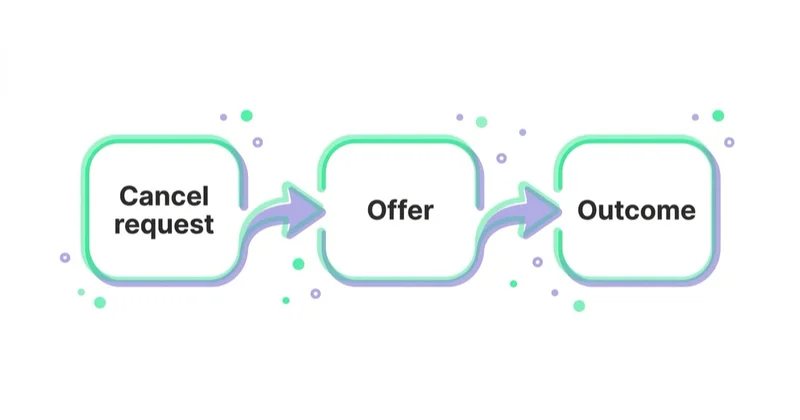
Make recurring terms understandable and cancellation functional. Obstructive flows can drive support cost, chargebacks, complaints and regulatory action while corrupting churn data.
Requirements vary by jurisdiction. In the United States, the FTC's 2024 amended "click-to-cancel" rule was vacated by the Eighth Circuit in July 2025, but the FTC Act, the Restore Online Shoppers' Confidence Act and state laws still matter, and FTC enforcement against alleged deceptive enrollment, billing and cancellation practices continues. Businesses should not rely on an outdated headline about the vacated rule as legal advice.
Use local counsel to review:
- disclosure of recurring price, frequency and minimum term;
- express consent and evidence of that consent;
- trial conversion and renewal notices;
- cancellation method and effective date;
- refunds, returns and unshipped orders;
- price changes and material term changes;
- email/SMS marketing permission after cancellation;
- data retention and deletion.
Shopify's current subscriptions experience displays frequency and shipping details in checkout, requires agreement to the cancellation policy and can give customers self-service management. Configuration and third-party apps still need review against the merchant's markets and policy.
A subscription economics dashboard
Build one cohort table before adding dozens of charts. For each signup month, channel, offer and product, include:
- subscribers acquired and fully loaded CAC;
- first-order net revenue and contribution;
- successful renewal rate by order number;
- gross contribution accumulated by cycle;
- payback cycle and share reaching payback;
- voluntary cancellation, failed payment, pause and skip;
- refund, return, chargeback and support rates;
- average delivery interval and products per shipment;
- reactivation and post-reactivation retention;
- projected LTV with the model version clearly labeled.
Add operational alerts for inventory, unusually high skips, payment-recovery failure and changes in cancellation reasons. Subscription marketing cannot be separated from supply and customer experience: an ad campaign that accelerates signups into an inventory shortage damages later retention.
How Space Ads would approach growth
We would connect acquisition decisions to observed cohort contribution rather than optimize a platform CPA in isolation.
- Audit definitions and data. Reconcile subscription contracts, orders, payments, refunds, media cost and analytics.
- Build the cohort baseline. Segment retention and contribution by offer, product, channel and signup period.
- Fix leakage before adding volume. Prioritize checkout clarity, failed-payment recovery, fulfillment and the highest-hazard renewal.
- Define controlled acquisition bands. Set spend and CAC limits from conservative payback evidence and available cash.
- Test offer quality. Compare discount, bundle, cadence and message on contribution and retention—not signup rate only.
- Scale in stages. Increase budgets while monitoring whether new cohorts retain and pay back like the cohorts that justified the increase.
- Reforecast regularly. Update LTV and cash requirements when product cost, shipping, audience mix or churn changes.
A new business does not always need to stop acquisition until an entire long payback window matures. It needs a staged risk policy: smaller tests, conservative forecast ranges, leading indicators that correlate with later value and enough cash to survive downside outcomes.
Common mistakes
| Mistake | Better approach |
|---|---|
| Treating recurring revenue as recurring profit | Calculate contribution after all variable order and service costs |
Using ARPU ÷ churn as precise LTV |
Build cohort survival and contribution by billing cycle |
| Reading one blended churn rate | Segment by signup cohort, channel, offer, product and order number |
| Setting CAC from projected lifetime revenue | Use conservative contribution payback and cash constraints |
| Counting active contracts as paid renewals | Track successful, profitable shipments and payment status |
| Treating every churn event as dissatisfaction | Separate voluntary, failed-payment, pause and skip behavior |
| Retrying every failed payment identically | Use decline-aware provider-supported recovery logic |
| Discounting every cancellation | Match intervention to the stated and observed cause |
| Hiding cancellation to protect retention | Build clear self-service management and monitor trust outcomes |
| Scaling because first-order CPA is low | Validate acquisition quality with maturing cohort contribution |
FAQ
What is subscription ecommerce? It is an ecommerce model in which a customer agrees to recurring purchases or membership benefits on a defined schedule. Common forms are replenishment, curated boxes and access memberships.
How do you calculate subscription ecommerce LTV? Estimate the contribution each cohort produces across future billing cycles: retention probability multiplied by payment success and contribution per successful order, summed over time. Use observed cohort data, subtract acquisition cost and label assumptions for immature periods.
What is a good subscription churn rate? There is no universal good rate. Product category, billing frequency, margin, acquisition offer and lifecycle stage change the acceptable result. Compare equivalent cohorts and judge churn through payback, lifetime contribution and customer experience.
How do you calculate CAC payback? Track cumulative contribution for an acquisition cohort. Payback is the cycle when that contribution equals the cohort's customer acquisition cost. Revenue or gross margin alone will overstate how quickly cash is recovered.
What is involuntary churn? It is subscription loss after a payment cannot be completed rather than a deliberate customer cancellation. Diagnose decline and authentication reasons, then use supported card updates, reminders, secure payment-update flows and appropriate retries.
How can an ecommerce subscription reduce churn? Match the solution to the reason: clearer expectations, better first delivery, pause, skip, frequency or quantity changes, product swaps, usage support, improved curation, payment recovery or a targeted save offer. Measure incremental retention and contribution.
When should a subscription business scale advertising? Scale when data quality is reliable, unit contribution is positive, maturing cohorts support a conservative payback case and the business has cash and fulfillment capacity for the downside scenario. Increase spend in stages and re-check each new cohort.
Should subscription cancellation be easy? Yes. Clear self-service cancellation protects trust and data quality and can reduce support and chargebacks. Legal requirements differ by market, so recurring terms and cancellation flows should be reviewed by qualified counsel.
Are annual subscriptions always better than monthly plans? No. Prepayment improves cash timing and may reduce renewal frequency, but discounts, refund obligations, delivery commitments and lower flexibility can reduce value. Compare contribution, retention, cash liability and customer preference.
Sources and further reading
- Shopify Help Center — subscriptions
- Shopify Help Center — subscription customer experience
- Shopify Help Center — managing subscription contracts
- Stripe Documentation — recurring revenue recovery
- U.S. Court of Appeals for the Eighth Circuit — decision vacating the amended FTC rule
- Federal Trade Commission — 2026 subscription and cancellation enforcement
Key takeaways
- Subscription growth is attractive when retained contribution repays CAC and funds future delivery—not because revenue repeats on paper.
- Calculate unit contribution and cohort survival before setting acquisition limits.
- Use successful renewal and cumulative contribution by cycle; contract status and blended churn can mislead.
- Diagnose voluntary churn, payment failure, pauses and skips separately.
- Recovery, cadence flexibility, product experience and clear terms often create more value than blanket cancellation discounts.
- Scale in controlled stages and reforecast when audience, margin, shipping or retention changes.
- Treat prepaid cash as an obligation to deliver, and make cancellation compliant and straightforward.
We connect recurring-store infrastructure, acquisition and measurement through our e-commerce development work. Related frameworks are in customer retention marketing and loyalty programs for ecommerce and DTC.
Continue reading
Auto Parts Ecommerce: Marketing Around the Fitment Problem
Auto parts marketing starts with fitment data. Learn how to connect the catalogue, vehicle selector, product feed, SEO and returns data so customers find parts that genuinely fit.
Local Inventory Ads: The Format Decided by Your Stockroom
Local inventory ads connect nearby demand with products available in physical stores. Learn how to prepare store data, pickup options, landing pages and offline measurement without promising stock the customer cannot buy.
The Shopify Marketing Stack: What to Install and What to Remove
A Shopify marketing stack should connect customer data, storefront experience, merchandising, lifecycle and acquisition without duplicating events or adding unmanaged risk. Use this framework to choose, govern and remove apps safely.