To choose a Google Ads agency, verify five things: how it diagnoses an account, how it defines business outcomes, how it manages measurement and campaign dependencies, who will do the work, and whether you retain direct control of your accounts and data. A badge, a case-study ROAS or a confident pitch cannot answer those questions.
The best selection process uses the same brief and evidence standard for every candidate. Ask each agency to analyse the same account or scenario, explain its assumptions, name what it would not change yet and define how the first 90 days would work. Then compare the scope, team, access model, fee and exit terms line by line.
TL;DR
- Define the commercial goal, scope and constraints before inviting proposals.
- Give shortlisted agencies the same data and request a specific diagnosis—not a free speculative strategy deck.
- Test measurement competence: which outcomes drive bidding, how duplicates are controlled and how qualified leads, revenue or margin return to Google Ads.
- Do not impose universal tactics such as weekly changes or mandatory brand exclusions. Ask how the agency decides based on volume, risk and business objective.
- Keep at least one internal administrator on Google Ads, GA4, Tag Manager, Merchant Center and related assets. Understand the distinct manager-account “owner” setting.
- Google Partner status confirms programme requirements; it is not a ranking of strategic quality or a guarantee of results.
- Compare fully defined scope and incentives, not just monthly fee or percentage of spend.
- Agree deliverables, decision rights, reporting definitions, notice and handover before work begins.
1. Write the decision brief before asking for proposals
Without one shared brief, agencies solve different versions of the problem and their proposals cannot be compared. A useful brief includes:
- business model, markets and seasonality;
- products, services and priority segments;
- current media spend and realistic range;
- gross margin, contribution or lead-to-sale economics where available;
- primary objective and the downstream outcome that matters;
- sales cycle, conversion lag and data quality;
- current Google Ads, GA4, CRM, Merchant Center and consent setup;
- internal owners for feed, creative, landing pages, development and sales follow-up;
- known constraints, such as regulation, stock, capacity or geography;
- expected scope and desired start date.
Do not ask agencies to promise a target before supplying the information that determines whether it is viable. If margin, sales capacity or qualified-lead data is unavailable, say so. A good agency will propose a measurement path and label the remaining assumptions.
The management scope itself may include Search, Shopping, Performance Max, Demand Gen, YouTube, Apps, Merchant Center, analytics, feed work, creative and landing pages. Our guide to Google Ads management explains why the same label can cover very different services.
2. Shortlist on fit, then verify capability
Credentials can establish relevance but should not decide the appointment. Shortlist candidates that can plausibly support the required market, platform scope, business model and level of technical work.
Then verify four forms of fit.
Commercial fit
Can the team translate media metrics into contribution, qualified pipeline or retained revenue? Listen for questions about margin, repeat purchase, lead qualification, sales close rate and capacity—not only CPA and ROAS.
Operating fit
Will the account receive the right mix of strategist, specialist, analyst, feed expert, developer and creative support? A larger logo does not guarantee a senior operator. Ask for the named day-to-day team, allocation and escalation path.
Technical fit
Does the scope require product-feed engineering, enhanced conversions for leads, Consent Mode, call tracking, app measurement or CRM integration? “We handle tracking” is not enough. Ask who implements, who validates and what is excluded.
Organisational fit
Can your team supply assets, approvals, technical changes and sales feedback at the required pace? An agency cannot repair an offer, stock problem or six-week approval queue through bidding settings. The proposal should identify both agency and client dependencies.
3. Use a diagnostic exercise with evidence
For an existing account, a scoped audit is the most revealing selection tool. It can be paid or included in a sales process; price matters less than access, depth and permitted use of the work.
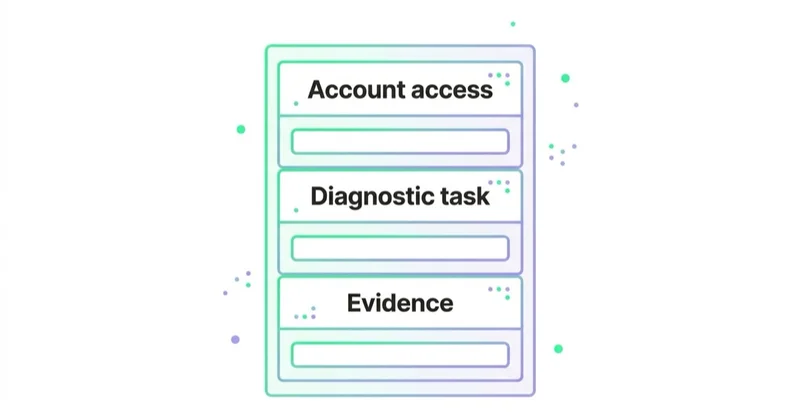
Provide the same date range and context to each finalist. Where possible, include:
- Google Ads access with an appropriate temporary role;
- GA4 and conversion documentation;
- Merchant Center and feed diagnostics for retail;
- CRM stage counts or anonymised quality feedback for lead generation;
- gross margin or contribution groupings;
- recent site, offer and budget changes.
Ask the agency to return:
- verified facts;
- hypotheses that need more evidence;
- three priorities and their expected mechanism;
- what should remain unchanged for now;
- measurement risks;
- dependencies and estimated implementation effort.
This format exposes shallow audits. A list of generic recommendations—add negatives, improve Quality Score, launch Performance Max—does not show that the agency understands the account. A credible diagnosis connects evidence to a commercial consequence and acknowledges uncertainty.
Do not ask an agency to disclose another client's account, change history or confidential data. An anonymised report or case study can show communication quality, but your own diagnostic exercise is the cleaner capability test.
4. Verify conversion and value measurement
Automated bidding can only act on the goals and values available to it. Measurement is therefore not a reporting appendix; it is part of campaign management.
Ask the agency to review:
- which conversion goals each campaign uses;
- which actions are primary and secondary;
- whether the same outcome is recorded more than once;
- counting method, attribution settings and conversion windows;
- purchase revenue, refunds, tax, shipping and margin treatment;
- form, phone, booking and offline sales coverage;
- consent behaviour and tag diagnostics;
- CRM feedback for qualified and converted leads.
Google explains that a primary action is used for bidding only when the campaign uses the associated goal. Secondary actions are normally observation-only, except when included in a custom goal. An agency should understand that full logic rather than merely promise to “make the best conversion primary”.
For lead generation, ask how the team will distinguish a submitted form from a qualified or converted lead. Google currently recommends enhanced conversions for leads as the upgraded route for importing downstream outcomes, with Data Manager, API and supported integrations among the available methods. Implementation still requires lawful data collection, correct matching, diagnostics and enough timely data to influence decisions.
Useful verification questions include:
- Which exact outcome will the bid strategy optimise for at launch?
- What must be true before moving to a lower-funnel goal?
- How will duplicate browser, GA4, call and CRM events be prevented?
- Who investigates a sudden conversion-volume change?
- How will value differ by product, lead type or margin tier?
- Which platform and business reports will be the source of truth for each decision?
5. Test how the agency reasons about campaign controls
Do not test candidates against a fixed checklist of “correct” settings. Google Ads changes, and sensible configurations differ. Test whether the team can explain the trade-off.
Search queries and negative keywords
Ask how search terms are reviewed, how irrelevant intent is identified and when a negative belongs at campaign, ad-group or account level. A high-volume launch may need frequent review; a mature low-volume account may not justify a ritual weekly change.
Current Performance Max campaigns also offer search-term reporting and campaign-level negative keywords, alongside account-level negatives and brand exclusions. A candidate relying on an outdated claim that Performance Max search queries are completely invisible has not kept its knowledge current.
Brand and non-brand demand
Brand traffic can make blended acquisition metrics look stronger because the user already knows the business. Ask how the agency will distinguish demand capture from demand creation and new-customer acquisition.
That does not mean every account must place brand and non-brand traffic in identical structures. Shopping, Performance Max, query matching and cross-channel journeys make the distinction imperfect. The agency should document the reporting method, exclusions and limitations instead of treating account-level ROAS as a complete answer.
Performance Max
Ask how the agency will use current controls and reports:
- search terms and search-term insights;
- campaign-level negative keywords;
- brand exclusions where strategically appropriate;
- Final URL expansion and URL exclusions;
- search themes as optional, additive inputs;
- asset group and channel reporting;
- product reporting and Merchant Center diagnostics;
- experiments when a causal comparison is feasible.
Brand exclusions are not a compulsory quality badge. Google notes that they limit traffic and may reduce performance. The right question is whether branded inventory supports the campaign's role and reporting—not whether the setting is always on.
For retail, product reporting expanded in June 2026 to cover product metrics across more channels in feed-based campaigns. A current agency should be able to explain the scope of those metrics and how feed attributes, product economics and inventory affect decisions.
Smart Bidding and change management
Ask what evidence triggers a target, goal or budget change and how the team accounts for conversion lag. Constant edits can disrupt interpretation; long inactivity can leave material problems unresolved. The right cadence follows data volume, risk and decision horizon.
Google states that changing conversion goals or actions can require learning time—often one to two conversion cycles. A credible operator plans transitions and monitoring instead of promising instant optimisation.
6. Understand Google Partner status correctly
Google Partner status is a legitimate programme credential, but it should be interpreted precisely.
Google's current requirements cover performance, spend and certifications. The certification requirement generally expects at least half of the registered account strategists—capped at 100 users—to hold relevant Google Ads certifications, with product-area conditions tied to recent spend. Performance uses programme criteria that include client growth and retention signals. Premier Partner is a higher, limited tier.
The badge therefore confirms that the company meets Google's programme requirements. It does not independently prove:
- expertise in your category;
- measurement quality;
- commercial judgement;
- who will manage your account;
- transparent reporting;
- profitable incremental growth.
Verify the badge on Google's partner directory and use it as one evidence point, not a substitute for the diagnostic process.
7. Protect account access and continuity
“Account ownership” is often used loosely. Google Ads has a specific manager-account owner setting, while the client account has its own users and data.
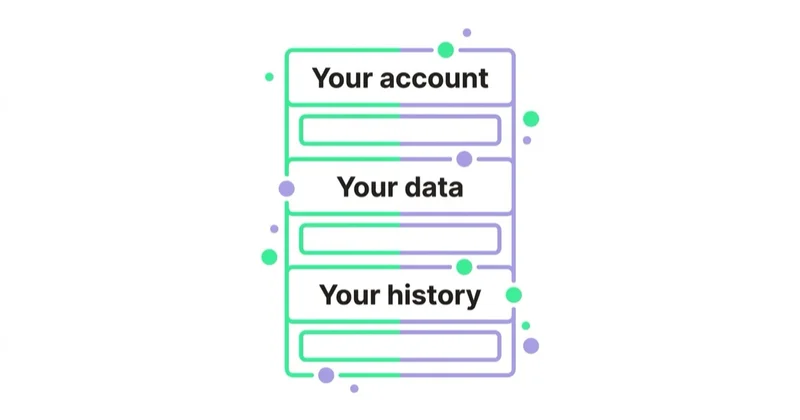
Google states that an owner manager receives powerful administrative privileges but does not take data ownership or administrative rights away from the client account. The client account retains its data and can remove that ownership access by unlinking the manager. If a manager creates a new client account, it initially becomes the owner manager.
The practical safeguards are:
- maintain at least one internal user with administrative access to the client account;
- use a company-controlled email, not a departing employee's personal login;
- understand which manager is marked as owner and whether it needs those privileges;
- keep billing and payments responsibilities documented;
- retain internal access to GA4, Tag Manager, Merchant Center, Business Profile, CRM, consent platform, feeds and landing-page systems;
- document domains, audiences, first-party data connections and external tools;
- test the offboarding process before it is needed.
An agency can manage the account through its manager account without becoming the sole route to your data. If a new account is required, agree how it will be created, who receives administrator access immediately and what happens at exit.
The distinction across platforms is covered in who owns your Google Ads, Meta and GA4.
8. Compare fees by scope and incentives
Common models include a fixed monthly fee, percentage of media spend, tiered fee, hourly/project work and a base fee plus performance component. None is automatically correct or conflicted.
Normalise proposals before comparing them:
| Scope question | Why it changes the price |
|---|---|
| Which accounts, markets and campaign types? | Determines operating complexity |
| Is measurement implementation included? | May require analytics and development work |
| Are feeds and Merchant Center included? | Retail performance often depends on data quality |
| Who produces image and video assets? | Performance Max, Demand Gen and YouTube need creative capacity |
| Are landing-page changes delivered or recommended? | Advice and implementation are different scopes |
| How often are meetings and reports? | Communication consumes specialist time |
| Is experimentation included? | Proper design, QA and interpretation add work |
| What is out of scope? | Prevents later ambiguity and add-on fees |
A percentage-of-spend fee can scale sensibly with account workload, but it also links agency revenue to media budget. Ask how budget increases are justified and approved. A low fixed fee can create a different incentive: minimise time and standardise service. Examine the operating model rather than assuming one fee structure guarantees alignment.
Performance fees require especially careful definitions. Specify baseline, attribution, margin, refunds, brand demand, seasonality, caps and data disputes. A fee linked to a platform-reported ROAS can reward results the agency did not incrementally create.
9. Define reporting and decision rights
A useful report answers:
- what changed in business outcome;
- what contributed to it;
- what remains uncertain;
- what the agency changed and why;
- what the client needs to decide or deliver;
- what will happen next and when it will be evaluated.
Agree definitions for revenue, new customer, qualified lead, pipeline, CPA, ROAS and contribution. State the attribution source used for different decisions. Google Ads, GA4, CRM and finance systems can legitimately report different totals because they answer different questions.
Also define decision thresholds. Can the agency move budget between campaigns without approval? By how much can it change the total budget? Who signs off creative claims, landing pages and market expansion? Clear authority speeds good decisions and prevents expensive surprises.
10. Contract and offboarding checklist
Before signing, record:
- exact service scope and exclusions;
- named team, senior oversight and replacement process;
- client dependencies and response times;
- media budget and fee approval rules;
- access levels and account inventory;
- confidentiality and permitted use of data;
- intellectual-property and creative ownership;
- third-party tool costs;
- reporting cadence and metric definitions;
- notice period and termination assistance;
- handover format and deadline;
- treatment of outstanding experiments, invoices and platform issues.
Avoid guarantees of ranking, position, ROAS or lead volume. No agency controls auctions, competitors, demand, site uptime, stock and sales follow-up simultaneously. A serious contract commits to work, governance and transparency while defining targets as targets.
A practical evaluation scorecard
Score every finalist against the same weighted criteria. Adjust the weights for the business.
| Area | Example weight | Evidence to request |
|---|---|---|
| Diagnosis and strategic reasoning | 20% | Scoped audit, prioritisation and assumptions |
| Measurement and data | 20% | Conversion map, CRM/feed plan and QA method |
| Commercial understanding | 15% | Unit-economics questions and reporting model |
| Channel and technical capability | 15% | Relevant implementation examples and named expertise |
| Team and operating model | 10% | Named team, allocation, cadence and escalation |
| Transparency and access | 10% | Access matrix, sample report and change governance |
| Fee and contract | 10% | Normalised scope, incentives and exit terms |
Do not let presentation quality silently become the highest-weighted criterion. Record scores and material concerns before the final sales call.
What the first 90 days should establish
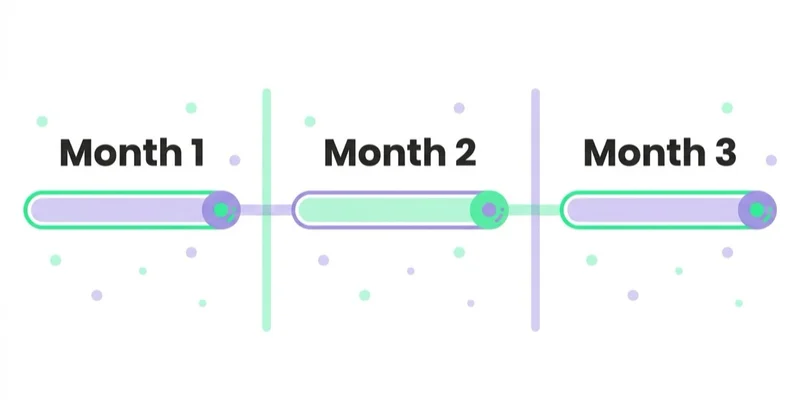
The first 90 days are not a universal performance deadline. They are a governance window in which the team should establish a reliable operating baseline.
Depending on the account, deliverables may include:
Days 1–30: access, diagnosis and measurement
- confirm access, billing, account settings and dependencies;
- validate conversions, values, consent and downstream data;
- document current structure, demand split and historical changes;
- identify critical waste, policy and feed issues;
- agree business metrics and decision rights.
Days 31–60: controlled implementation
- fix high-confidence measurement and structural issues;
- align goals, bidding and budgets with the agreed objective;
- improve feed, assets, queries or landing pages in scope;
- establish reporting and experiment backlog;
- avoid changing every variable at once.
Days 61–90: interpret and prioritise
- review early results in light of conversion lag and seasonality;
- separate observed results from causal claims;
- decide what to scale, hold, test or stop;
- update forecasts and dependency roadmap;
- agree the next operating cycle.
Read the detailed first 90 days of Google Ads playbook. Accounts with long sales cycles may need more time before customer outcomes can be evaluated; the agency should define leading and lagging evidence in advance.
Verify the work after appointment
Clients with direct access can inspect the platform rather than relying only on a dashboard.
Change history
Google Ads currently retains campaign change history for the previous two years and shows who made changes. Review it in context. A large bulk upload may represent one planned project; an empty week may be appropriate while an experiment matures. Ask for rationale, not a minimum number of edits.
Conversion goals and diagnostics
Confirm that the agreed goals and values remain active and that diagnostics are monitored. Unexpected changes deserve investigation because they can affect reporting and bidding.
Search terms and controls
Review material irrelevant spend, negatives, brand treatment, landing-page routing and Performance Max query controls. Expect a documented reason for the configuration.
Business reconciliation
Compare platform outcomes with CRM, ecommerce and finance data. Differences are expected; unexplained trends are not. The agency should help trace attribution, data and operational causes without forcing every system to show the same number.
Space Ads approach
Space Ads starts by connecting platform activity to the business model. We map the conversion and value signals, separate facts from assumptions, review the dependencies outside the ad account and prioritise changes by expected commercial impact.
Our management model keeps the client close to the evidence: clear account access, documented decisions, transparent reporting and explicit ownership of feeds, creative, landing pages and CRM feedback. Where the data cannot support a confident conclusion, we state what additional evidence is needed rather than filling the gap with a platform metric.
FAQ
What should I ask a Google Ads agency?
Ask which business outcome will drive bidding, how conversions are validated, how brand demand is reported, which Performance Max controls are relevant, who handles feeds and landing pages, who will manage the account, and what evidence will trigger a budget change. Request specific answers for your account.
Should I choose a Google Partner?
Partner status is a useful credential confirming Google's programme requirements for performance, spend and certifications. It does not rank agencies by strategic quality or guarantee results. Combine it with an account diagnosis, team review, measurement assessment and contract checks.
Who should own the Google Ads account?
The client should retain its own administrator access and control of its data, billing arrangements and connected assets. Google also has a specific owner-manager setting: an agency manager may hold it when needed, but the client account retains its data and can unlink that manager. Document the arrangement.
Is a free Google Ads audit trustworthy?
Price does not determine quality. Judge whether the audit uses appropriate access and context, distinguishes verified issues from hypotheses, quantifies materiality and proposes prioritised next steps. Be cautious when it is a generic checklist or demands sensitive data without clear handling terms.
How much should a Google Ads agency charge?
The fee depends on markets, campaign types, media volume, measurement, feeds, creative, landing pages, reporting and seniority. Compare the total defined scope and operating capacity. A cheaper fee is not cheaper if essential work is excluded; a larger fee is not justified without relevant delivery.
Is a percentage-of-spend fee a red flag?
Not by itself. It is simple and can reflect increasing workload, but it also links agency revenue to spend. Require a clear approval process and commercial case for budget increases. Review caps, tiers and included work.
How long should I give a new Google Ads agency?
Set milestone dates for access, measurement, diagnosis and implementation immediately. Evaluate performance over a period that reflects conversion volume, lag, seasonality and the scale of changes. Ninety days is a useful governance checkpoint, not a promise that every business outcome will be statistically clear.
What is the biggest red flag?
A mismatch between confidence and evidence: guaranteed results, unclear conversion definitions, no direct client access, recommendations unsupported by account data, or refusal to explain trade-offs.
Key takeaways
- Start with one decision brief and one evidence standard for every candidate.
- Use a scoped diagnostic exercise to test reasoning on your actual account.
- Verify measurement, commercial logic, team capacity and dependencies—not only campaign tactics.
- Interpret Partner status and manager-account ownership according to Google's current definitions.
- Keep direct internal administrator access across the advertising and measurement stack.
- Compare fees after normalising scope, incentives and exclusions.
- Define the first 90 days, decision rights, reporting terms and offboarding before signing.
- Continue verifying through change history, conversion diagnostics, query controls and business data.
If you want this protocol applied to your account, see our Google Ads agency service.
Sources and further reading
- How to become a Google Partner or Premier Partner — Google Ads Help
- About ownership of client accounts — Google Ads Help
- Manage conversion goals — Google Ads Help
- Enhanced conversions for leads — Google Ads Help
- Search targeting and controls for Performance Max — Google Ads Help
- Product reporting — Google Ads Help
- Review your account history — Google Ads Help
- Questions to ask a marketing agency
Continue reading
Gemini Ad Formats: When the Ad Is Generated, Not Written
Google is testing and announcing Gemini-powered ad experiences across AI Mode and Search. Learn what each format does, what remains uncertain and how to prepare data, content and measurement.
Google Ads Experiments: Testing That Produces a Decision
A useful Google Ads experiment starts with a decision, an effect worth detecting and enough statistical power. Learn how to choose the test, split, metric and interpretation.
Google Ads Account Suspended: Why It Happens and What to Do
A Google Ads suspension requires evidence, not panic. Learn how suspension differs from a hold or pause, what the strike system covers and how to diagnose and appeal safely.