To market a private label brand nobody knows, give a specific customer a defensible reason to choose it, prove that reason where the decision happens and remove avoidable risk from the first purchase. Then acquire customers at a cost the product's margin and repeat behaviour can support.
Awareness matters, but it cannot compensate for an interchangeable product, vague claims, weak reviews, inconsistent product data or an offer that loses money after fulfilment and returns. Marketing begins with the commercial and product truth: who is this for, what is meaningfully better or different, what evidence supports it, and why should a buyer trust the seller?
TL;DR
- Choose a narrow initial segment and one credible reason to buy; “premium quality at an affordable price” is not a position.
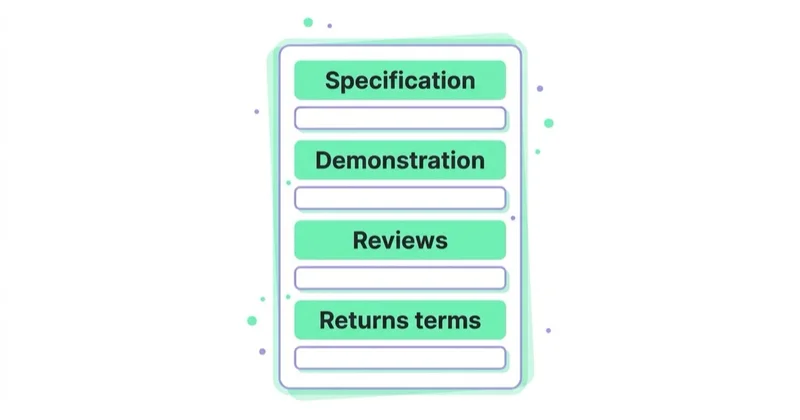
- Build proof from accurate specifications, demonstrations, testing, certifications, real customer experience and clear policies.
- Make comparative and performance claims only when the evidence supports the exact wording.
- Plan honest review collection from the first order. Never buy fake reviews or make an incentive conditional on positive sentiment.
- Treat the product page, feed, identifiers, pricing, stock and fulfilment as part of marketing.
- Select channels by demand state, creative fit and contribution economics—not a universal launch ranking.
- Use marketplaces and direct commerce deliberately; each can serve a different role in discovery, trust, conversion and retention.
- Measure new-customer contribution, repeat purchase, returns and cohort payback alongside platform ROAS.
What private label means for marketing
A private-label product is produced by one business and sold under another seller's brand. It may be a retailer's store brand, a differentiated direct-to-consumer range or an own-brand product built around a specific audience.
Private label does not automatically mean generic, cheap or identical to a competitor's product. The marketing challenge depends on how much control the brand has over formulation, materials, features, packaging, quality assurance, supply and exclusivity.
Three starting positions require different strategies:
| Starting position | Main challenge | Marketing priority |
|---|---|---|
| Near-equivalent product | Low perceived difference and easy price comparison | Better audience, offer, service or bundle—with honest claims |
| Meaningfully specified product | Difference exists but is not understood | Demonstration, specification and education |
| Store/retailer own brand | Existing retailer trust but limited product reputation | Transfer trust while proving category competence |
The broader commercial work—supplier choice, quality, packaging, margin and inventory—is covered in building a private label brand. This guide focuses on demand once a viable product and supply path exist.
Start with a commercial viability model
Before selecting channels, calculate what a first customer can cost.
first-order contribution = net revenue − product cost − fulfilment − payment fees − expected returns/refunds − variable service cost
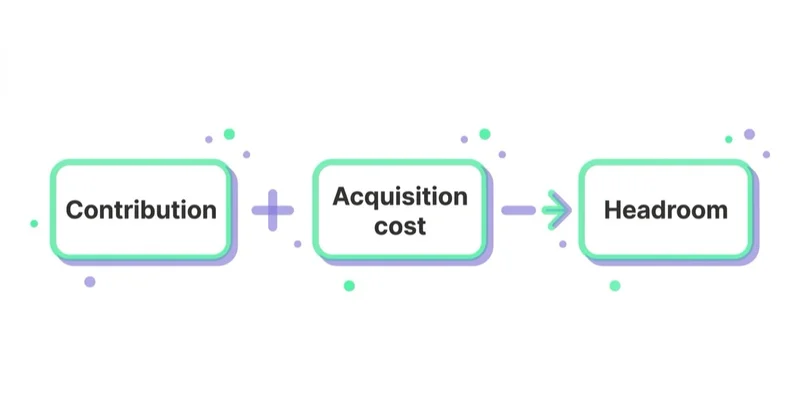
allowable acquisition cost = expected customer contribution over the chosen payback window − required profit or risk buffer
Use contribution, not revenue, because private label economics can be sensitive to freight, packaging, discounts, marketplace fees and returns. Do not assume repeat purchase will rescue an unprofitable first order until cohort data demonstrates it.
Illustrative example
Suppose a product sells for $60 excluding recoverable tax. The scenario includes:
- product and inbound cost: $18;
- pick, pack and delivery subsidy: $8;
- payment and variable support cost: $3;
- expected returns/refunds provision: $4;
- contribution before acquisition: $27.
If the brand requires $9 contribution on the first order, the initial allowable acquisition cost is $18. A higher target can be tested only if repeat orders, cross-sell or subscription behaviour support it.
These are hypothetical inputs, not category benchmarks. Build conservative, central and strong scenarios for your own product.
Choose a position a customer can understand
An unknown brand does not need to be superior on every dimension. It needs a clear fit for a defined buyer or use case.
Useful positioning sources include:
- a product designed for a neglected use case;
- a simpler range that reduces choice complexity;
- better compatibility, size, formulation or pack format;
- stronger service, availability or warranty;
- verifiable sourcing or material standards;
- a bundle that solves the complete job;
- a channel-specific advantage, such as reliable replenishment.
Weak positions use adjectives without a decision: innovative, high-quality, sustainable, premium and affordable. Turn each into an answerable statement. What changed? For whom? Compared with what? How is it verified?
Positioning statement template
For [specific customer/use case], [brand/product] provides [relevant outcome] through [verifiable mechanism], unlike [real alternative], with [proof or risk reduction].
This is an internal decision tool, not necessarily the homepage sentence. If the team cannot complete it honestly, more advertising will amplify confusion.
Build a proof system, not a list of claims
An established name may benefit from prior experience and recognition. A new private label needs evidence close to each material claim.
Product demonstration
Show the product performing the job in realistic conditions. A strong demonstration explains setup, scale, time, environment and limitations. Avoid edits that imply a result the product did not achieve.
Creative variations can include:
- side-by-side use for objectively comparable functions;
- assembly or installation;
- texture, fit, capacity or finish at useful scale;
- stress, wash or durability procedures;
- common failure mode and how the design addresses it;
- before-and-after evidence with consistent conditions.
Accurate specifications
Dimensions, material, ingredients, compatibility, origin, care, warranty and certifications help a buyer determine fit. Publish the information consistently across packaging, site, feed, marketplaces and customer support.
Specification is not automatically proof of performance. “Made from X” supports a material statement, not necessarily “lasts twice as long”.
Testing and certification
Use testing that matches the claim and category. Keep the report, method, date, sample and limitations. Certification logos should be current, applicable to the exact product and used according to the scheme owner's rules.
For UK advertising, CAP guidance states that objective claims need objective substantiation; subjective surveys do not support a claim that requires objective evidence. Other markets have their own rules. Legal and regulatory review should precede launch in sensitive categories.
Customer experience
Verified customer reviews, authentic user-generated content, service records and repeat purchase can become evidence over time. They should complement—not replace—product substantiation.
Risk reduction
Clear delivery, returns, warranty, contact and payment information reduce uncertainty. Google Merchant Center's misrepresentation policy expects merchants to present products and business information accurately and provide relevant information before commitment.
A generous promise is useful only if operations can fulfil it. Model the expected cost of returns and warranty claims before advertising the policy as a differentiator.
Comparative marketing: useful when precise
Buyers will compare an unknown brand with familiar alternatives, but the brand does not need to attack a named competitor in every ad.
Use the appropriate level:
- category comparison: explain which job or customer the product suits;
- attribute comparison: compare documented materials, dimensions, included items or policies;
- performance comparison: use a fair, repeatable test matching the advertised claim;
- named-competitor comparison: apply legal, trademark and platform review for the target market.
“Contains 500 ml” is simpler to support than “better value”; “tested for 10,000 cycles under method X” is more precise than “built to last”; “fits model Y” is different from claiming endorsement by its manufacturer.
Do not hide a material disadvantage that makes the comparison misleading. A candid fit statement—excellent for one use, unsuitable for another—can increase qualified conversion and reduce returns.
Price follows position and economics
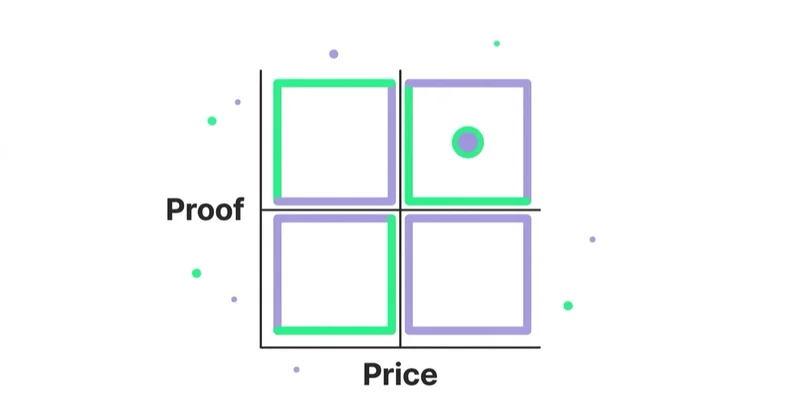
There is no universally bad “middle” price. A private-label product can succeed as value, mainstream, premium or specialist if the product, evidence, experience and economics support that position.
Evaluate price through four lenses:
Customer reference point
What alternatives does the buyer actually compare: a market leader, marketplace generic, substitute product, professional service or doing nothing?
Perceived risk
An unknown brand at a high price needs stronger evidence and risk reduction. A very low price can attract a different segment and may raise quality concerns, but that effect is category-specific.
Unit economics
Leave room for acquisition, fulfilment, returns, promotions, retail/marketplace fees and future product development. A launch price that works only at zero advertising cost is not a scalable price.
Price integrity
Avoid creating an artificial reference price or permanent “sale”. Promotion and price-comparison rules vary by jurisdiction and platform. Use real start/end dates, accurate eligibility and consistent checkout pricing.
Instead of a broad discount, test offer architecture: starter size, bundle, subscription, gift, threshold benefit or service layer. Our guide to ecommerce promotions without destroying margin covers the trade-offs.
Product page: answer the decision, not the brand brief
The page must help an unfamiliar buyer decide whether the product fits.
Include, where relevant:
- a clear product and use-case statement;
- outcome and mechanism without unsupported exaggeration;
- demonstrations and images that show scale and use;
- complete material, ingredient, size or compatibility information;
- what is included and what is not;
- authentic ratings and reviews with review policy;
- delivery, returns, warranty and support details;
- total price and recurring-payment terms;
- comparison or selection guidance;
- accessible controls, labels and error messages;
- concise FAQ based on real pre-purchase questions.
Do not hide essential information behind aspirational storytelling. Brand narrative can deepen preference after the buyer understands the product.
Search and merchant data
Use accurate Product structured data and Merchant Center feeds. Google states that providing both can maximise eligibility for product experiences and help it understand and verify data. Keep price, availability, variants, shipping and returns consistent with the visible page.
Private-label identifiers need care. Google advises not to invent a GTIN when none has been assigned. For store-brand/private-label products without a GTIN, use the applicable brand and MPN guidance. If a valid GTIN exists, submit the correct one for each variant. GS1 standards govern formal identifier allocation.
Structured data makes information machine-readable; it does not guarantee a rich result or compensate for inaccurate content.
Build reviews ethically from the first order
Reviews can reduce uncertainty, but a rushed “first reviews” programme creates legal and reputational risk.
A compliant operating pattern
- invite all eligible customers or use a neutral sampling rule;
- request honest experience, not a positive rating;
- make any material incentive clear and do not condition it on sentiment;
- follow the review platform's rules, which may prohibit incentives entirely;
- disclose material relationships in creator and testimonial content;
- publish and moderate reviews under a documented policy;
- do not suppress genuine negative reviews merely because they are negative;
- investigate suspicious patterns and maintain evidence of the process.
The US FTC's Consumer Reviews and Testimonials Rule prohibits fake or false reviews and incentives conditioned on positive or negative sentiment. The FTC notes that honest incentivised reviews are not categorically prohibited by that rule, but disclosure and other advertising law still apply, and platforms may have stricter policies.
In the UK, fake reviews became an expressly banned practice under the Digital Markets, Competition and Consumers Act regime from 6 April 2025. CMA guidance also places responsibilities on businesses that publish reviews to take reasonable and proportionate steps against fake reviews, concealed incentivised reviews and misleading review information.
Rules differ across markets. Obtain appropriate advice and treat authenticity as a product requirement, not a growth hack.
Use negative reviews as product research
Tag themes such as fit, instructions, damage, delivery, expectation mismatch and quality. Fix recurring causes in the product, packaging, page and support. A lower return rate can be more valuable than a higher displayed rating.
Channel strategy by buyer state
No universal sequence puts Shopping before Search or paid social before marketplaces. Choose channels by whether demand already exists and whether the product can be explained economically.
| Channel | Best role | Requirement | Main risk |
|---|---|---|---|
| Search | Capture explicit category/problem demand | Relevant query-to-page match and credible offer | Paying premium CPCs before conversion is proven |
| Shopping/free listings | Attribute-level product comparison | Accurate feed, identifiers, price, stock and imagery | Commodity comparison and margin pressure |
| Paid social/video | Demonstrate and create consideration | Strong visual mechanism and broad enough economics | Optimising to cheap clicks or low-quality first orders |
| Creators/affiliates | Education, demonstration and borrowed reach | Audience fit, disclosure, usage rights and measurement | Paying for reach without credible product experience |
| Marketplaces | High-intent discovery and platform-supported trust | Listing quality, stock, service and fee model | Limited relationship, price competition and platform dependency |
| SEO/content | Answer research and compatibility questions | Original expertise, maintenance and patience | Generic content disconnected from product demand |
| Email/SMS/lifecycle | Onboarding, replenishment and cross-sell | Permission, customer value and useful cadence | Discount dependency and poor deliverability |
| Retail/wholesale | Physical trial and distribution | Retail economics, packaging and supply reliability | Reduced margin and less customer-level data |
Search and Shopping
Build campaigns around intent, product economics and inventory. Separate brand demand from category acquisition in analysis. For a new brand, category terms may be expensive, but they can still work when the offer fits high-intent searches and the page proves the choice.
Feed-driven surfaces reward accurate product data, but do not assume the feed “does more than creative”. Image, price, title, reviews, promotion, landing page and competitive context work together. Read how product feeds work.
Paid social and video
Lead with the problem, use case or demonstration—not a logo reveal. Create multiple hooks without changing the product truth. Send each ad to a page that continues the same promise.
Track first-order contribution and downstream cohorts by creative angle. A creator-style asset can generate inexpensive purchases that return or fail to repeat; platform CPA alone will miss that.
Creators and sampling
Select creators for category credibility, audience fit and ability to explain the product. Define deliverables, approval boundaries, disclosures, usage period, territories, paid-media rights, exclusivity and claim limitations.
Sending a product does not guarantee a positive endorsement. Authentic evaluation includes the possibility of criticism. Never script a personal experience the creator did not have.
Marketplaces and direct commerce
Treat this as portfolio design, not a moral choice.
- A marketplace can supply high-intent demand, payment familiarity and fulfilment options.
- A direct site can offer richer education, bundles, customer service and a permission-based relationship.
- Retail can provide trial and reach that neither digital route creates efficiently.
Customer data and communication rights depend on the channel's terms and the transaction. Do not assume the brand has unrestricted access to marketplace customer data. Build channel-specific economics and avoid a direct offer that creates unmanaged conflict with retail partners.
The DTC marketing playbook explains the direct model in more detail.
Launch in controlled stages
Stage 1: readiness
- validate product quality, claims and regulatory requirements;
- define position, price and contribution model;
- establish identifiers, feed and product-page data;
- produce demonstration, specification and FAQ assets;
- configure analytics, consent and channel events;
- build review, support and returns processes.
Stage 2: limited evidence
- launch to a controlled audience or market;
- validate fulfilment, service, tracking and page behaviour;
- collect honest feedback and diagnose returns;
- test distinct messages rather than superficial variations;
- reconcile platform orders with actual contribution.
Stage 3: repeatable acquisition
- concentrate spend on product/audience combinations with viable economics;
- expand creative from validated proof themes;
- improve feed, pages and offer based on observed objections;
- introduce lifecycle journeys and cross-sell;
- hold inventory and service capacity ahead of scale.
Stage 4: durable demand
- invest in organic search, creator relationships, community and retail selectively;
- develop second-purchase and product-line logic;
- measure brand demand and incrementality where feasible;
- reduce dependence on one channel, product or promotion.
Measurement that prevents false scale
Build a scorecard by channel, product, market, new/returning customer and cohort.
Acquisition
- qualified traffic and product-view rate;
- add-to-cart and checkout progression;
- new-customer CPA;
- first-order revenue and contribution;
- promotion and marketplace-fee impact.
Product and experience
- conversion rate by intent and device;
- return/refund and cancellation rate;
- customer-service contact reasons;
- rating and review themes—not only average rating;
- delivery and stock performance.
Customer value
- second-order rate and time to repeat;
- cohort contribution after 30/90/180 days as relevant;
- subscription retention or replenishment;
- cross-sell and product-line behaviour;
- payback period.
Demand quality
- branded search and direct demand trends;
- new-customer mix;
- geo or holdout evidence where feasible;
- marketplace versus direct cannibalisation;
- blended marketing cost as a share of contribution.
Platform ROAS is useful for campaign operations but cannot prove that all attributed demand is incremental. Scale only after finance and customer outcomes support the platform signal.
Space Ads approach to private-label growth
Space Ads connects positioning, product evidence and acquisition economics before increasing media. We audit the page, feed, measurement, creative and fulfilment dependencies together because paid-media performance often exposes a constraint outside the campaign.
Creative is built from substantiated product mechanisms and genuine customer questions. Campaigns are structured around intent, inventory and contribution, while reporting follows new customers, returns and cohort value beyond the initial platform conversion.
Where a brand lacks review volume or category trust, we build a compliant evidence plan rather than manufacture social proof. If the current margin or product experience cannot support paid growth, that is a commercial finding—not a bidding problem.
FAQ
How do you market a new private label product?
Define one initial customer and defensible product reason, calculate allowable acquisition cost, create verifiable proof, build an accurate product page and feed, then run controlled channel tests. Expand only when fulfilment, returns and customer contribution support the attributed sales.
Should a private label brand compete on price?
Price can be a deliberate advantage, but it is not the only credible position. Choose value, mainstream, premium or specialist based on customer alternatives, product evidence and unit economics. Avoid a launch discount that makes acquisition look viable while destroying contribution.
How do I get the first product reviews?
Ask eligible buyers neutrally after enough time to use the product, make the process simple and follow local law and platform rules. If using sampling or an incentive, do not condition it on positivity and ensure required disclosure. Never buy, write or commission fake reviews.
Are comparison ads safe for private labels?
They can be effective when the comparison is material, fair and supported by evidence that matches the exact claim. Named competitors, regulated categories and performance claims require market-specific legal and platform review.
Should I launch on a marketplace or my own website?
Either or both may fit. Model marketplace demand, fees, service and data limits against the direct site's education, bundles and customer relationship. Decide which channel serves discovery, transaction and retention rather than applying one universal rule.
Which paid channel is best for a private label launch?
The answer depends on demand and demonstrability. Search and Shopping can capture existing intent; paid social and creators can explain a visual product; marketplaces can access high-intent shoppers. Test the channel whose economics and creative requirements the product can currently support.
What should private-label marketing measure?
Track new-customer acquisition cost, first-order contribution, return/refund rate, repeat purchase, cohort contribution and payback. Use platform ROAS for optimisation, then reconcile it with ecommerce, marketplace and finance data.
Key takeaways
- A new private label needs a specific customer fit and evidence, not generic premium language.
- Build acquisition targets from contribution and observed repeat behaviour.
- Substantiate objective and comparative claims before distribution.
- Collect reviews honestly and comply with current market and platform rules.
- Product data, identifiers, fulfilment and returns are part of marketing performance.
- Select channels by demand state and economics; no fixed sequence works for every brand.
- Measure customer and cohort value before declaring scale profitable.
Explore our approach to ecommerce growth and ad creative.
Sources and further reading
- Consumer Reviews and Testimonials Rule: Q&A — US FTC
- Fake reviews guidance for businesses — UK CMA
- Substantiation in advertising — ASA/CAP
- Product structured data — Google Search Central
- Unique product identifiers and private-label products — Google Merchant Center Help
- Merchant Center misrepresentation policy
- GS1 GTIN management standard
Continue reading
Auto Parts Ecommerce: Marketing Around the Fitment Problem
Auto parts marketing starts with fitment data. Learn how to connect the catalogue, vehicle selector, product feed, SEO and returns data so customers find parts that genuinely fit.
Local Inventory Ads: The Format Decided by Your Stockroom
Local inventory ads connect nearby demand with products available in physical stores. Learn how to prepare store data, pickup options, landing pages and offline measurement without promising stock the customer cannot buy.
The Shopify Marketing Stack: What to Install and What to Remove
A Shopify marketing stack should connect customer data, storefront experience, merchandising, lifecycle and acquisition without duplicating events or adding unmanaged risk. Use this framework to choose, govern and remove apps safely.