Private label generally means that a third party manufactures a product sold under the retailer’s or brand owner’s name. How much the brand controls the formula, materials, tooling, packaging or specification varies widely. “White label”, “private label”, “contract manufacturing” and “OEM” are commercial descriptions, not globally consistent legal categories.
The strategic opportunity is control: the business can shape the proposition, customer experience, price architecture, distribution and future product line. The risk is also control. Inventory, product claims, quality failures, compliance, recalls and demand creation can move toward the brand owner even when a supplier does the physical manufacturing.
A strong private-label project therefore starts with a customer problem and a compliance route, not a catalogue and a logo. It earns the inventory commitment by passing a series of evidence gates.
TL;DR
- Treat private label, white label and OEM as descriptions of control and exclusivity, then define the actual rights and obligations in the supplier agreement.
- Private label can improve gross margin, but it also adds tooling, testing, freight, duties, packaging, working capital, returns, write-offs, compliance and customer-acquisition cost.
- Validate the problem, willingness to pay and channel economics before negotiating a large minimum order quantity.
- Make differentiation valuable, perceptible and defensible. A visible feature nobody values is not an advantage; a valuable feature competitors can copy next week may not be durable.
- Determine the legal role separately for every market and product category. Under the EU General Product Safety Regulation, a business placing a covered product on the market under its own name or trademark is deemed the manufacturer for that regulation.
- Supplier certificates do not replace the brand owner’s due diligence. Verify that reports match the exact product, materials, factory, standard and current production version.
- Build traceability, complaint handling, corrective action and recall capability before launch.
- Repeat purchase matters for replenishable products; durable goods can work through first-order contribution, accessories, service, warranty value or referrals.
Private label, white label and OEM: use a control matrix
The labels are used inconsistently by suppliers. Instead of debating terminology, score the arrangement:
| Dimension | Low-control / commonly called white label | Adapted private label | Custom or OEM-style programme |
|---|---|---|---|
| Product | Existing catalogue item | Base product with agreed changes | Brand-owned design or detailed specification |
| Formula/materials | Supplier controlled | Selected attributes controlled | Brand-controlled bill of materials or formula |
| Tooling | Shared | Shared or partly exclusive | Dedicated tooling where applicable |
| Packaging | Logo and standard pack | Custom pack and claims | Custom structural and visual system |
| Territory/channel rights | Usually none | Negotiable | Contract-specific |
| IP ownership | Supplier | Mixed | Must be assigned or licensed explicitly |
| Change control | Supplier may change inputs | Approval for defined changes | Formal engineering or formula change process |
| MOQ and lead time | Usually lower/shorter | Medium | Usually higher/longer |
“Custom” does not automatically mean exclusive. A contract should state whether the supplier may sell the same formula, mould, component mix or packaging to competitors, and what happens to tooling and technical files when the relationship ends.
Start with a demand thesis, not a product
A large category is not evidence that a new brand can enter profitably. Write a falsifiable demand thesis:
For [specific customer], current products fail at [observable job or pain]. They will choose and pay [price range] for [credible difference], through [channel], because [evidence].
Build evidence from several sources:
- customer and non-customer interviews;
- support tickets, returns and search logs from an existing retailer;
- competitor reviews and repeated complaints;
- search demand and category trends;
- marketplace assortment, price and review distribution;
- retailer or distributor conversations;
- small landing-page, waitlist or concept tests;
- product-use observation;
- willingness-to-pay research.
Reviews are useful for generating hypotheses but not sufficient alone. They overrepresent unusually positive and negative experiences, can refer to older product versions and do not prove that enough buyers will pay for a solution.
Evaluate the proposed difference
Score each feature on five questions:
- Value: does it solve a meaningful problem?
- Perception: can the customer understand or experience it?
- Proof: can the claim be substantiated legally and credibly?
- Cost: what does it add to landed cost, failure risk and lead time?
- Defensibility: can it be protected or operationally difficult to copy?
The difference does not need to be visible in the first three seconds of every ad. Some high-consideration products require explanation. It does need a communication route proportionate to the buying journey.
Secure the brand before printing packaging
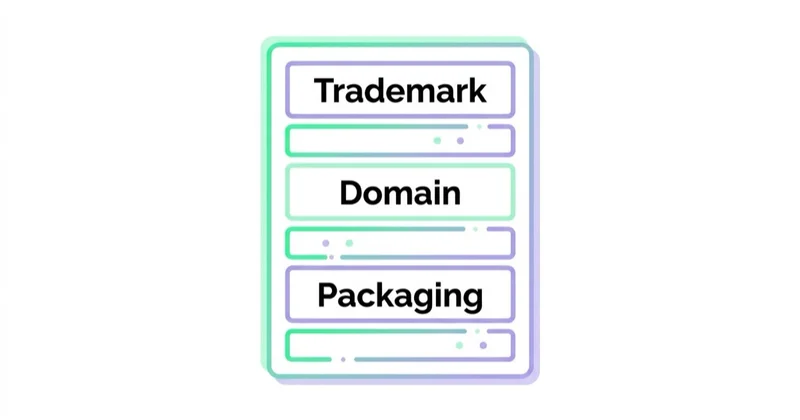
A memorable name is not useful if it conflicts with an existing mark, cannot be registered in the relevant classes or lacks suitable domains and marketplace handles.
Before final design:
- search WIPO’s Global Brand Database and relevant national or regional registers;
- check identical and confusingly similar names, not only exact spelling;
- review the relevant goods and services classes;
- obtain specialist trademark advice for priority markets;
- decide which entity will own the trademark, domains, designs and creative files;
- file at the appropriate point in the launch process;
- define how counterfeit, marketplace and distributor enforcement will work.
WIPO cautions that its database covers many collections but should be supplemented with national or regional office searches. A database result is not a legal clearance opinion.
Write a product brief that can be inspected
The product specification should convert the customer promise into measurable acceptance criteria. Depending on category, include:
- intended use and reasonably foreseeable misuse;
- dimensions, tolerances, weight and capacity;
- materials, ingredients, formula or bill of materials;
- performance and durability thresholds;
- colour, finish, sensory and cosmetic limits;
- packaging, artwork, barcode and labelling requirements;
- approved claims and required evidence;
- applicable standards, tests and documentation;
- sample approval and “golden sample” process;
- batch, lot and date-code traceability;
- acceptable quality limits and inspection method;
- shelf life, storage and transport conditions;
- change-control and deviation approval;
- spare parts, warranty and end-of-life obligations.
Avoid specifications such as “premium quality”. A factory cannot inspect premium. It can inspect a defined material grade, seam strength, tolerance, fill weight or failure threshold.
Glossary
- Private label: a product manufactured by a third party and sold under another business’s brand; the exact control model varies.
- White label: a commercial term often used for a standard product offered to several brands with limited modification.
- OEM: an ambiguous industry term that may refer to an original equipment manufacturer or manufacturing to another company’s specification.
- MOQ: minimum order quantity a manufacturer will accept.
- Landed cost: product cost plus freight, duty and other costs required to make inventory available for sale.
- Contribution margin: revenue less the defined variable costs of earning and fulfilling it.
- Golden sample: the approved reference sample used to judge production consistency.
- Economic operator: a role defined by relevant product rules, such as manufacturer, importer, authorised representative, distributor or fulfilment service provider.
- Traceability: the ability to identify supplier, production batch, distribution path and affected customers where required.
Compliance: determine the role, product and market
Compliance cannot be solved with a generic “CE certificate” or one factory report. Requirements depend on the product, intended use, claims, users, market, distribution model and economic-operator role.
European Union
For consumer products within its scope, EU Regulation 2023/988 states that a natural or legal person placing a product on the market under its own name or trademark is deemed the manufacturer and is subject to the relevant manufacturer obligations. It also requires a covered product to have an economic operator established in the EU responsible for specified tasks.
GPSR is a baseline, not the whole regime. Toys, cosmetics, electrical equipment, personal protective equipment, food, supplements, chemicals, medical devices and other categories may have specific legislation that adds or changes requirements.
United Kingdom
Great Britain and Northern Ireland do not always follow the same framework. UK government guidance notes that manufacturers, importers, distributors and sellers all have product-safety responsibilities, and an own-brand business may be treated as manufacturer or Responsible Person under category-specific rules. Confirm the rules for GB and NI separately where both are served.
United States
Obligations are divided across federal and state regimes and product categories. CPSC requirements, for example, can place testing, certification, tracking-label and reporting duties on manufacturers, importers or private labelers depending on the product. FDA, FTC, state law and other agencies may also apply.
Origin claims are regulated marketing claims. The FTC says an unqualified “Made in USA” claim generally requires the product to be all or virtually all made in the US. A US office, warehouse or brand does not establish US origin.
Build a compliance matrix
For each SKU and market, record:
| Field | Required decision |
|---|---|
| Intended use and users | Adult, child, professional, food-contact, skin-contact, etc. |
| Legal category | Applicable general and sector-specific rules |
| Economic-operator role | Manufacturer, importer, distributor, Responsible Person or other role |
| Standards and tests | Exact standard, version, test method and sample identity |
| Technical file | Risk assessment, drawings, formula, reports, declarations and change history |
| Product and packaging labels | Identity, warnings, traceability, operator details, language, origin |
| Online offer information | Required safety, operator and product details before purchase |
| Incident process | Complaint review, authority reporting, corrective action and recall |
| Retention period | How long documents and records must be kept |
| Owner | Named internal or external qualified person |
Use competent product-safety and legal specialists. This article is a planning framework, not jurisdiction-specific legal advice.
Supplier due diligence beyond the sales sample
A good sample proves that one sample can be good. It does not prove the factory can produce the same result at scale.
Verify:
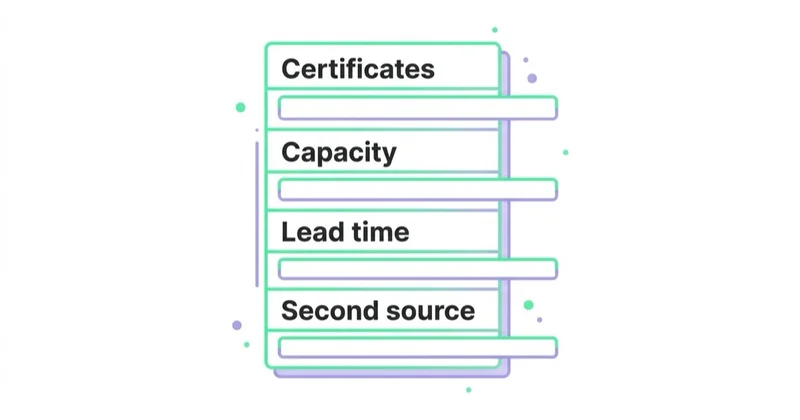
- legal entity, manufacturing location and subcontractors;
- quality-management and category certifications, including scope and validity;
- production capability, capacity and peak-season lead time;
- material and component suppliers;
- social, labour and environmental requirements relevant to the brand;
- previous recalls, enforcement or recurring quality issues where discoverable;
- test reports tied to the exact model and production materials;
- change-control discipline;
- batch traceability and complaint investigation;
- insurance and financial resilience;
- business-continuity and second-source options.
Where risk justifies it, use an independent factory audit, pre-production sample, during-production inspection and pre-shipment inspection. Inspection is not a substitute for product design, testing or compliance; it verifies defined production criteria.
Contract for the failure case, not only the purchase order
The manufacturing agreement should address:
- exact specification and approved sample;
- ownership of tooling, formulae, designs and artwork;
- confidentiality and permitted use of brand IP;
- exclusivity by product, territory, channel and duration;
- supplier and subcontractor change approval;
- quality thresholds, inspection and rejection;
- test reports, declarations and regulatory cooperation;
- delivery terms, title, risk and Incoterms where relevant;
- warranties, indemnities and insurance;
- defect, rework, replacement and chargeback process;
- recall cooperation, traceability and cost allocation;
- forecast, MOQ, lead time and cancellation;
- termination, transition stock and tooling transfer;
- governing law and dispute resolution.
A low unit price does not compensate for a contract that leaves the brand funding every quality failure.
The economics, done properly
Private label does not guarantee higher margin. Calculate the economics at SKU, first-order, customer and inventory levels.
Landed unit cost
Include:
- ex-factory product and retail packaging;
- tooling amortisation;
- testing, inspection and compliance allocation;
- freight, insurance, brokerage and duty;
- warehousing intake and preparation;
- expected defect and loss allowance.
Order contribution
Net sales − landed product cost − pick/pack and delivery − payment or marketplace fees − returns and warranty allowance − variable service cost = pre-acquisition contribution
Then subtract acquisition cost for the order or customer. Compare contribution at first order and across a realistic customer horizon.
Working capital and inventory risk
Model cash timing:
- supplier deposits and balance payment;
- production and transit lead time;
- customs and intake delay;
- days of inventory;
- retailer payment terms;
- advertising payment cycle;
- reorder point and safety stock;
- markdown, expiry and obsolescence risk.
A cheaper MOQ can destroy cash if demand is slow. A smaller, more expensive batch may have a better risk-adjusted return because it preserves capital and learning speed.
Illustrative example
Suppose a product sells for £48 net of sales tax. Landed cost is £13, fulfilment and payment cost £7, and expected returns, warranty and service cost £4. Pre-acquisition contribution is £24.
If first-order CAC is £21, the order contributes £3 before fixed overhead. A repeat purchase with £3 of retention cost might contribute £21. That can be attractive for a replenishable product if repeat behaviour is proven. For a durable product, the case may instead depend on first-order price, accessories, warranty economics, referrals or lower acquisition cost.
Use customer acquisition cost benchmarks only as orientation; the decision must use the brand’s own contribution and cohort data.
Validate before increasing MOQ
Use staged evidence, while avoiding claims or pre-orders that the business cannot lawfully fulfil:
- Problem validation: interviews, behaviour and existing sales data.
- Concept validation: proposition, price and claim comprehension.
- Prototype validation: real use, failure modes and comparison with alternatives.
- Compliance feasibility: role, test plan, labels and estimated cost.
- Channel validation: landing page, retailer interest or small media test.
- Pilot batch: controlled production, inspection and customer feedback.
- Repeat and return evidence: enough time to observe the category’s real cycle.
Deposits or pre-orders can test commitment more strongly than email signups, but they create consumer, delivery and refund obligations. Use clear terms and realistic timelines.
A launch sequence that reduces risk
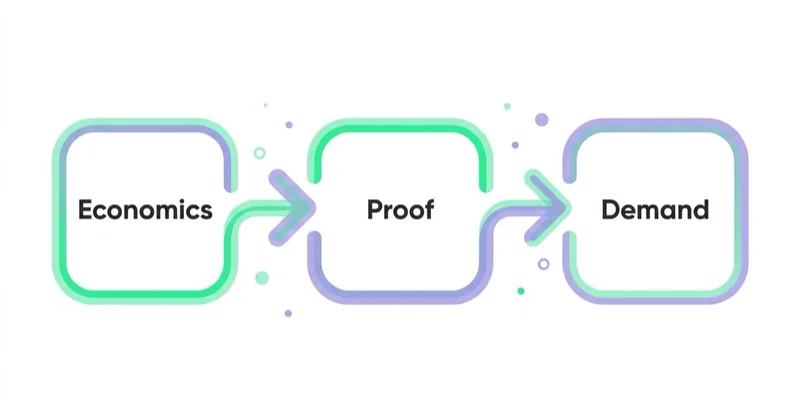
- Approve the customer problem and demand thesis.
- Screen name, trademark, domain and marketplace availability.
- Classify the product and markets; commission the compliance plan.
- Freeze the product specification and acceptance criteria.
- Qualify the supplier, factory and subcontractors.
- Approve prototype, golden sample, claims and packaging.
- Complete testing, documentation, labels and insurance.
- Sign manufacturing and quality agreements.
- Validate unit economics and working-capital scenarios.
- Produce and inspect a pilot batch.
- Test fulfilment, support, complaint and recall workflows.
- Launch with measurement for contribution, returns, defects and repeat behaviour.
The go-to-market work continues in our guide to marketing a private-label brand.
How Space Ads approaches private-label growth
Space Ads begins on the commercial side of the system: customer demand, proposition, channel economics, measurement and the path from first purchase to profitable customer. We do not treat advertising as proof that the product is compliant or production-ready.
Before scaling media, we expect named owners to confirm product safety, claims, documentation, stock and fulfilment. We then:
- translate validated differentiation into search, feed, marketplace and creative language;
- separate brand-building, demand capture and retention roles;
- measure contribution rather than gross platform ROAS alone;
- pass product and margin priorities into campaign structure where platforms support them;
- monitor returns, cancellations, defect feedback and repeat rate by cohort;
- hold spend when media begins amplifying a product, stock or service problem.
Where operational or legal evidence is outside our remit, we work from the specialist-approved claims and standards rather than inventing a marketing version of them.
Common mistakes
| Mistake | Better practice |
|---|---|
| Choosing from a catalogue before defining the customer problem | Write and test a demand thesis first |
| Assuming “custom” means exclusive | Put product, tooling, territory and change rights in the contract |
| Trusting a generic supplier certificate | Match the report to the exact SKU, materials, factory, standard and version |
| Printing packaging before IP and legal review | Clear the brand and approve claims and labels first |
| Calculating margin from ex-factory price | Model landed cost, returns, CAC, working capital and write-offs |
| Lowering unit cost through an untested large MOQ | Price the value of learning and inventory risk |
| Treating first sales as product-market fit | Observe returns, defects, reviews, repeat or referral behaviour |
| Letting media outrun operations | Set stock, service, quality and compliance gates for scale |
FAQ
What is private label? A private-label product is manufactured by a third party and sold under another business’s brand. The business may control anything from packaging alone to a detailed product specification. Define the actual arrangement contractually because industry terminology varies.
What is the difference between private label and white label? White label usually describes a standard product offered to several brands with limited changes. Private label often implies more brand-specific specification or exclusivity. Neither term guarantees rights, quality or legal status; the specification and agreement do.
Is private label more profitable? It can be, but not automatically. Compare net selling price with landed cost, fulfilment, fees, returns, warranty, compliance, acquisition and working-capital cost. The relevant measure is contribution and cash return, not factory-price markup.
What compliance obligations come with private label? They depend on product, market and role. Under EU GPSR, a person placing a covered product on the market under its own name or trademark is deemed the manufacturer for that regulation. Sector-specific EU, UK, US and other rules may add testing, labels, documentation, notification, reporting and recall duties. Obtain qualified advice before ordering.
How much differentiation is enough? Enough to create value that the target customer understands and will pay for, at an acceptable cost and risk. Test value, perception, proof, cost and defensibility. Some differences can be shown instantly; others need education in a considered buying journey.
What categories suit private label best? There is no universally best category. Replenishable products can benefit from repeat purchase, while durable goods can work with strong first-order contribution, accessories, service or referral. Favour categories where the business has evidence, expertise, a compliance route and channel advantage.
How do I verify a private-label supplier? Verify the legal entity, factory, subcontractors, capability, quality system, category credentials, test reports, traceability, insurance and change control. Use independent audits or inspections where risk justifies them, and tie acceptance to a written specification and approved sample.
Should I trademark the brand before ordering? At minimum, conduct professional clearance before committing to packaging and inventory. Filing timing depends on markets and strategy. Search WIPO plus national or regional registers and obtain specialist advice; a simple exact-name search is not enough.
Key takeaways
- Industry labels do not define control; the product specification and contract do.
- Validate a customer problem, willingness to pay and channel economics before selecting inventory.
- Clear the brand and define ownership of trademark, tooling, formula, designs and data.
- Determine product, market and legal role before commissioning tests or labels.
- Verify the production version, not just a polished supplier sample.
- Model landed cost, contribution, CAC, working capital, returns and write-off risk.
- Use a pilot batch and measurable scale gates before increasing MOQ or media.
How we approach store build and the commercial infrastructure behind an own-brand launch is on our e-commerce development page.
Sources and further reading
- General Product Safety Regulation — European Commission
- General Product Safety Regulation 2023/988 — EUR-Lex
- Product requirements and compliance — Your Europe (European Commission)
- Product safety advice for businesses — UK Government
- Retailers: product safety and responsibilities — US Consumer Product Safety Commission
- Global Brand Database — WIPO
- Made in USA Rule — US Federal Trade Commission
- Customer acquisition cost benchmarks by industry
- Customer retention marketing
- Ecommerce conversion rate benchmarks by industry
Continue reading
Auto Parts Ecommerce: Marketing Around the Fitment Problem
Auto parts marketing starts with fitment data. Learn how to connect the catalogue, vehicle selector, product feed, SEO and returns data so customers find parts that genuinely fit.
Local Inventory Ads: The Format Decided by Your Stockroom
Local inventory ads connect nearby demand with products available in physical stores. Learn how to prepare store data, pickup options, landing pages and offline measurement without promising stock the customer cannot buy.
The Shopify Marketing Stack: What to Install and What to Remove
A Shopify marketing stack should connect customer data, storefront experience, merchandising, lifecycle and acquisition without duplicating events or adding unmanaged risk. Use this framework to choose, govern and remove apps safely.