An ecommerce marketing agency helps a retailer create profitable demand and turn more of that demand into customers and repeat purchases. Depending on the scope, its work may include paid acquisition, SEO, product feeds, creative, conversion optimisation, lifecycle marketing and measurement. The value does not come from doing all of those things at once. It comes from connecting the right capabilities around the store's commercial constraint.
That distinction matters. A technically sound advertising account cannot compensate for weak margins, unavailable stock, an uncompetitive offer or a poor checkout. Equally, an excellent store will not grow if too few qualified buyers find it. The agency and client therefore need a shared operating model, not merely a list of channels.
TL;DR
- An ecommerce marketing agency may cover acquisition, merchandising and feeds, conversion, retention, creative, and measurement. Those capabilities should support one commercial plan.
- Start with the economics and customer journey, then identify the few constraints that matter most. A business can have more than one constraint, and they can interact.
- Define outcomes, deliverables, decision rights and client dependencies. “Manage our marketing” is not a workable scope of work.
- Judge performance at three levels: business economics, customer and channel diagnostics, and controlled experiments. No single metric explains everything.
- MER is a useful blended trend, but it is not a causal measure. Price changes, seasonality, promotions, organic demand and retail distribution can all move it.
- The retailer should retain ownership and administrative control of accounts, data, audiences, product-feed logic and creative source files.
- Choose a team for the complexity of the problem. A coordinated specialist team is valuable only when the scope and revenue opportunity justify the coordination cost.
What an ecommerce marketing agency actually does
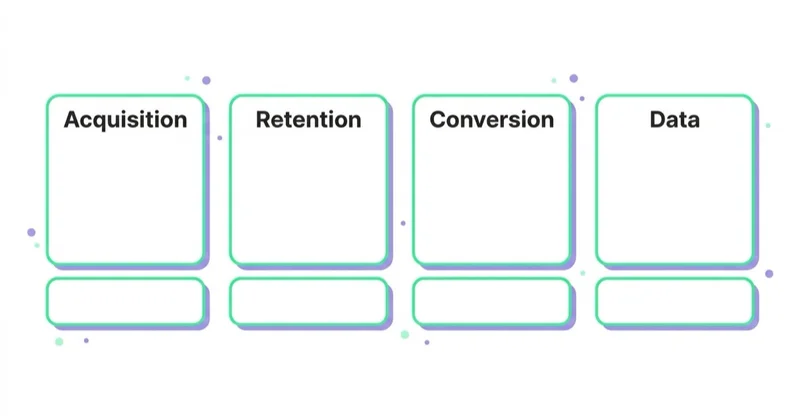
The exact remit varies, but most meaningful engagements draw from six connected capabilities.
1. Customer acquisition
Acquisition covers the channels used to reach new and returning buyers: paid search, Shopping, paid social, marketplaces, affiliates, organic search and, in some cases, creator partnerships or display.
Good acquisition work goes beyond launching campaigns. It includes:
- translating revenue and margin targets into channel objectives;
- segmenting products by margin, availability, lifecycle and strategic priority;
- matching campaigns and creative to customer intent;
- controlling brand, prospecting and remarketing activity separately;
- planning tests rather than changing several variables at once;
- reallocating spend when evidence, inventory or economics change.
The agency should not optimise every product to the same revenue target if their contribution margins, return rates or repeat-purchase profiles differ materially.
2. Product merchandising and feed management
For Shopping, catalogue advertising and marketplaces, product data is part of the media strategy. Titles, identifiers, categories, variants, images, prices and availability determine whether platforms understand a product and where it can appear.
A feed scope may include:
- resolving errors and disapprovals;
- keeping price and availability consistent with the store;
- improving titles and attributes using actual product information;
- creating labels for commercial campaign segmentation;
- monitoring catalogue coverage and changes;
- coordinating source-data fixes with ecommerce or development teams.
Google's product-data requirements evolve, so feed management is an ongoing operating responsibility rather than a one-off upload. Structured data and automatic updates can reduce mismatches, but Google explicitly notes that automatic item updates do not replace regular product-data maintenance.
3. Conversion optimisation
Conversion work addresses what happens after a shopper reaches the store. It can cover landing pages, navigation, on-site search, product detail pages, merchandising, cart, checkout, payment options, delivery information and mobile usability.
The objective is not simply to increase the headline conversion rate. A promotion can raise conversion while reducing contribution profit; removing useful information may push more visitors into checkout while increasing returns. A sound CRO programme therefore monitors guardrails such as average order value, margin, cancellations, returns and customer-service contacts.
Where traffic is sufficient, important changes should be tested against a control. Where it is not, the team can still combine usability research, analytics, session evidence and smaller sequential tests—but should describe the result as directional rather than causal.
4. Retention and lifecycle marketing
Lifecycle marketing turns customer and behavioural data into relevant communication before and after purchase. The scope may include email and SMS capture, welcome journeys, browse and basket abandonment, post-purchase education, cross-sell, replenishment and win-back programmes.
Retention is not free revenue. It requires technology, creative, incentives, consent management and frequency control, and it can erode trust if communication becomes excessive. Its economics should be evaluated using incremental contribution and cohort behaviour, not attributed email revenue alone.
For replenishable or frequently purchased products, repeat revenue may become a major growth lever. For furniture, luxury items or other infrequent purchases, the strategy may focus more on referral, accessories, service and long-term brand preference. The appropriate programme follows the buying cycle.
5. Creative and offer development
Media performance increasingly depends on the quality and range of messages supplied to advertising platforms. An agency may research customer objections, develop concepts, write copy, coordinate production and analyse creative patterns.
Creative responsibility should be explicit. A media team can identify fatigue and formulate hypotheses, but it cannot run a credible testing programme without a dependable production capacity. The scope should state who supplies photography and product facts, who approves claims, how many concepts and adaptations are expected, and how quickly new assets can be produced.
Offer decisions remain commercial decisions. The agency can model and test bundles, thresholds or promotions, but the retailer owns margin, stock and brand implications.
6. Data, measurement and planning
Measurement connects platform activity to store outcomes. Typical work includes analytics and advertising tags, consent-aware measurement, conversion definitions, product-level reporting, dashboards, forecasting and experimentation.
It also includes deciding what not to combine. The store, analytics system and advertising platforms answer different questions and use different definitions. Their totals will not always match. The task is to document the differences, validate that the implementation behaves as intended and create one agreed source for each management question.
Start with the commercial model, not the channel list
Before deciding whether the business needs paid social, SEO or email support, build a baseline that explains how it makes money.
At minimum, review:
- net revenue after discounts, cancellations and returns;
- gross and contribution margin by useful product or category group;
- acquisition cost for new customers, not only all purchasers;
- first-order contribution and the payback period for acquisition;
- repeat-purchase rate and cohort value over a defined period;
- average order value and units per order;
- stock availability, lead times and fulfilment capacity;
- conversion by device, market, new versus returning visitor and major journey step;
- current spend, demand volume and performance by channel.
This baseline changes the brief. A store with healthy demand but poor stock coverage may need merchandising and forecasting before more media. A store with strong first-order economics but low reach may genuinely need acquisition. A subscription business with an attractive front-end offer and weak renewal may need product or retention work rather than cheaper clicks.
There is rarely a perfect “first failed metric”. Constraints can be simultaneous: incomplete product data can limit Shopping while weak mobile pages depress all traffic. The practical goal is to rank problems by expected commercial impact, confidence, effort and dependency, then create a sequence.
How to diagnose the initial scope
Use evidence from five layers rather than relying on a generic benchmark.
| Diagnostic layer | Questions to answer | Likely scope implications |
|---|---|---|
| Economics | Which products, customer groups and markets produce contribution? How much can the business afford to acquire a customer? | Targets, budget ceilings, category priorities |
| Demand | Is there qualified demand the store is failing to capture, or must demand be created? | Search, Shopping, SEO, paid social, creative |
| Merchandising and journey | Are key products available, eligible and persuasive? Where do shoppers leave? | Feed, onsite merchandising, CRO, development |
| Customer value | Do customers return on the expected category cycle? Which cohorts are profitable? | Lifecycle, loyalty, offer and product work |
| Measurement | Are revenue, cost, consent and customer definitions sufficiently reliable for decisions? | Tracking remediation, data model, experiments |
A useful discovery phase ends with a prioritised problem statement, not an audit containing dozens of disconnected observations. For example:
Profitable categories have enough search demand, but incomplete product attributes restrict eligible inventory and campaigns optimise to gross revenue despite materially different margins. The first 60 days will fix source data and conversion values, restructure category priorities and establish a contribution-based baseline before spend increases.
That is specific enough to guide work and evaluate whether the plan was delivered.
Full service is an operating model, not a guarantee of depth
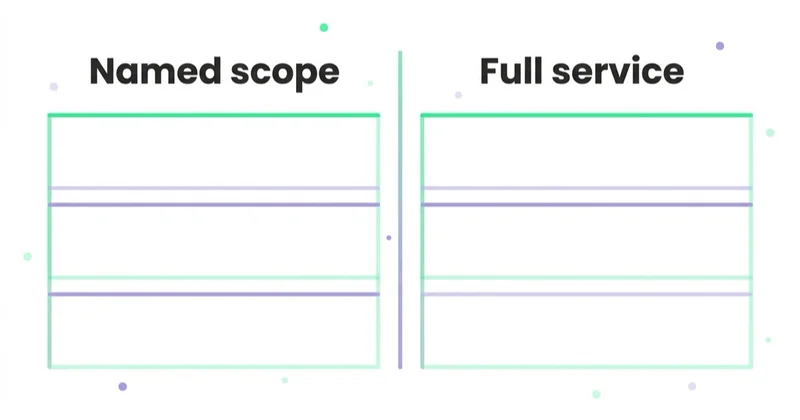
“Full service” can describe several legitimate team structures:
Coordinated specialists. Channel, feed, lifecycle, creative and analytics specialists work under one accountable lead. This suits complex stores when several capabilities are active and the commercial opportunity justifies the team.
A focused specialist team. The agency owns one or two connected workstreams, such as paid acquisition and product feeds, while internal teams retain ecommerce, CRM and creative. This can provide greater depth with clear interfaces.
A generalist or fractional team. A small senior team covers planning and execution across a narrower level of activity. It may suit an early-stage store but cannot provide unlimited specialist depth.
A hybrid model. Internal staff retain institutional knowledge and daily trading decisions, while the agency supplies platform expertise, additional capacity and an external challenge function.
No structure is inherently superior. Ask who will do the work, how much of each role is included, who coordinates dependencies, which activities are subcontracted and what happens when priorities compete. Review named roles and relevant experience rather than assuming that an agency-wide capability will be available to your account.
Turn the brief into a testable scope of work
A strong scope answers eight questions.
- What business problem are we addressing? State the current evidence and the intended commercial change.
- Which workstreams are included? Name channels, markets, stores and product ranges.
- What will be delivered? Specify audits, campaigns, feed rules, experiments, creative concepts, lifecycle flows, dashboards and meeting cadence.
- What is excluded? Development, production, translations, promotions or marketplace operations should not be assumed.
- Who decides and who executes? Create clear decision rights for budgets, discounts, claims, tracking, site changes and customer communication.
- What must the client supply? Product data, margins, access, stock information, approvals and development capacity are real dependencies.
- How will work be accepted and evaluated? Define quality criteria, baselines, targets, guardrails and review periods.
- How will additional work be approved? Agree the change-request and pricing process before urgent requests arrive.
This protects both parties. The agency is not held accountable for outcomes that depend on unavailable stock or unapproved changes; the retailer can distinguish included work from a proposed extra.
A measurement framework that does not overclaim
No single ecommerce KPI can allocate credit and diagnose performance at the same time. Use three levels.
Level 1: business economics
Monitor net revenue, contribution, cash requirements, new-customer acquisition cost, cohort value and payback. These metrics answer whether the overall growth model is commercially viable.
MER—total revenue divided by marketing spend—can be a useful blended trend when its definition is consistent. But it does not isolate the effect of marketing. It can rise because prices increased, a promotion converted existing demand, stores or marketplaces generated more revenue, or organic demand changed. Define which revenue and costs are included and interpret it alongside contribution and context.
Level 2: journey and channel diagnostics
Use platform and site metrics to understand where change occurred: impression share, product eligibility, click costs, conversion rate, average order value, new-customer mix, email engagement and checkout completion, for example.
These indicators guide optimisation, but platform-attributed conversions are not the same as incremental sales. Platforms use their own attribution settings and may each claim influence over the same order.
Level 3: causal evidence
Use controlled experiments for important decisions where scale and implementation permit. Campaign experiments can compare an original and a treatment over the same period. Conversion-lift or geographic holdout methods compare exposed and control groups to estimate sales that would not otherwise have happened.
Experiments need an explicit hypothesis, a primary outcome, guardrails, sufficient duration and a decision rule set before results arrive. They are not required for every small optimisation, but they are the strongest answer to questions such as whether a channel or promotion created incremental demand. See our guide to incrementality testing.
Ownership, access and data protection
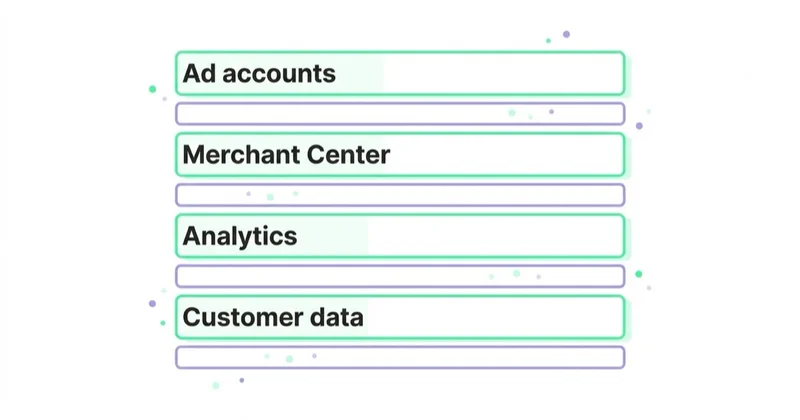
The retailer should retain ownership or contractual control of the assets on which its operation depends:
- advertising and Merchant Center accounts, with client billing and administrator access;
- analytics, tag-management and consent-management configurations;
- domains, store administration and product data;
- CRM audiences, email and SMS lists, templates and automations;
- feed rules, scripts and exportable configuration;
- research, dashboards and editable creative source files where included;
- documentation of integrations, naming conventions and conversion definitions.
Apply least-privilege access, individual user accounts and multi-factor authentication. The contract should also define intellectual-property rights, permitted data use, retention, incident handling and deletion or transfer at exit. Data-protection roles depend on what each party actually does, so they should be assessed rather than assumed from the label “agency”.
Our detailed account ownership checklist explains what to verify before signing and before an agency transition.
What the first 90 days can look like
The sequence should adapt to the store, but a disciplined engagement often follows this pattern.
Weeks 1–3: establish the truth
- agree definitions, targets and commercial guardrails;
- validate access, conversion events, consent behaviour and data flows;
- reconcile orders and costs sufficiently to understand material differences;
- review product economics, stock, feed health and the purchase journey;
- document active campaigns, audiences, lifecycle programmes and prior tests.
Weeks 3–6: stabilise and prioritise
- correct critical measurement and product-data issues;
- stop obvious waste without making wholesale changes unsupported by evidence;
- agree the test roadmap and creative or development capacity;
- build reporting around decisions, not a catalogue of metrics.
Weeks 6–12: execute the highest-value work
- launch prioritised campaign, feed, creative, CRO or lifecycle changes;
- record hypotheses and compare results with defined baselines or controls;
- report what was delivered, what changed, what remains uncertain and what decision follows;
- update the roadmap as constraints and evidence change.
The first 90 days should produce a more reliable operating system as well as campaign results. Exact commercial outcomes cannot be guaranteed because demand, competition, stock, pricing and implementation all affect them.
Common scoping mistakes
| Avoid | Do instead |
|---|---|
| Buying a channel bundle before diagnosing the business | Prioritise problems by impact, evidence, effort and dependencies |
| Treating gross revenue or platform ROAS as profit | Use contribution, new-customer economics and cohort value |
| Calling MER an attribution model | Use it as a defined blended trend and experiments for causal questions |
| Treating the product feed as a technical afterthought | Assign ownership, monitoring and source-data remediation |
| Expecting media optimisation without enough creative | Define research, production volume, approvals and turnaround time |
| Giving the agency outcome accountability without client dependencies | Record who supplies stock, margin data, approvals and development |
| Accepting “full service” without reviewing the delivery team | Confirm named roles, allocation, senior oversight and subcontractors |
| Keeping critical assets in agency-owned accounts | Establish ownership, exportability and exit assistance in the contract |
How Space Ads approaches an ecommerce engagement
We start by connecting media performance to the store's economics, product data, customer journey and operating constraints. That allows us to distinguish a campaign problem from a margin, feed, stock, creative or measurement problem before recommending more spend.
The resulting scope can be broad or focused. What matters is that every included workstream has an owner, a commercial reason, defined deliverables and the inputs needed from the client. Reporting then separates overall business outcomes, channel diagnostics and experimental evidence instead of forcing all three questions into one ROAS number.
If the primary need is paid acquisition, our guide to choosing an ecommerce PPC agency provides a more specialised checklist. For a broader planning framework, see our ecommerce marketing strategy guide.
FAQ
What does an ecommerce marketing agency do?
It helps an online retailer acquire customers and improve the commercial performance of their journey. Its scope may include paid media, SEO, product feeds, creative, conversion optimisation, lifecycle marketing and measurement. The exact mix should follow the retailer's economics and constraints.
How is an ecommerce marketing agency different from a PPC agency?
A PPC agency primarily manages paid advertising and the measurement or feed work needed to support it. An ecommerce marketing agency may also cover organic demand, onsite conversion, retention, merchandising and broader commercial planning. Many agencies sit between those definitions, so compare the actual scope and team rather than the label.
Which service should an ecommerce business buy first?
Start with a commercial and journey diagnosis. If measurement is unreliable, resolve enough of it to make decisions. Then prioritise the problem with the strongest combination of expected contribution, evidence, feasibility and strategic importance. It may be acquisition, but it may also be stock, product data, conversion, creative or retention.
What KPIs should an ecommerce agency report?
The scorecard normally needs net revenue and contribution, acquisition cost for new customers, payback or cohort value, plus relevant journey and channel diagnostics. Include guardrails such as return rate, stock or margin where decisions can affect them. Use experiments for major causal questions where practical.
How long does an ecommerce agency take to show results?
The timing depends on the work. Critical tracking or feed fixes may affect delivery relatively quickly; conversion tests need enough eligible traffic; SEO and retention usually require longer observation; and customer lifetime value may take several buying cycles to mature. Agree leading indicators and an appropriate evaluation window for each workstream rather than one universal deadline.
Should every channel be managed by one agency?
Not necessarily. One lead team can reduce coordination cost, while specialist partners can add depth. The right model depends on scale, internal capability and how tightly the channels depend on one another. In either case, assign one owner to the commercial plan, shared definitions and cross-channel decisions.
Key takeaways
- An ecommerce agency should connect acquisition, product data, conversion, retention, creative and measurement around commercial priorities.
- Diagnose the economics and customer journey before purchasing a broad channel package.
- Define deliverables, exclusions, dependencies, decision rights and acceptance criteria in the scope of work.
- Use business economics, diagnostic metrics and experiments for different management questions.
- Treat MER as context, not proof that marketing caused revenue.
- Keep control of accounts, data, feed logic, audiences and working files.
- Select the team structure for the actual complexity and opportunity, then revisit scope as evidence changes.
Learn more about our integrated ecommerce marketing and performance marketing work.
Sources and further reading
- Merchant Center product data specification update 2026 — Google
- Structured data markup for Merchant Center — Google
- About conversion measurement — Google Ads
- About the Experiments page — Google Ads
- Understand Conversion Lift and incremental conversions — Google Ads
- How to audit an ecommerce store
- Customer retention marketing
Continue reading
Auto Parts Ecommerce: Marketing Around the Fitment Problem
Auto parts marketing starts with fitment data. Learn how to connect the catalogue, vehicle selector, product feed, SEO and returns data so customers find parts that genuinely fit.
Local Inventory Ads: The Format Decided by Your Stockroom
Local inventory ads connect nearby demand with products available in physical stores. Learn how to prepare store data, pickup options, landing pages and offline measurement without promising stock the customer cannot buy.
The Shopify Marketing Stack: What to Install and What to Remove
A Shopify marketing stack should connect customer data, storefront experience, merchandising, lifecycle and acquisition without duplicating events or adding unmanaged risk. Use this framework to choose, govern and remove apps safely.