
Black Friday 2026 falls on 27 November 2026, but e-commerce planning should not start in November. By the time shoppers compare deals, platforms enter peak auction pressure and competitors increase budgets, the most important strategic work should already be done.
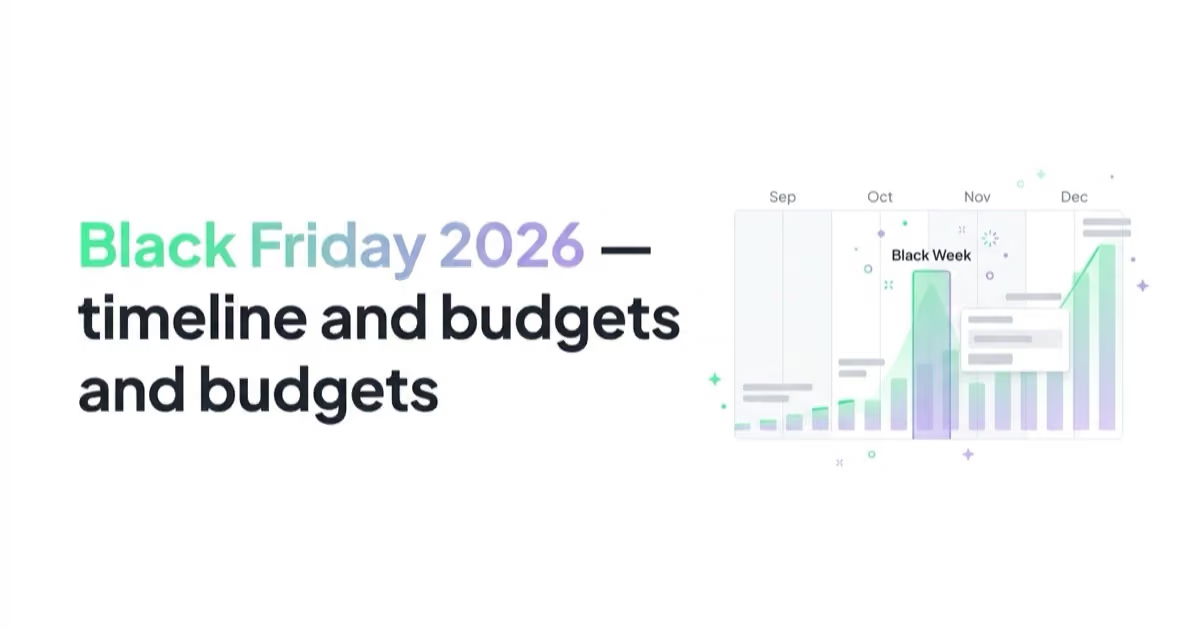
A strong Black Friday 2026 plan starts in September with tracking, feed quality, audience building, offer architecture and creative testing. October should focus on demand generation and remarketing pool growth. November should shift into controlled budget scaling, offer sequencing, brand protection, checkout reliability and real-time margin monitoring.
The objective is not just revenue volume. The objective is profitable incremental revenue. Many brands can generate a large Black Friday spike by discounting too aggressively and overpaying for warm traffic. The better plan protects margin, stock and customer quality.
TL;DR
- Black Friday 2026 is on 27 November 2026, but the campaign plan should start at least 8 weeks earlier.
- September is for measurement, feed, landing pages, creative testing and audience preparation.
- October is for demand generation, email/SMS growth, remarketing pools and offer testing.
- November is for budget scaling, brand defence, deal sequencing and operational control.
- Google Ads should usually combine Shopping, Performance Max, Search, brand protection and selected AI Max testing.
- Meta should focus on creative volume, Advantage+ structures, catalogue ads and warm audience sequencing.
- TikTok should be used for discovery, creator-led demand and short-form deal education, not only last-click conversion.
- Tracking must be ready before peak: Consent Mode, Enhanced Conversions, CAPI, GA4, UTMs and product feed diagnostics.
Why Black Friday Needs A Timeline
Black Friday is not a one-day campaign. It is a compressed buying season with several phases:
- early research,
- wishlisting,
- price comparison,
- early access deals,
- Black Week,
- Black Friday,
- Cyber Monday,
- post-purchase retention.
Ad platforms need data before peak. Creative needs testing before spend rises. Product feeds need approval before traffic surges. Email and SMS lists need growth before offers launch.
Brands that wait until November usually pay more for worse learning.
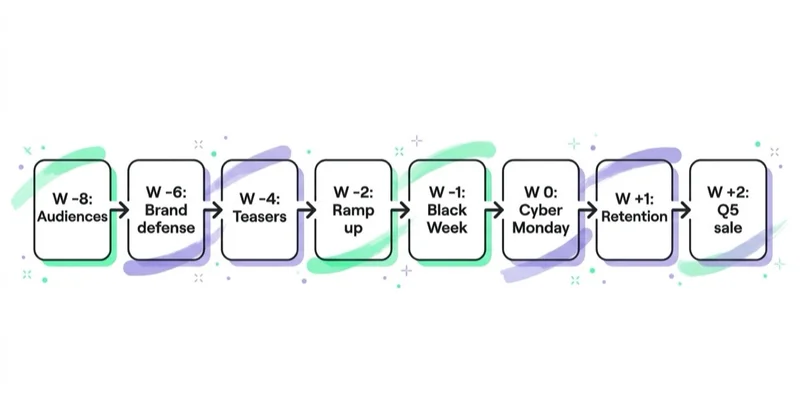
September: Foundation And Testing
September should answer: is the business ready to scale?
Checklist:
- audit GA4 and conversion tracking;
- confirm Consent Mode v2;
- check Enhanced Conversions;
- review Meta CAPI and pixel deduplication;
- clean Merchant Center issues;
- update product feed titles, images and availability;
- identify hero SKUs and margin tiers;
- define discount rules;
- map inventory constraints;
- build landing page templates;
- test creative angles.
Useful supporting guides:
October: Demand And Audience Building
October is the month for warming the market.
Focus on:
- prospecting campaigns;
- creator and UGC testing;
- email/SMS signup offers;
- gift guide content;
- category landing pages;
- first-party audience growth;
- TikTok and Reels creative testing;
- Google non-brand search expansion;
- product comparison content.
The goal is to build cheap attention before peak auction competition. Retargeting in November works better when October created enough qualified visitors.
November: Peak Execution
November needs stricter control.
Break it into phases:
| Period | Focus |
|---|---|
| Early November | Preview offers, waitlists, gift guides, audience warming |
| Black Week | Main offer rollout, budget ramp, email/SMS sequencing |
| Black Friday | Highest-intent demand capture, brand defence, stock control |
| Cyber Monday | Last-call offers, bundles, digital products, urgency |
| Post-peak | Retention, upsell, review requests, margin analysis |
Do not let every channel increase budget automatically. Scale where margin and conversion quality support it.
Google Ads Structure
A practical Google Ads Black Friday setup can include:
- Performance Max for product coverage;
- Shopping or feed-led campaigns for SKU control where applicable;
- Search campaigns for category and offer queries;
- brand defence campaigns;
- competitor campaigns if legally and strategically appropriate;
- remarketing exclusions where needed;
- AI Max tests only where tracking and URL controls are ready.
AI Max can help discover long-tail demand, but peak season is not the time to lose control of landing pages or brand terms. See Google AI Max for Search and Performance Max for setup context.
Meta Ads Structure
Meta needs creative variation before Black Friday.
Recommended structure:
- Advantage+ Shopping or broad sales campaigns;
- catalogue ads for product remarketing;
- prospecting creative tests;
- offer-specific ads;
- email/SMS audience exclusions where needed;
- retention and upsell sets after purchase.
Creative should cover:
- offer clarity;
- gift use cases;
- urgency;
- objections;
- social proof;
- product demonstrations;
- comparison against alternatives.
For automation context, see Meta Andromeda and Meta Advantage+.
TikTok Ads Structure
TikTok is strongest when it creates demand before peak. It can still convert during Black Friday, but many brands underuse it until the auction is already expensive.
Use TikTok for:
- creator-led product discovery;
- Spark Ads;
- short offer explainers;
- gift guides;
- problem/solution hooks;
- trend-native creative;
- retargeting warm viewers.
See TikTok Ads, Spark Ads and AI UGC ads.
Retail Media And Marketplaces
For brands selling on marketplaces, Black Friday planning should include Amazon, Allegro, retailer media networks or category-specific marketplaces.
Marketplace ads need:
- stock readiness;
- marketplace fee calculations;
- sponsored product budget;
- organic ranking review;
- product page quality;
- pricing rules;
- delivery promise.
For Poland and CEE expansion, see Allegro Ads.
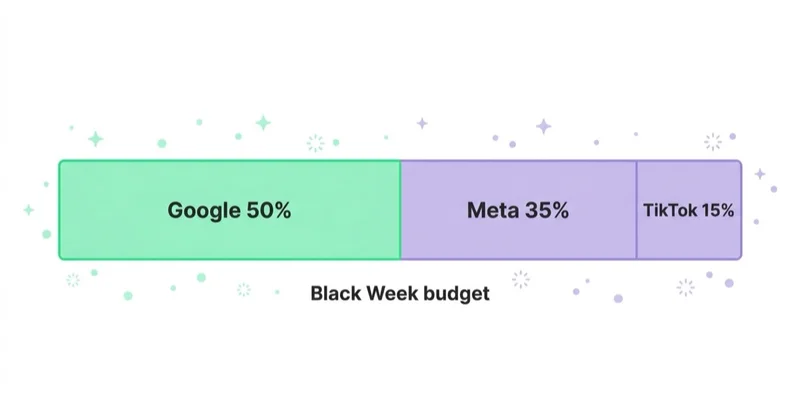
Budget Allocation
A simple planning model:
| Budget area | September | October | November |
|---|---|---|---|
| Prospecting | Medium | High | Medium to high |
| Remarketing | Low | Medium | High |
| Brand search | Stable | Stable | Protected |
| Shopping / PMax | Medium | Medium to high | High |
| Creative testing | High | High | Lower |
| Retention | Medium | Medium | High after purchase |
The exact split depends on category. Fashion and beauty often need stronger creative and remarketing. Electronics need price competitiveness. Subscription products need longer lead time and retention planning.
Measurement Checklist
Before November:
- GA4 purchase events tested;
- revenue and currency correct;
- Consent Mode active;
- Enhanced Conversions working;
- Meta Pixel and CAPI deduplicated;
- TikTok Pixel tested;
- UTMs consistent;
- product feed approved;
- stock and price feeds updated;
- dashboard shows margin, not only revenue;
- CRM or email platform captures source.
How we approach this at Space Ads
Black Friday is won in the weeks before it, not on the Friday itself. At the peak, CPMs spike because everyone is bidding, and whoever shows up unprepared pays top rates to reach a cold audience that rarely buys on first contact. The run-up is where we build the reserve: cheaper traffic fills remarketing lists and warms audiences, so Black Week becomes about closing warm demand instead of buying expensive strangers. Creative and offers get locked well ahead, because there's no time for fixes mid-peak. One thing we guard without compromise is measurement: it has to be verified before the season, never repaired during it. Broken conversion tracking in the biggest week of the year is the most expensive possible moment to learn your data can't be trusted.
Common Mistakes
Starting Too Late
November is execution month, not strategy month.
Discounting Without Margin Math
A high ROAS can still be unprofitable after discounts, returns and shipping.
Scaling Remarketing Too Hard
Warm audiences often look efficient but may not be incremental.
Neglecting Stock
Ad spend is wasted if hero SKUs go out of stock during peak.
Using Untested Creative
Black Friday is too expensive for first-draft creative learning.
FAQ
When is Black Friday 2026?
Black Friday 2026 is on 27 November 2026.
When should e-commerce brands start planning?
At least 8 weeks before Black Friday. September is a practical starting point for tracking, feed, creative and offer planning.
Which channels matter most?
Most e-commerce brands should plan Google Ads, Meta Ads, email/SMS and at least one discovery or marketplace layer such as TikTok or retail media.
Should budgets be increased on Black Friday?
Only where margin, stock and conversion quality support it. Budget scaling should be controlled by product economics, not panic.
Is TikTok useful for Black Friday?
Yes, especially for discovery, creator-led education and short-form product storytelling. It should usually start before peak week.
Key Takeaways
Black Friday 2026 planning should start before demand peaks. The best teams use September and October to build measurement, audiences, creative learning and offer clarity. November is for execution and control.
The winners will not simply spend more. They will know which products deserve budget, which audiences are incremental, which channels protect margin and which offers create repeat customers after the sale.
Before you ramp up seasonal budgets, it is worth running a marketing audit of Google, Meta and TikTok accounts — so you scale what works, not your mistakes.
Sources and further reading
- Google Merchant Center Help
- Google Ads Help: Performance Max
- Meta Business Help: Advantage+ shopping campaigns
- TikTok Business Help Center
Continue Learning
Continue reading
One Creative Won't Fit All: Ad Creative for Meta vs TikTok vs Google
A strong concept can travel across Meta, TikTok, and Google, but the same file may not suit every placement. Learn what to preserve, what to adapt, which specifications matter, and how to test cross-platform creative without relying on stereotypes.
Marketing Dashboard: What Growth Teams Should Track Across Ads, SEO and Sales
A marketing dashboard should connect ad spend, SEO, GA4, CRM and sales outcomes into one decision view. This guide explains what growth teams should track and how to avoid dashboard noise.
UGC Ads: How to Brief, Source and Run Creator Content That Performs
Creator-led ads can make a product easier to understand, but paid content must not masquerade as an independent customer opinion. Learn how to source, brief, contract, disclose and test creator content responsibly.


































